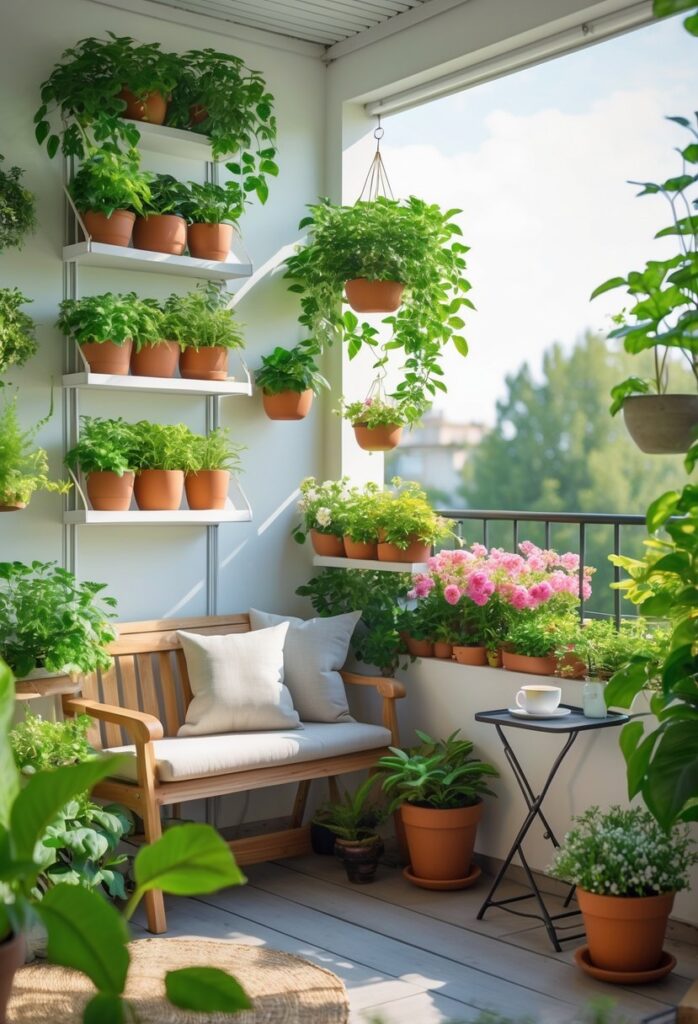
Decorating a small balcony with plants can feel tricky, but honestly, it’s one of the best ways to bring life and color to a tiny outdoor spot. If we use vertical garden walls, hanging baskets, or compact planters, we can squeeze in more greenery without making things feel cramped.
These ideas let us grow all sorts of plants—herbs, flowers, you name it—even if space is tight.
Picking the right containers and plant types really matters. Low-maintenance plants like succulents or climbing vines thrive in small spots and add some charm and privacy.
With a little planning, any small balcony can turn into a green, inviting retreat that fits our style.
Key Considerations for Small Balcony Plant Decor
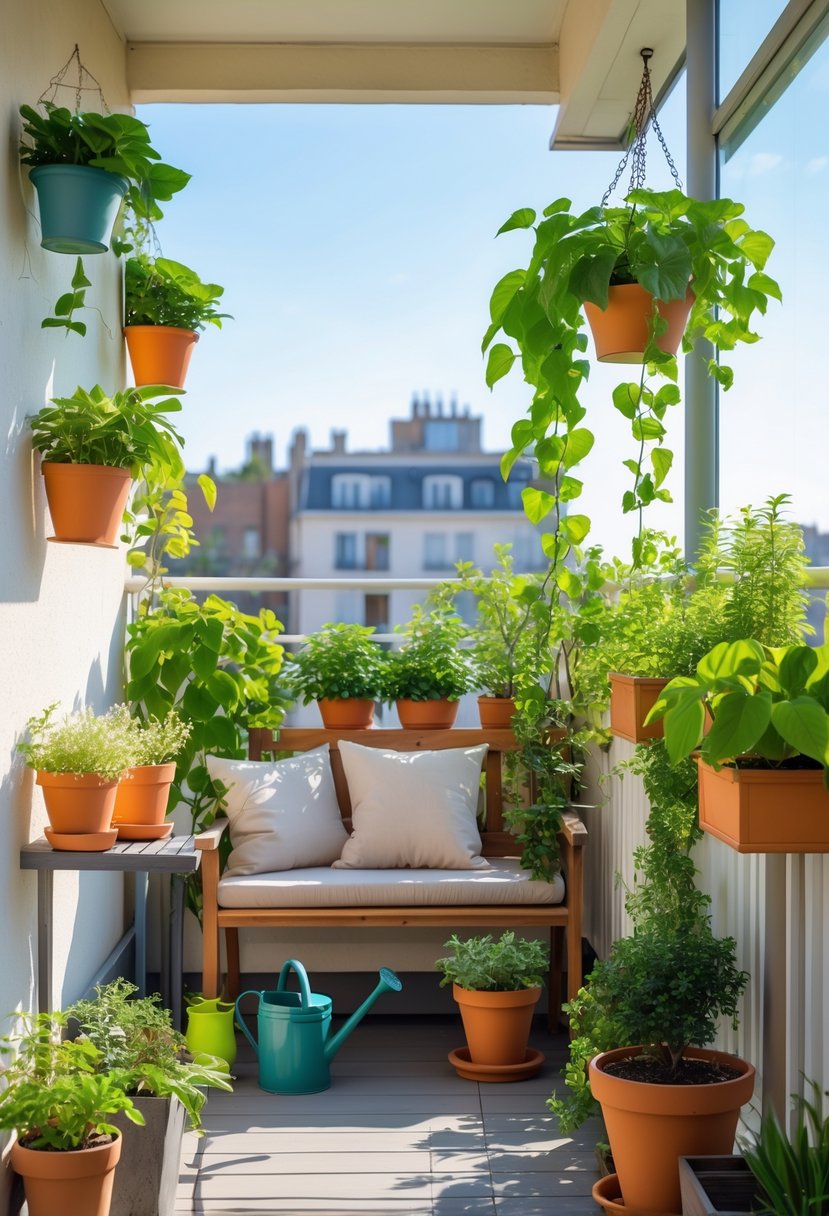
When we decorate a small balcony with plants, we need to think about how much space we actually have, how sunlight hits the area, and how we’ll handle watering. These details help us keep our little garden healthy and looking good.
Assessing Space and Weight Limitations
Small balconies have space and weight limits, so we need to stay aware of those for safety. Before we add anything, let’s measure the floor and check the balcony’s load capacity.
That way, we can choose containers and plants that fit without overcrowding or stressing the structure.
Lightweight pots—plastic or fabric—work better since they don’t add much weight. If we use vertical planters or hanging baskets, we free up the floor and get more plants in.
It’s smart to keep heavier pots near walls or corners for extra support and stability.
Understanding Light and Microclimates
We need to figure out how much sunlight our balcony gets. South-facing balconies usually soak up 6 to 8 hours of direct sun, but north-facing or shaded ones might get just a couple of hours.
That makes a big difference in what plants will actually grow well.
Let’s watch where the sun and shade fall throughout the day. Microclimates matter too—wind, nearby buildings, and balcony materials can change temperature and humidity.
Walls might bounce heat back, while open railings let in breezes. If we group plants with similar light and moisture needs, they’ll do much better.
Planning for Drainage and Watering
Good drainage keeps water from pooling and damaging roots or even the balcony itself. We should always use pots with drainage holes and put saucers underneath to catch extra water.
Raising containers a bit with pot feet or blocks helps air flow and drainage.
Different plants need different amounts of water, especially with sun and wind changing things up. We should check the soil often and water deeply when it’s dry, but not overdo it.
Self-watering containers or drip systems can save us time and keep moisture steady. If we water in the early morning or late evening, we lose less to evaporation.


Choosing Plants for Small Balconies

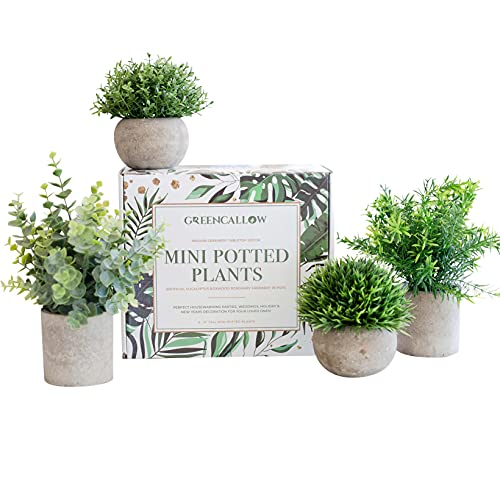
Choosing the right plants helps us make the most of our limited balcony space. We go for plants that look good, are easy to care for, or give us something practical like herbs.
Every choice adds something to the overall vibe.
Best Flowering Plants for Visual Impact
Flowering plants can really brighten up a balcony without taking over. Marigolds are tough and cheerful, perfect for sunny spots and easy to grow.
Petunias are another favorite; their trailing blooms look great in hanging baskets or railing planters.
We want compact or trailing varieties that won’t crowd things. Small pansies or violas also fit well.
Mixing colors and plant heights creates a lively display that feels welcoming.
Low-Maintenance Succulents and Foliage
Succulents are a lifesaver for anyone who forgets to water or doesn’t want a lot of fuss. Aloe, jade plants, and echeveria all fit nicely in shallow pots and add cool shapes.
Foliage plants like snake plants or pothos fill in gaps with lots of green texture. They clean the air and don’t mind indirect light, which is great for shady balconies.
Combining succulents with leafy plants keeps things fresh and low-maintenance.
Edible and Functional Plant Options
Edible plants let us grow food and decorate at the same time. Tomatoes, especially cherry varieties, do well if we stake them or use vertical supports.
Herbs like basil, thyme, and oregano are handy for cooking and smell amazing. Lettuce or Swiss chard can go in window boxes or railing planters.
Rosemary and other fragrant herbs also help keep bugs away, which is a nice bonus.


Maximizing Vertical Space With Creative Solutions
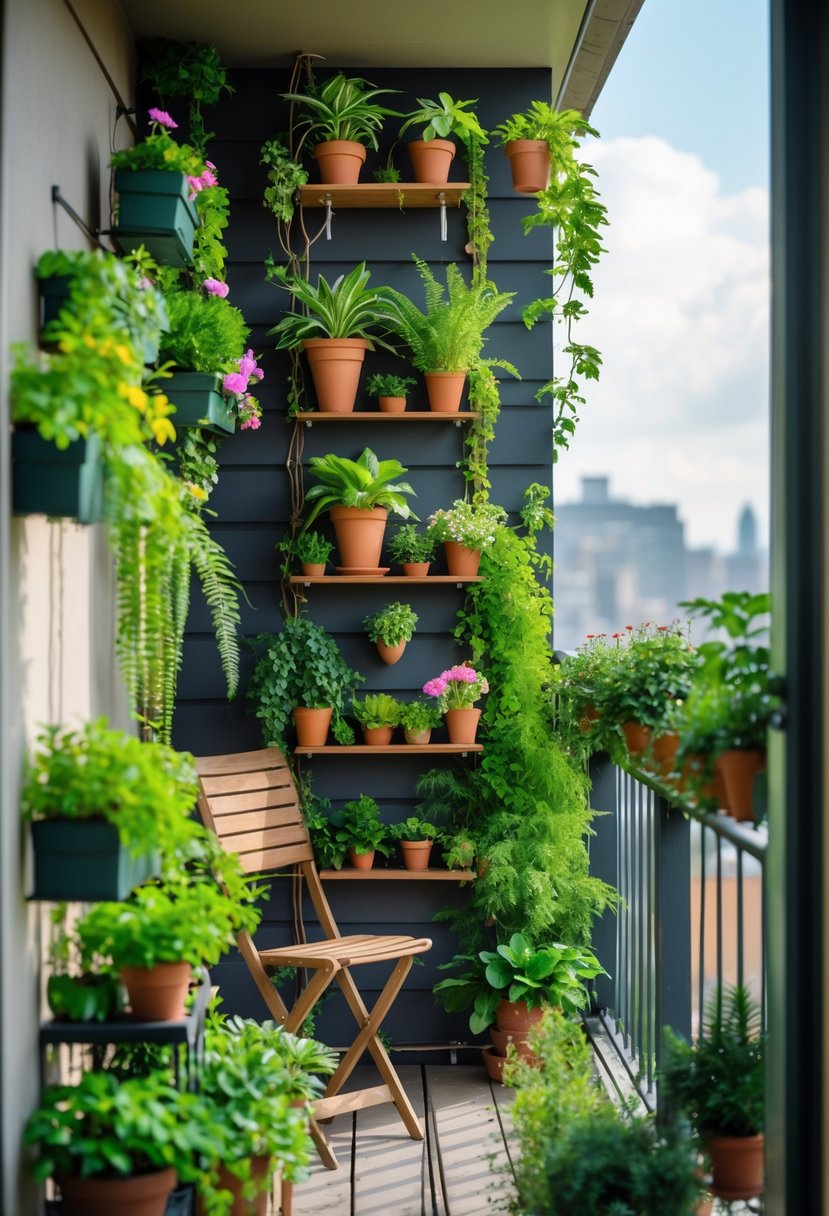
If we want more plants but not more clutter, using vertical space is the way to go. Adding shelves, wall planters, or trellises lets us grow upwards instead of out.
This keeps the balcony open and makes everything look lush.
Vertical Garden Walls and Plant Walls
Vertical garden walls really pack in the plants. We can hang pockets, containers, or frames filled with soil right on the balcony wall.
Herbs, flowers, or succulents all work stacked this way.
Modular panels or pocket planters make watering and care simple. Mixing plant types creates cool patterns and color pops.
A vertical wall turns a blank space into living art—pretty nice, right?
Trellises for Climbing Plants
Trellises help climbing plants grow up instead of out, saving precious floor space. We can put a trellis on the wall or railing and let vines, beans, or flowering climbers take over.
This adds privacy and a bit of shade, too.
Pick a trellis that matches the balcony style and is sturdy enough for the plants. Ivy, morning glories, and sweet peas all climb fast.
We should make sure the trellis gets enough sunlight and trim plants as needed to keep things tidy.
Wall-Mounted Shelves and Hanging Planters
Wall-mounted shelves give us extra spots for pots without crowding the floor. Herbs, little flowers, or decorative plants all fit on different levels.
Shelves with drainage holes keep water from pooling.
Hanging planters bring greenery up high—overhead or along railings. Lightweight fabric or mesh planters are easy to hang and let air flow.
Herbs and trailing plants are easy to reach and don’t take up floor space.


Smart Use of Planters and Containers
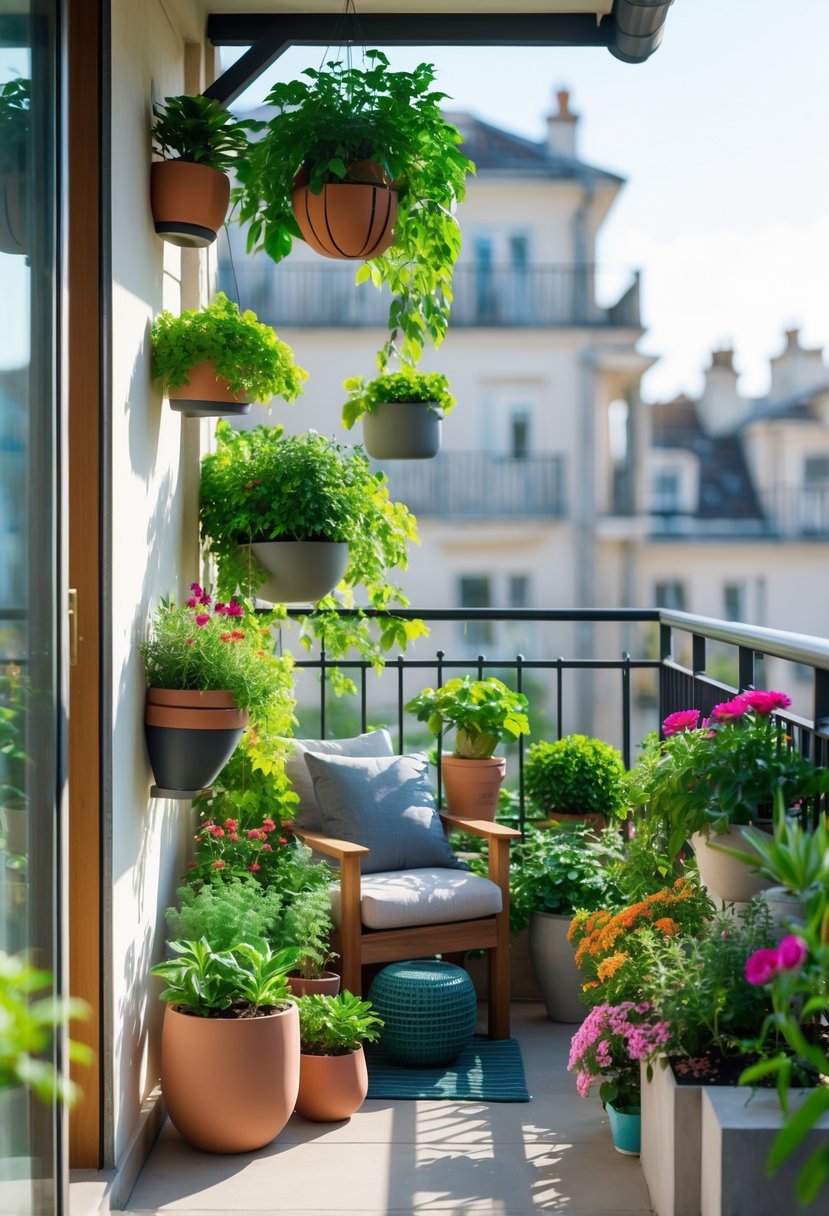
Making the most of a small balcony means picking planters and containers that fit more greenery without making a mess. The right choices help us keep things organized and nice to look at.
Space-Saving Tiered Planters
Tiered planters let us stack plants vertically—super helpful when floor space is tight. Wooden or metal stands with a few levels can hold different plants at once.
We can put sun-lovers like succulents up top, and shade-loving ferns below.
Tiered planters keep things tidy and create a mini green wall. We can tuck them in corners or against walls so they’re not in the way.
They’re usually lightweight, so moving them around or bringing them inside for bad weather isn’t a hassle.
Utilizing Railing Planters and Hanging Baskets
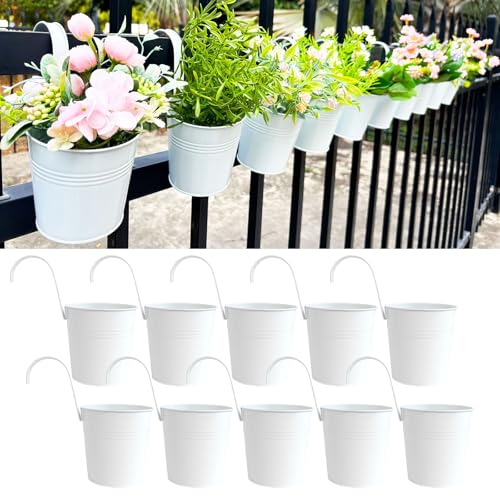
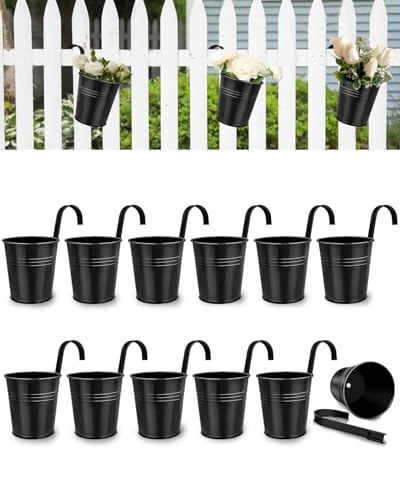
Railing planters clip right onto the balcony rails, freeing up more space. Sturdy materials like UV-resistant plastic or metal last longer outside.
They’re great for herbs like rosemary or thyme, or even small veggies like cherry tomatoes.
Hanging baskets add greenery overhead. We can hang them from hooks on the ceiling or railing.
Light pots with trailing plants, like ivy or petunias, look great and don’t weigh much. Self-watering baskets make life easier, especially during hot spells.
Using railing planters and hanging baskets adds layers and texture without clutter.
Selecting the Right Materials and Styles
The planter material matters for both looks and function. Terracotta pots breathe well and help with moisture, but they’re heavy and can break, so we use them sparingly.
Plastic and metal planters last longer and come in lots of colors and styles. Lightweight options make rearranging a breeze.
Built-in or wall-mounted planters save space and give a modern vibe.
When we pick styles, matching the balcony’s theme helps everything feel put together. Mixing hanging baskets with wall planters adds variety and keeps things interesting.


Enhancing Comfort and Style
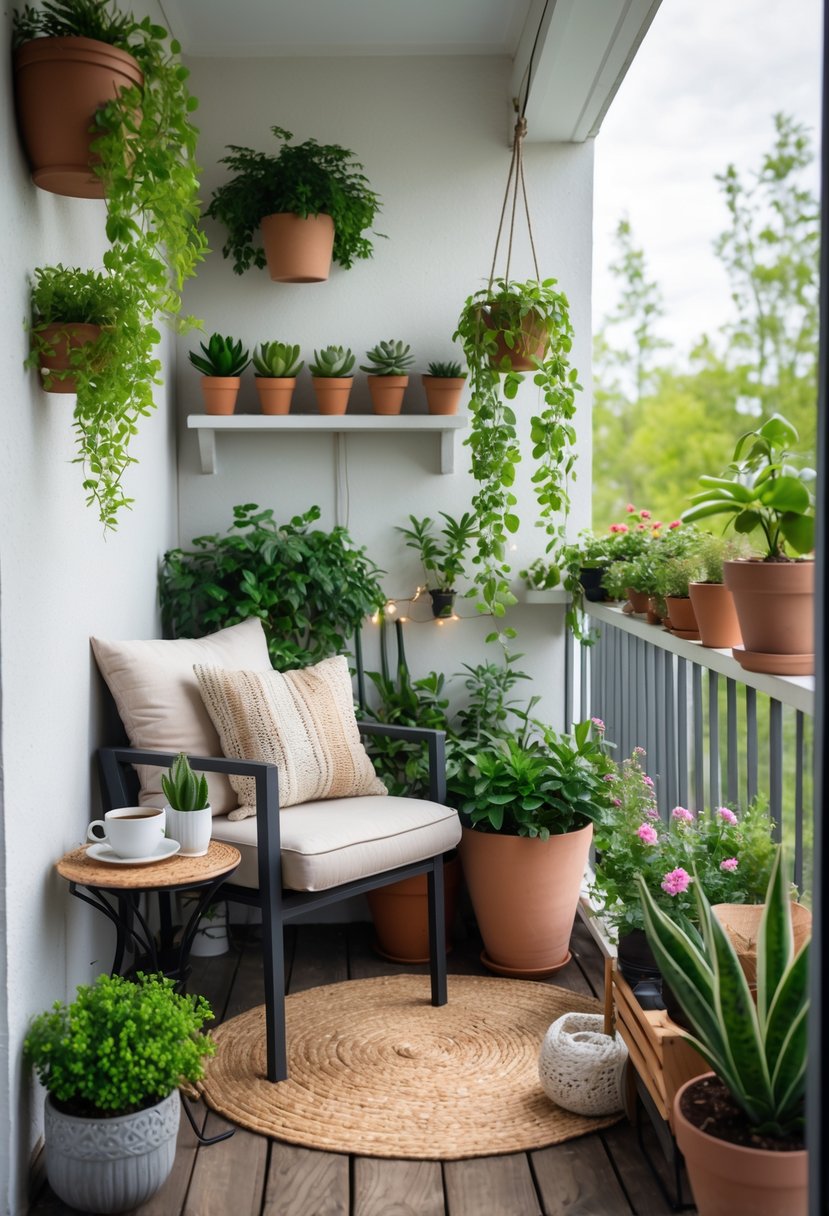
To make a small balcony comfy and stylish, we focus on smart furniture, clear zones, and splashes of color. These details bring balance and make the space fun to use.
Incorporating Functional Furniture
The right furniture can save space and still feel cozy. Wicker is a favorite—lightweight, tough, and it just fits with plants.
A compact chair or loveseat won’t take over the balcony.
Furniture with storage, like benches with hidden spots, keeps things neat. Neutral colors like beige or gray let the plants pop, while bold cushions—maybe something sunny like yellow—add energy and comfort.
A small, foldable table is handy for drinks or extra plants. If we pick weather-resistant materials, our furniture will last through the seasons.
Defining Zones With Plants
Plants can help us carve out different areas without using up more floor space. We can group tall plants in a corner for privacy, and use smaller pots or hanging planters to brighten other spots.
Vertical gardening—wall planters or rail baskets—adds texture and saves space. This way, we can set up a seating area, a mini garden, or even a tiny workspace.
Plants break up the space visually, making it feel bigger and more organized. Mixing leafy greens with flowers keeps things lively.
Adding Bold Colors and Decorative Accents
Color brings personality to the balcony. Bold cushions, throws, or little decor pieces work well with all the greenery.
Yellow cushions, for instance, make everything feel sunnier.
Patterned rugs or colorful pots add interest without making things look crowded. String lights or lanterns bring a cozy vibe and are practical, too.
By mixing neutral furniture with bold color pops, we pull together a space that feels like ours.


Privacy and Ambiance for Relaxation
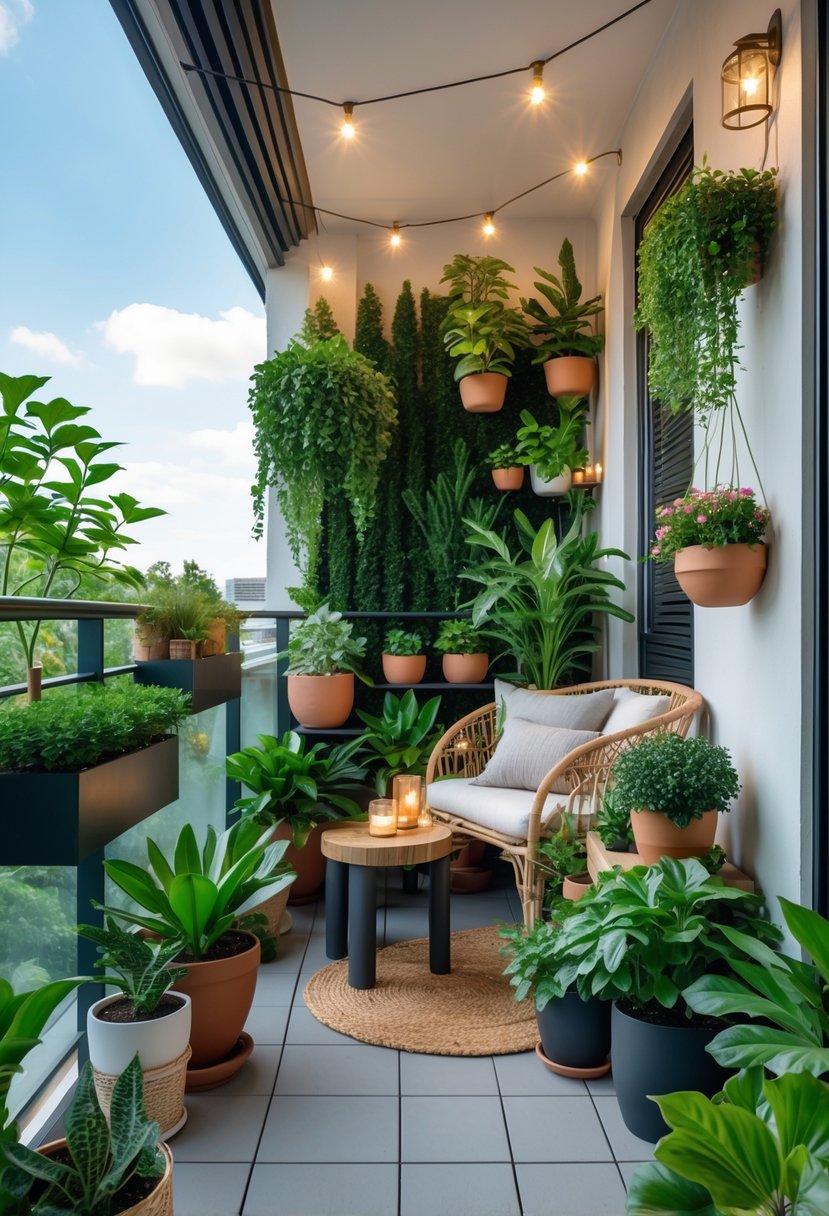
Creating a private, peaceful balcony comes down to smart choices. Plants and lighting help us build a calm, inviting spot that feels tucked away from the city.
Using Plants as a Natural Privacy Screen
Plants make the best natural privacy screens. We can pick tall, dense plants like bamboo or grasses, or use climbing vines to block views and keep things green.
Vertical gardens with cascading plants also cover walls and railings nicely.
Mixing plant heights in pots adds layers of privacy. Ferns, pothos, or ivy soften hard edges and make the space feel enclosed.
All that greenery also helps absorb noise and clean the air, making the balcony a better place to relax.
Installing Bamboo Screening and Decorative Dividers
Bamboo screening offers a practical and good-looking way to boost privacy. It’s light, easy to set up, and just fits right in with tropical or natural styles.
You can place bamboo panels along railings or walls to carve out a cozy corner. That simple touch really changes the feel of the space.
We can also bring in decorative dividers made from wood or woven materials to add texture and privacy. These dividers break up the balcony visually, but they don’t block all the sunlight.
If you mix in some plants with the dividers, you’ll get a layered look. That combo keeps things open but still gives you some seclusion.
Lighting for Romantic and Inviting Spaces
Lighting really makes or breaks the vibe for outdoor evenings. String lights or small lanterns give off a soft, warm glow that feels both romantic and relaxing.
Solar-powered string lights are eco-friendly, and honestly, they’re pretty easy to deal with. You just set them up and forget about them.
Try placing lights along the railings or wrapping them around plants. That little trick highlights your greenery and adds a sense of depth.
Lanterns with candles or LED lights can boost the ambiance and make you want to stay out there just a bit longer. Soft lighting also helps the balcony feel bigger and more welcoming, and it never feels harsh.
Frequently Asked Questions
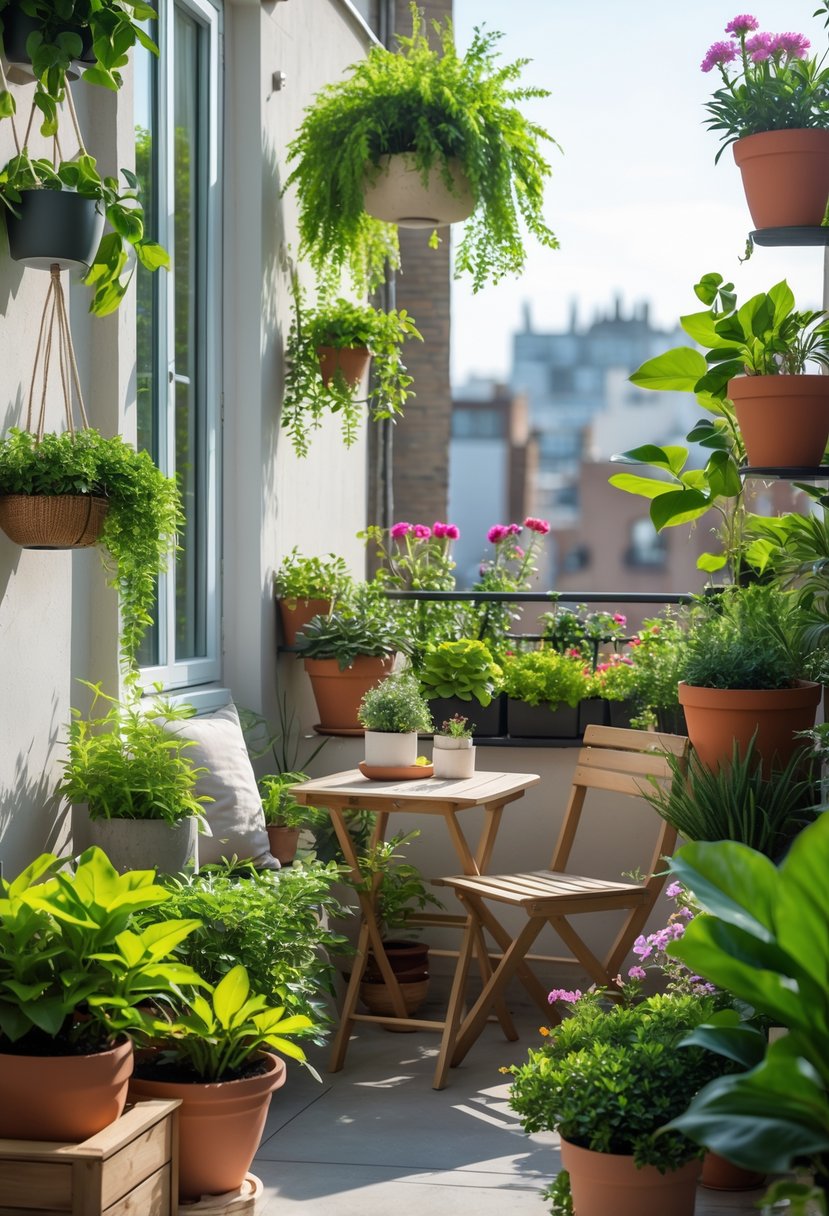
Picking the right containers, plants, and care routines is key to making a small balcony garden work. Using vertical space, making sure you have good drainage, and choosing plants that match your light conditions help you get the most out of a small spot.
What are the best space-saving planters for a small balcony?
Go for vertical planters like wall-mounted containers and hanging baskets to open up floor space. Multi-level plant stands and railing planters also give you more growing area without clutter.
Stackable and modular containers let you change things up as your garden grows. That kind of flexibility just makes life easier.
How can I create privacy on my balcony with plants without taking too much space?
Trellises with climbing plants or vertical living walls do the trick for privacy. Train vines like morning glories or peas to grow up and form natural screens.
Tall, narrow plants—think columnar trees—fit nicely in corners and add height without stealing your floor space.
What are some low-maintenance plants suitable for balcony gardens?
Pick drought-tolerant plants like succulents, snake plants, or spider plants if you want less watering. Mediterranean herbs such as rosemary and thyme are tough and love containers.
If you have more shade, ferns and begonias barely need attention and still do well in low light.
How do I ensure proper drainage for plants in a confined balcony area?
Make sure your containers have drainage holes to stop water from building up. Elevate your pots with small blocks or pot feet to help air flow and let extra water run out.
Using lightweight materials like plastic keeps pots from holding too much moisture. It’s a small change, but it really helps.
Can I grow edible plants or herbs on a small balcony, and if so, how?
Absolutely, you can grow herbs like basil, oregano, and thyme in small pots or railing planters. Compact veggies—think cherry tomatoes or leafy greens—work well in hanging baskets or vertical planters.
Keep edible plants grouped by how much sun they need, and you’ll have a better shot at a healthy harvest.
What lighting conditions should I consider when selecting plants for my balcony?
First, take a look at how much sunlight hits your balcony each day. If your balcony faces south, you’ll probably get a lot of sun—perfect for heat-loving plants like peppers or marigolds.
North-facing or shady balconies don’t get as much light, so you’ll want to try shade-tolerant options such as lettuce, ferns, or begonias. Sometimes the sunlight changes with the seasons, so you might need to move your plants around.