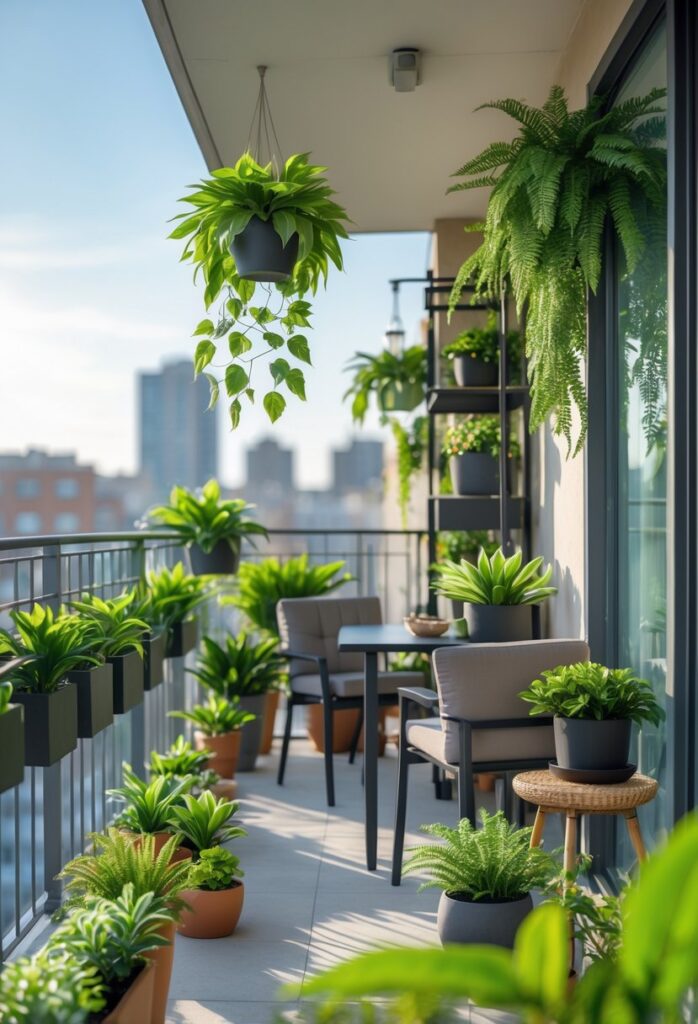
Decorating a balcony with artificial plants is actually a pretty clever way to add some greenery—no watering cans or sunlight worries needed. You can set up a beautiful, low-maintenance outdoor spot that stays fresh all year by picking plants, containers, and a layout that work for you.
Artificial plants bring life and color to even the tiniest balconies. Suddenly, the space feels more welcoming and, dare I say, functional.
When you pick plants that match your style—tropical, modern, or something in between—you can make your balcony feel like a little retreat. Want privacy? Taller plants can help. Mixing up textures keeps things interesting and lets you enjoy a nature-inspired vibe without the usual plant chores.
Benefits of Decorating Balconies With Artificial Plants
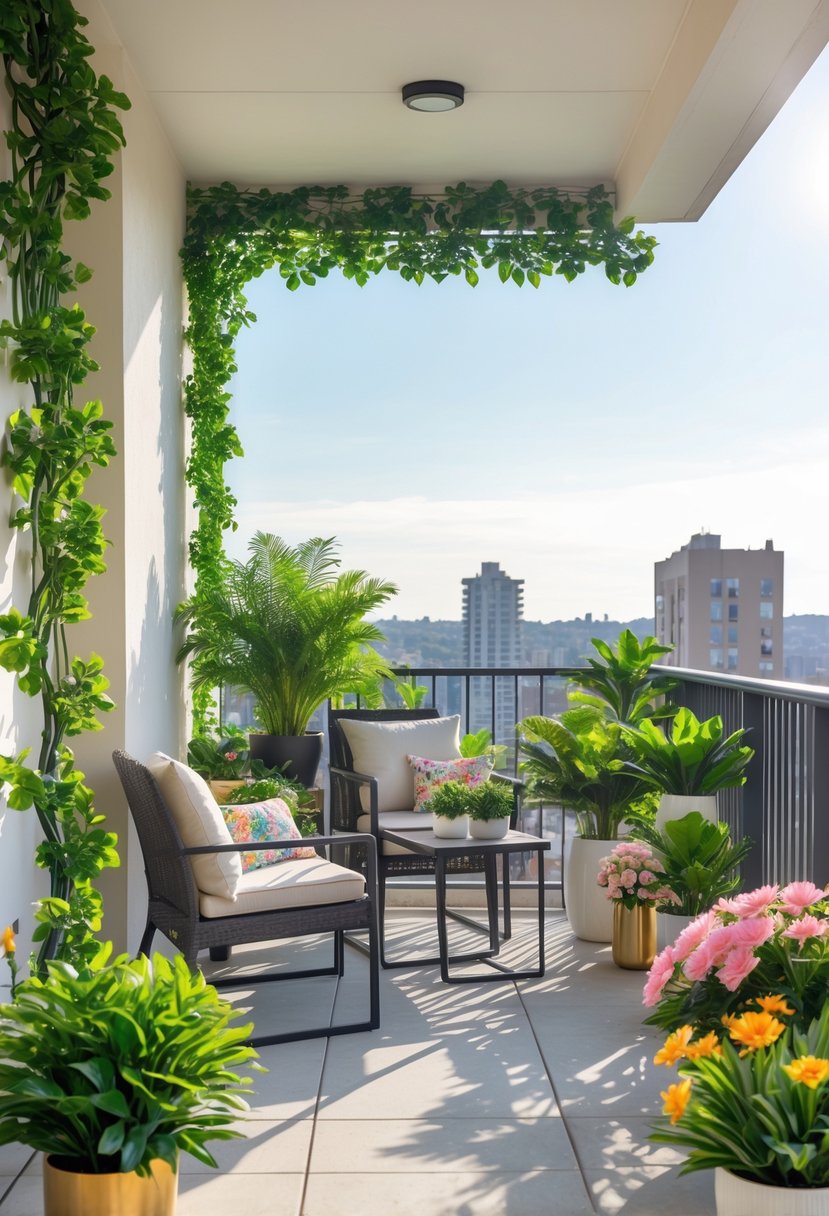
Artificial plants keep your balcony looking good with almost zero effort. No matter the season, these plants stay vibrant, weather whatever comes their way, and fit right in whether your balcony is big or tiny.
Year-Round Visual Appeal
Artificial plants hold their color and shape all year. Real ones can fade or drop leaves, but these stay fresh and lively in the summer heat or winter chill.
You won’t need to replace them as often since they don’t die back or get patchy. There’s a huge variety of realistic options, so your balcony can look great every single day.
Low Maintenance and Durability
The best part? Artificial plants barely need any care. Forget watering, pruning, or fertilizing—just set them up and enjoy. No dirt mess, either, so things stay neat.
Manufacturers use materials that resist fading and weather damage. These plants can handle rain, wind, and harsh sun. They keep looking good and hold up for years.
Options for All Spaces
You’ll find artificial plants in all sorts of sizes and styles, so any balcony can be spruced up. Small spots? Try potted succulents or hanging vines to save floor space.
If you have more room, tall shrubs or faux trees can create privacy and a lush feel. Vertical planters and wall-mounted options help maximize every inch, especially when space is tight. You get to design your balcony your way, no matter how big or small it is.


Choosing the Best Artificial Plants for Your Balcony
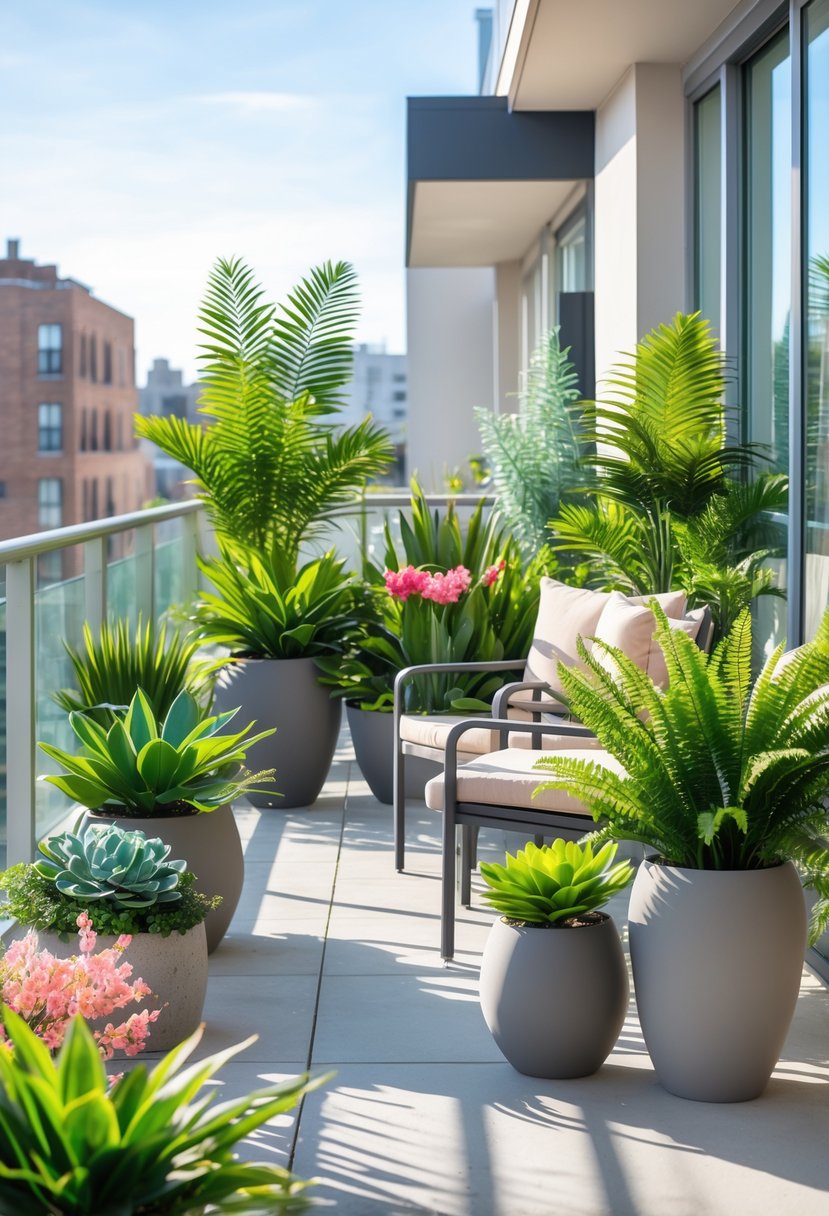
When you’re picking artificial plants, focus on quality, durability, and style. You want your balcony to feel inviting, not fake.
Find plants that actually look real, can handle the outdoors, and fit your balcony’s size and vibe.
Assessing Realism and Quality
Looks matter. Go for artificial plants that pass for the real thing. Ferns, ivy, and boxwood usually have great detail and texture.
Check the leaf shapes and colors. Good artificial plants use silk or fine plastic, so they keep their shape and color longer.
Little imperfections and varied leaf sizes make plants like geraniums and artificial flowers seem more natural. Avoid plants that look too shiny or identical—they tend to scream “plastic.”
UV and Weather Resistance
Balconies get plenty of sun, wind, and rain, so weatherproofing is a must. Pick plants treated for UV resistance so they don’t fade in the sun. This matters even more if you like bold plants like palm trees or bright geraniums.
Look for sturdy pots and heavier bases for bigger plants so they don’t tip over on windy days. Check the labels for water and weather resistance. Outdoor fabrics or coated plastics will last longer and keep your balcony looking fresh.
Selecting the Right Plant Types
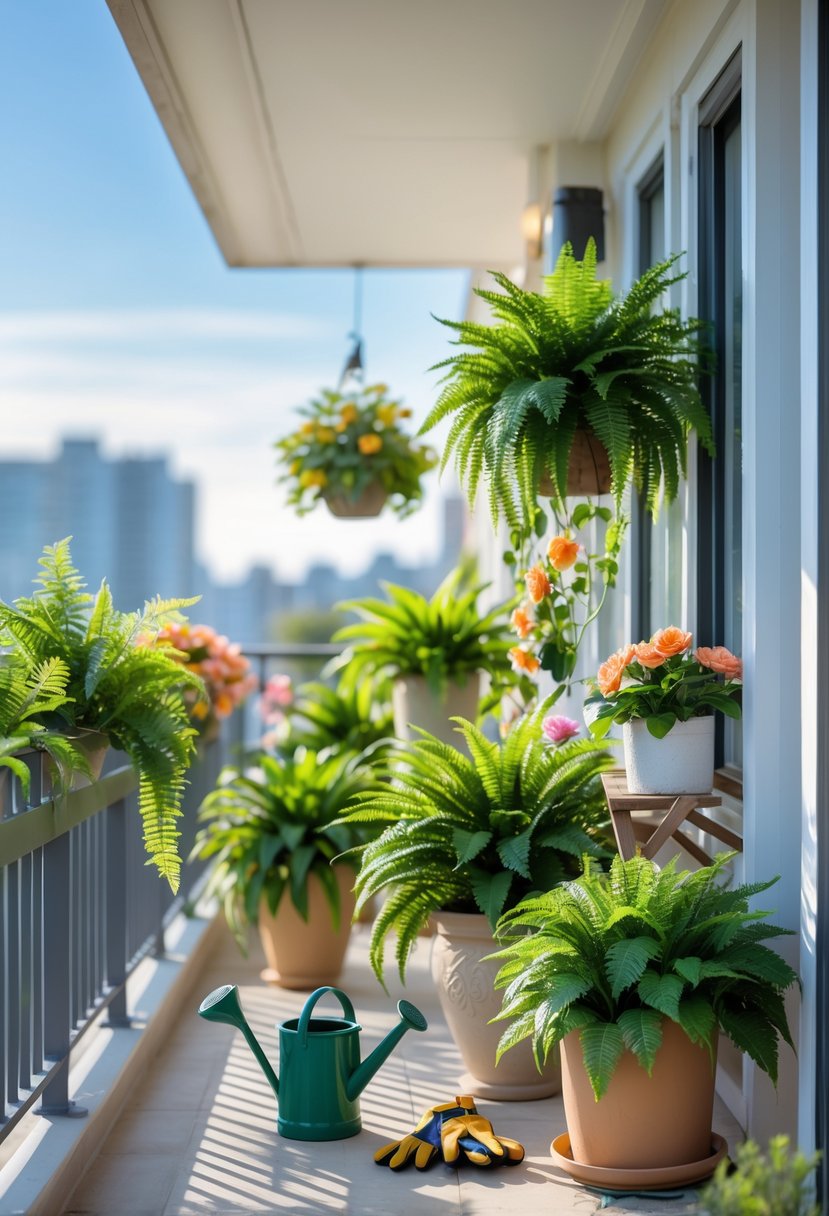
Your balcony’s size and style help decide which plants work best. For small balconies, compact options like artificial succulents, ferns, or ivy are ideal. Hanging silk geraniums or trailing ivy add greenery without crowding the floor.
If you have more space, try boxwood shrubs, topiaries, or faux palm trees for privacy and a bold look. Mixing plant types—soft ferns with spiky grasses, for example—adds texture.
Stick with neutral greens for a calm vibe, or toss in some colorful geraniums if you want more energy.


Creative Ways to Arrange Artificial Plants
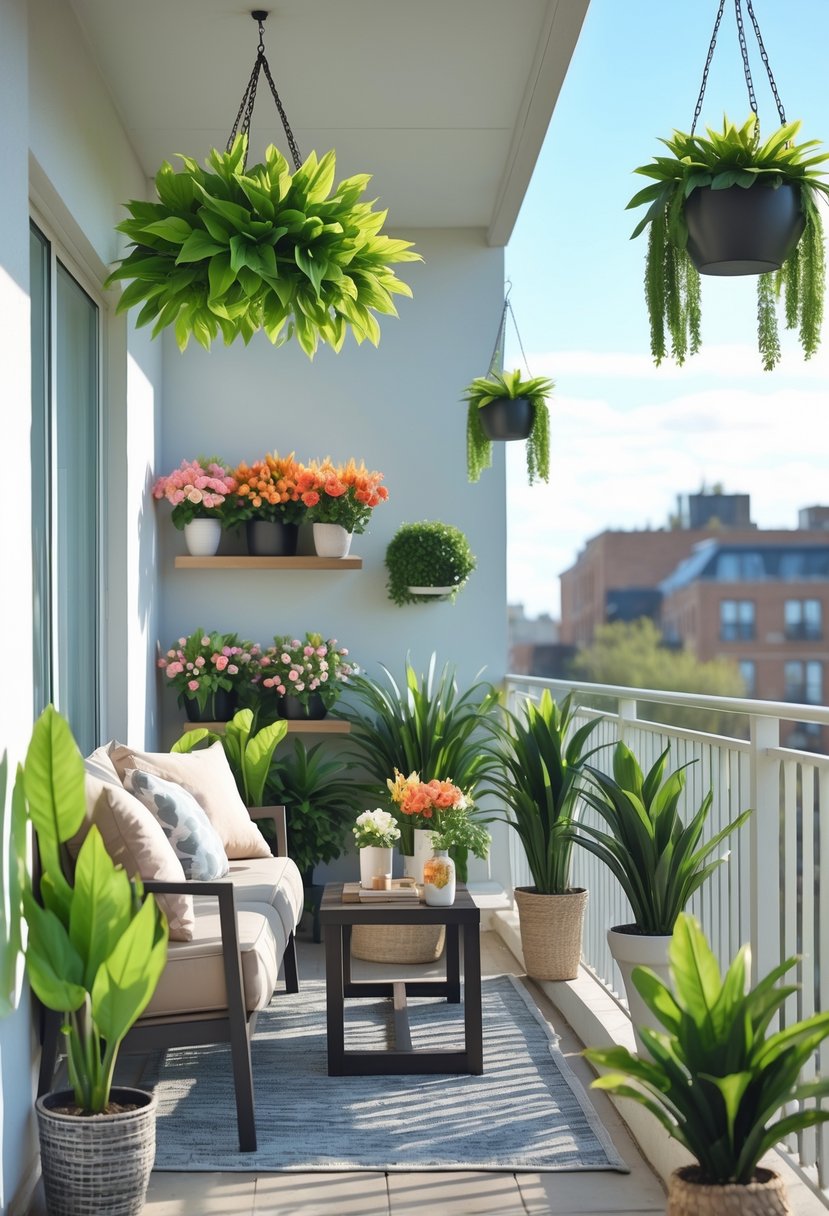
Arranging artificial plants isn’t just about plopping them down. The right containers, layers, and color combos can make your balcony feel way more inviting. It’s surprisingly easy to make artificial greenery look like a thoughtful part of your decor.
Using Planters and Pots
The planters and pots you pick really shape your balcony’s vibe. Match the container size to each plant and your space. Tall faux bamboo or trees need sturdy, bigger pots. Smaller succulents or flowers fit great in compact planters or hanging baskets.
Consider materials, too. Lightweight plastic or resin is easy to move, but ceramic or terracotta brings a classic touch. Decorative pots—maybe geometric for a modern look or rustic for something cozy—let you show off your style.
Layering for Depth and Texture
Layering plants at different heights adds depth and looks more natural. Start with tall plants like silk orchids or faux olive trees in corners or at the back. Fill the middle with medium-height ferns or lavender. Place small succulents or grass mats up front or on tables.
Plant stands, shelves, or wall planters help you use vertical space. Mixing textures—glossy leaves with soft fronds—makes the area feel richer and less flat.
Balancing Colors and Heights
Balancing color and height keeps things from feeling cluttered or boring. Pick a color scheme that fits your furniture and taste. Want a bright look? Mix vibrant geraniums with green ivy. Prefer calm? Go for boxwood and succulents in soothing greens.
Group plants in odd numbers for a more natural feel. Don’t put all the tall ones together; spread out different heights. Shorter plants or flowers on tables break up tall lines and make the space easier to move around.


Incorporating Hanging and Vertical Elements
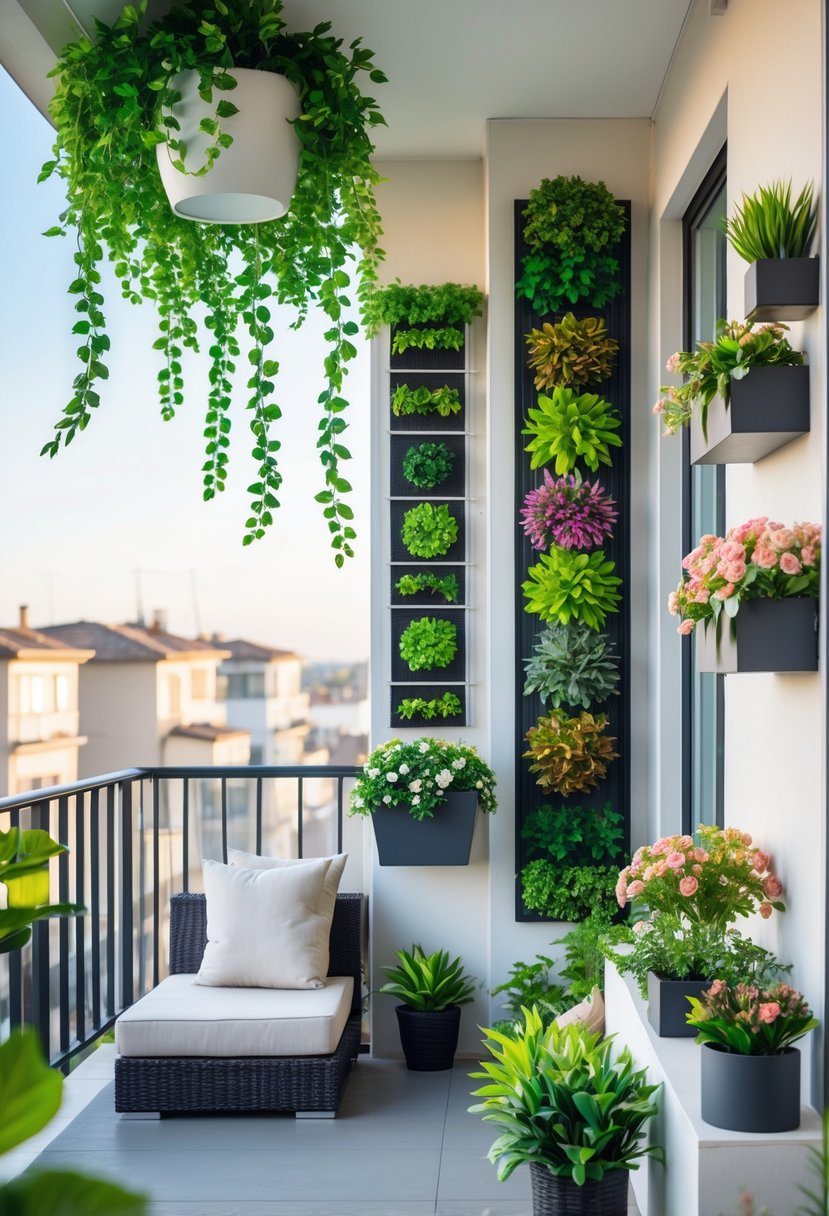
Hanging and vertical elements save floor space and bring greenery to eye level and above. These ideas give your balcony a fresh look by using walls and ceilings you might otherwise ignore.
Hanging Baskets for Visual Impact
Hanging baskets are a simple way to add greenery without losing floor space. Hang artificial plants like silk geraniums or ferns from the ceiling or railings. This draws the eye upward and adds color.
Mix up basket sizes and materials—woven, metal, whatever you like—for more texture. Hang baskets at different heights for a cascading effect. Just make sure the plants are UV-resistant so they don’t fade.
Hanging baskets work especially well for adding pops of color or softness, making even small balconies feel lush.
Vertical Gardens on Balcony Walls
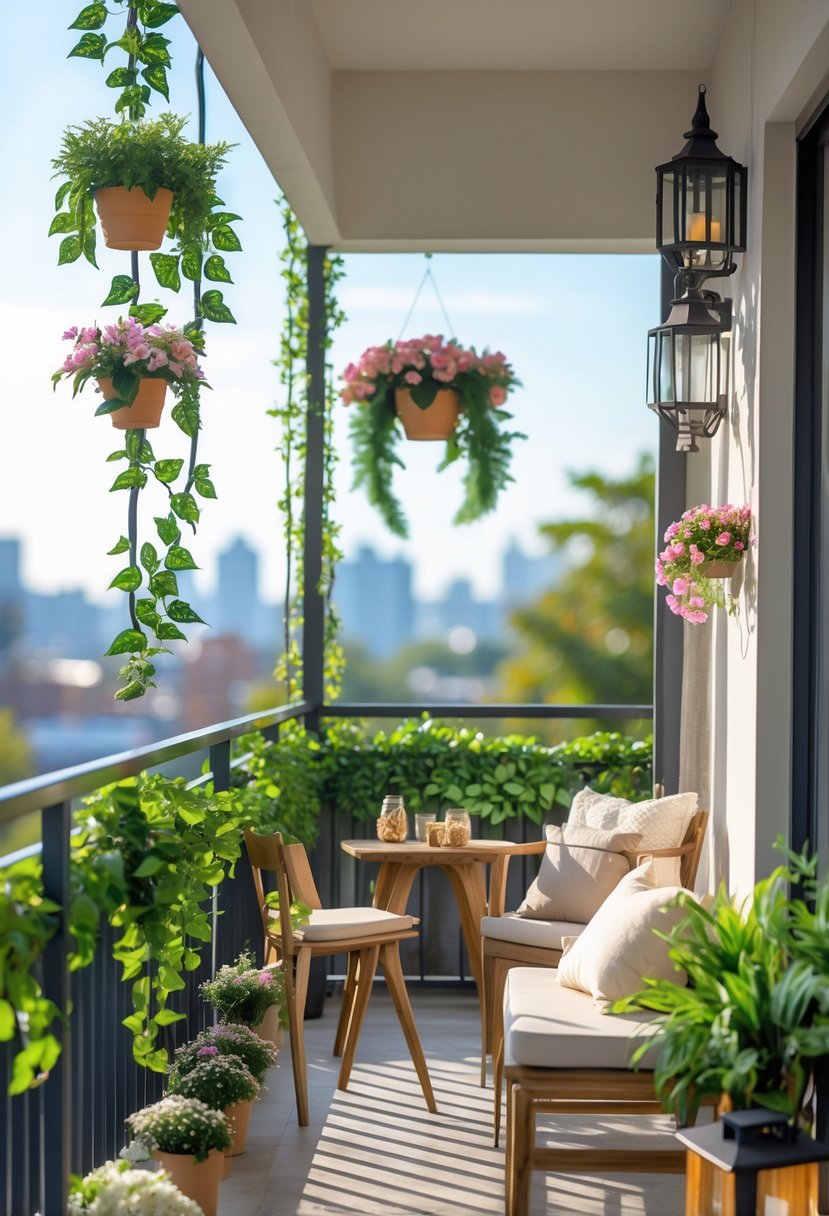
Vertical gardens can totally transform a bare wall. Use trellises or panels to hang artificial vines like ivy, or arrange several potted faux plants together.
Cover a whole wall or just a section for privacy and a cozy feel. Artificial ivy vines look dense without any trimming or watering.
Mix up leaf shapes and colors for more interest. Vertical gardens let you pack in greenery, even if your balcony is small.
Wall-Mounted Plant Displays
Wall-mounted displays are a neat way to show off artificial plants. Shelves, racks, or grid panels let you arrange pots of succulents, flowers, or grasses however you like.
Combine different sizes and textures for a balanced look. Use sturdy hooks or brackets to keep things safe, especially if it gets windy.
This setup saves space and makes cleaning or rearranging easy. You can highlight your favorite plants and really make the space your own.


Enhancing Balcony Space With Ground and Grass Features
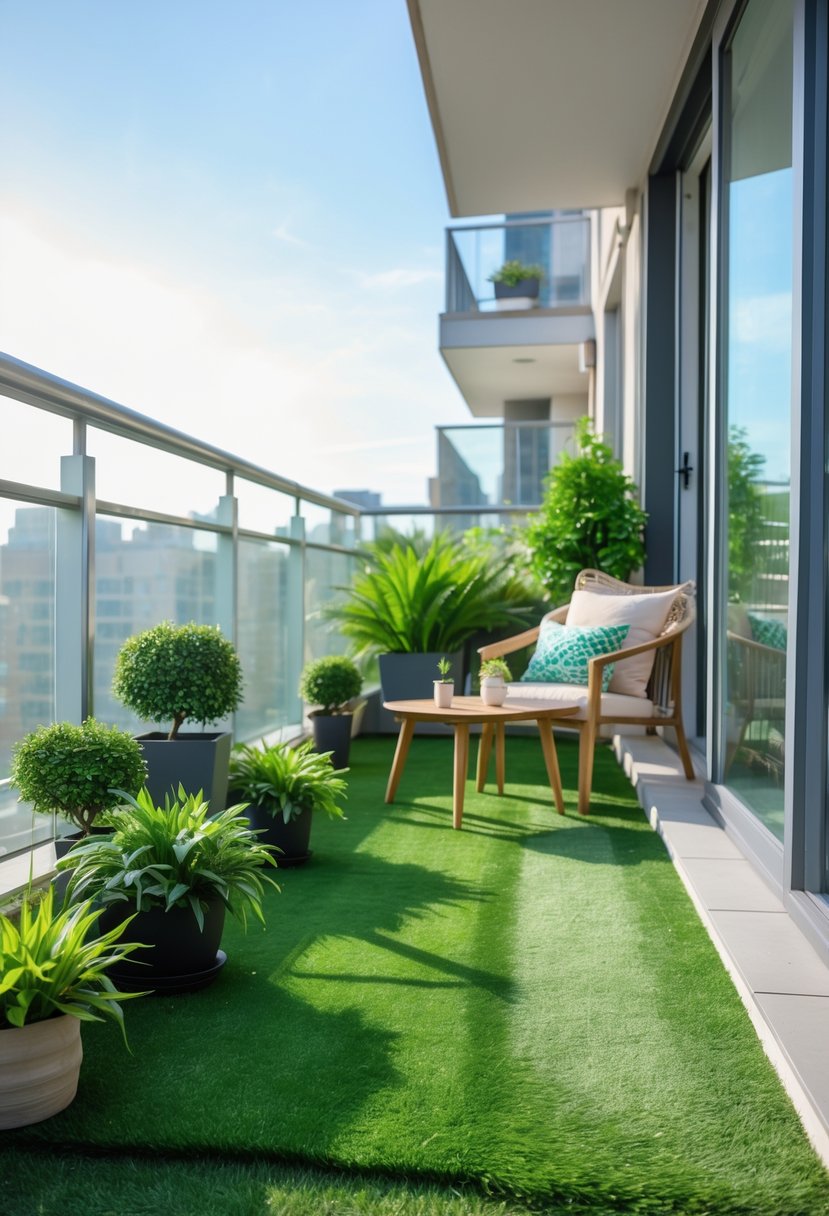
If you want your balcony to feel cozy and natural, ground coverings are a great place to start. Artificial grass and grass mats add comfort and style without much work. They can even make your balcony look bigger and give you a soft, green base for plants and furniture.
Artificial Grass for Flooring
Artificial grass flooring makes a hard balcony surface feel lush and green. It’s tough, weather-resistant, and stays vibrant without any mowing or watering. Perfect if you’re busy or living in an apartment.
The soft feel is nice underfoot, so hanging out on the balcony becomes more appealing. It even helps with noise and brings a bit of nature to city living.
Look for grass that’s easy to install and has good drainage—you don’t want water pooling. Pair it with simple furniture or cushions for a comfy, pulled-together look.
Grass Mats and Green Corners
Grass mats let you add green without covering the whole floor. They’re great for defining areas like a seating nook or a play spot, and they mix well with artificial plants.
Try boxwood or similar green panels in the corners for vertical interest. This combo adds privacy and depth.
Layer different greenery for contrast. Maybe put a grass mat under a group of planters, or near a lounge chair with boxwood panels behind. It adds dimension without making things feel crowded.


Personalizing Balcony Décor With Accessories
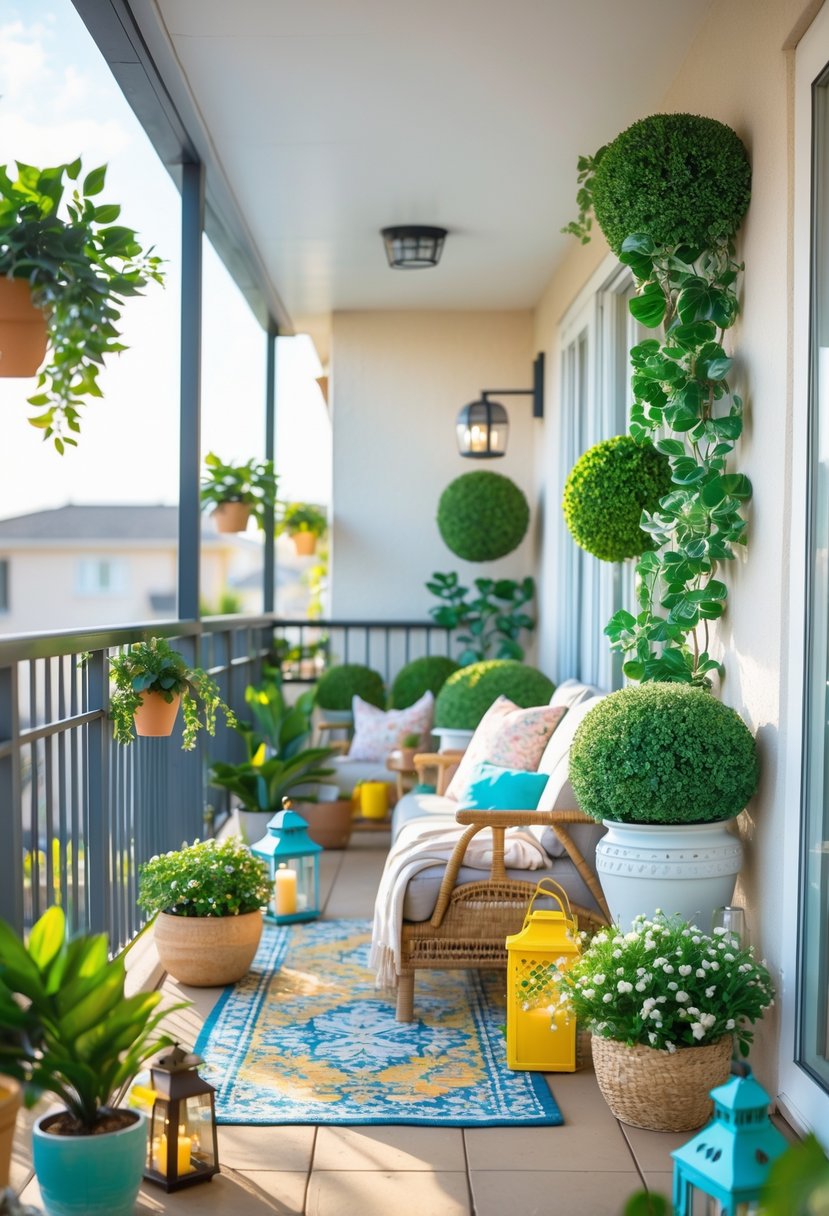
Accessories make your balcony feel unique and welcoming. They pull the look together and add comfort and function.
Decorative Ornaments and Accents
Ornaments give your balcony personality. Pick out small sculptures, ceramic figures, or colorful pots that match your style.
Patterned cushions, woven baskets, or wall hangings add texture and keep things interesting. Just don’t go overboard—let the plants stay the focus.
Choose weather-resistant pieces since balconies get plenty of sun and rain. Lightweight or secure items prevent accidents. Natural tones with a few bright pops usually look best.
Lighting for Ambiance
Good lighting turns your balcony into a cozy retreat at night. String lights, lanterns, or solar LEDs add a warm glow and highlight your plant displays.
Clip-on lights or small spotlights can spotlight a topiary or hanging basket. This adds depth and makes things look magical after dark.
Solar lights are easy to set up and energy-efficient. Adjustable lighting lets you switch from bright for gatherings to dim for relaxing.
Integrating Outdoor Furniture
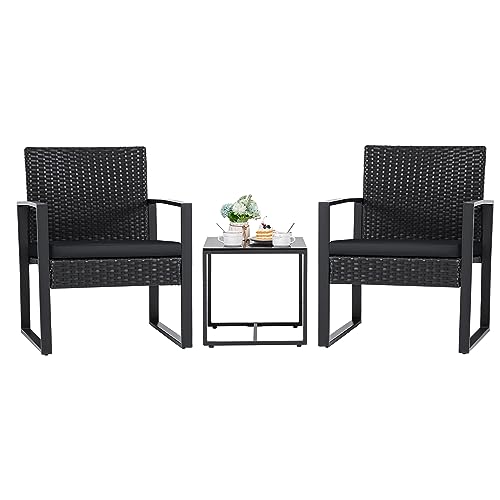
The right furniture can turn your balcony into a cozy, stylish spot. I usually go for space-saving picks like foldable chairs, benches with hidden storage, or a small table that doesn’t swallow the whole area.
I always choose materials that stand up to the weather—metal, treated wood, or synthetic wicker. It’s just smart, since it protects your stuff and keeps everything looking tidy.
Matching your furniture colors with artificial plants and accessories pulls the look together. Tossing in some comfy cushions or a throw makes the space feel even more inviting and matches your vibe.


Maintenance Tips for Outdoor Artificial Plants
If you want your outdoor artificial plants to look fresh, you’ve got to clean them regularly. A bit of seasonal care goes a long way to avoid fading, dust, and weather damage.
Cleaning and Longevity
I find it works well to clean artificial plants about once a month—or after a storm. Grab a soft cloth or feather duster to get rid of dust on the leaves.
For a deeper clean, mix some warm water with a little mild soap. Gently wipe the leaves and stems with a cloth or sponge.
Give them a rinse with a gentle spray from the hose. Skip the high-pressure water, bleach, or anything too harsh—they’ll mess up the color and material. Let the plants dry out completely before putting them back outside.
If your plants don’t have UV protection, spray them with a clear UV-resistant coat when they’re new. That helps keep the colors from fading in the sun.
I always look for UV-resistant and weatherproof artificial plants since they last longer and handle the outdoors better.
Seasonal Touch-Ups
When winter’s coming, I bring in any artificial plants that aren’t frost-proof. After moving them inside, I clean and dry them well to keep mold and mildew away.
I wrap the plants in bubble wrap or cloth so they hold their shape. Then I stash them in a cool, dry spot—plastic bins with silica packs work great for keeping moisture out.
In spring, I check for damage. If I find loose stems, I fix them up with weatherproof glue or a zip tie.
I like to refresh the pots by fluffing up the soil, mulch, or rocks, so everything looks tidy and stable.


Frequently Asked Questions
I try to pick artificial plants that actually look real and fit the balcony’s size. I also pay attention to basic care, making sure they can handle the weather and stay put. Privacy with plants? You can get creative there.
What are the best types of artificial plants to use for balcony decoration?
I’d say faux boxwood shrubs work well for structure and privacy. Silk geraniums add a splash of color, and artificial lavender gives a calm, relaxed vibe.
Succulents look great if you’re into modern style. Ivy vines and bamboo fit nicely in corners or vertical spaces.
How can I create a natural-looking arrangement with artificial plants on my balcony?
Try mixing plants of different sizes and textures. Use tall ones in the back for depth and smaller ones in front for detail.
A combo of glossy and matte leaves adds some variety. Layering at different heights makes the whole thing feel more lively and real.
Are there specific care instructions for maintaining artificial plants outdoors?
Just dust and clean them gently to keep them looking good. Stay away from harsh chemicals.
Check for any damage now and then. If you keep them outside, make sure the pots and anchors are still sturdy.
Can artificial plants withstand various weather conditions when used on a balcony?
If you pick UV-resistant and weatherproof materials, your plants will handle the sun, rain, and wind. The good ones don’t fade or lose their shape easily.
High-quality materials really do last longer and keep looking nice, even with changing weather.
What are creative ways to display artificial plants for balcony privacy?
You can use tall artificial trees or shrubs to block out nosy neighbors. Hanging ivy vines or making a green wall with topiary and some lights adds a cool touch.
Bamboo in planters or on a trellis creates a natural screen, and it barely takes up any floor space.
How can I securely install artificial plants on my balcony to ensure they do not fall or blow away?
Try using heavy pots or weighted bases to keep your plants steady. Lightweight containers just don’t cut it.
You can secure the plants with brackets, or even anchor them right to the railings if possible. If you’re hanging plants, go for strong hooks and fasteners that can handle a bit of wind—no one wants a surprise from a falling plant!