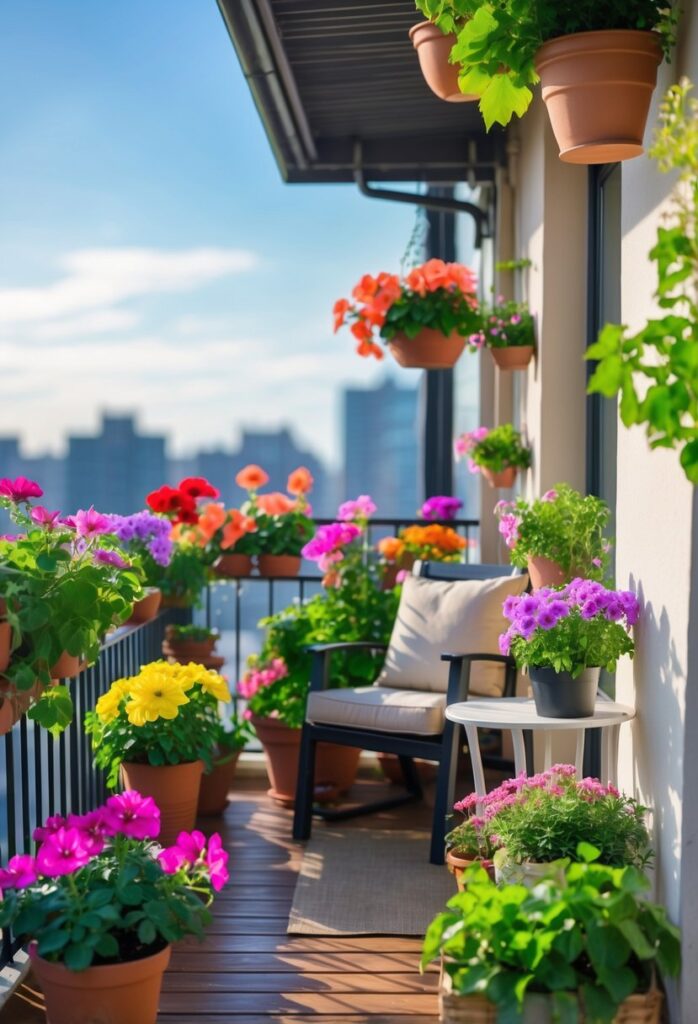
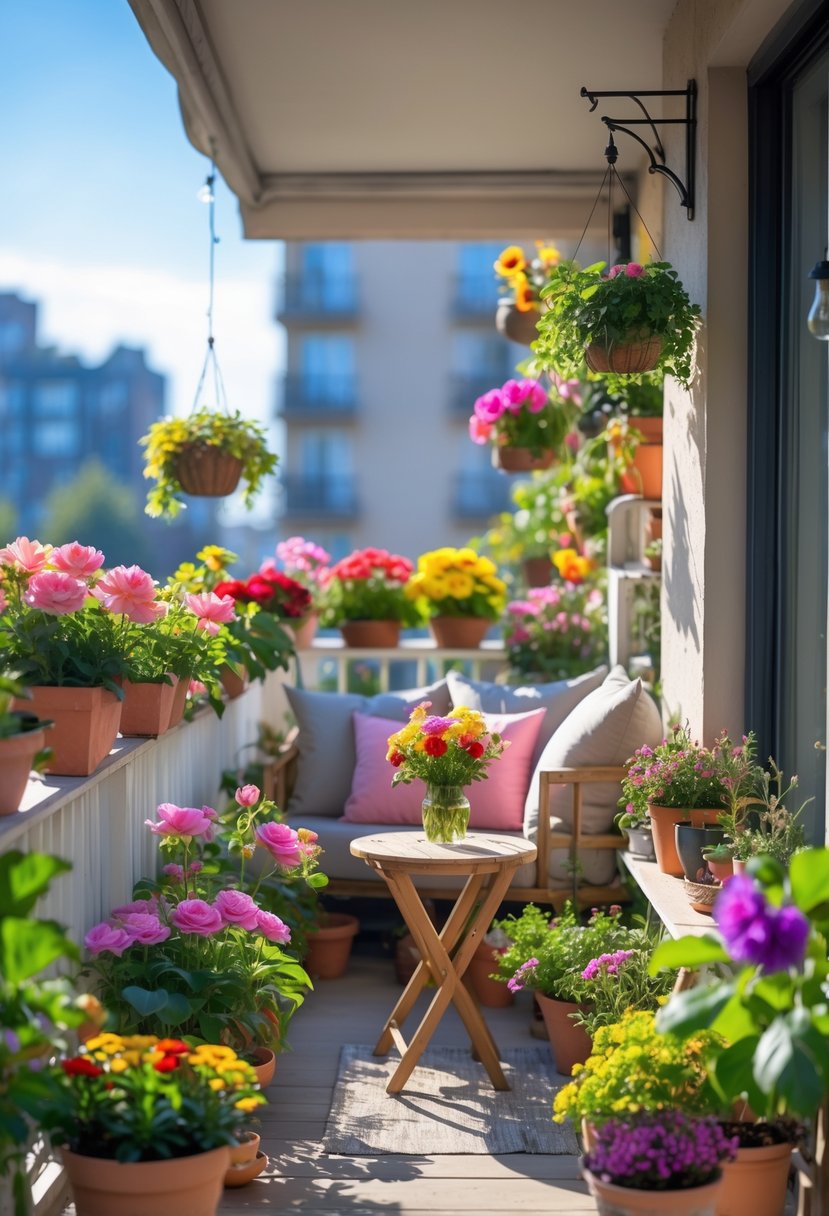
Decorating a balcony with flowers brings life and color to even the smallest outdoor space. You can mix pots, hanging planters, and vertical gardens to create a lush, inviting area—no matter how tight the space is.
Choosing the right mix of plants, based on your balcony’s size and sunlight, really makes things both beautiful and easy to care for.
Flowers don’t just make a balcony prettier—they create a peaceful spot to relax. Fragrant blooms like lavender and jasmine can fill the air with wonderful scents.
A bit of planning and some creative touches can turn any balcony into your own little green oasis in the city.
Let’s get into some practical ideas to help you mix colors, textures, and plant types, no matter your style or balcony size. Even the tiniest balcony can become a vibrant space full of freshness and natural beauty with just a bit of effort.
Choosing the Best Flowers for Your Balcony
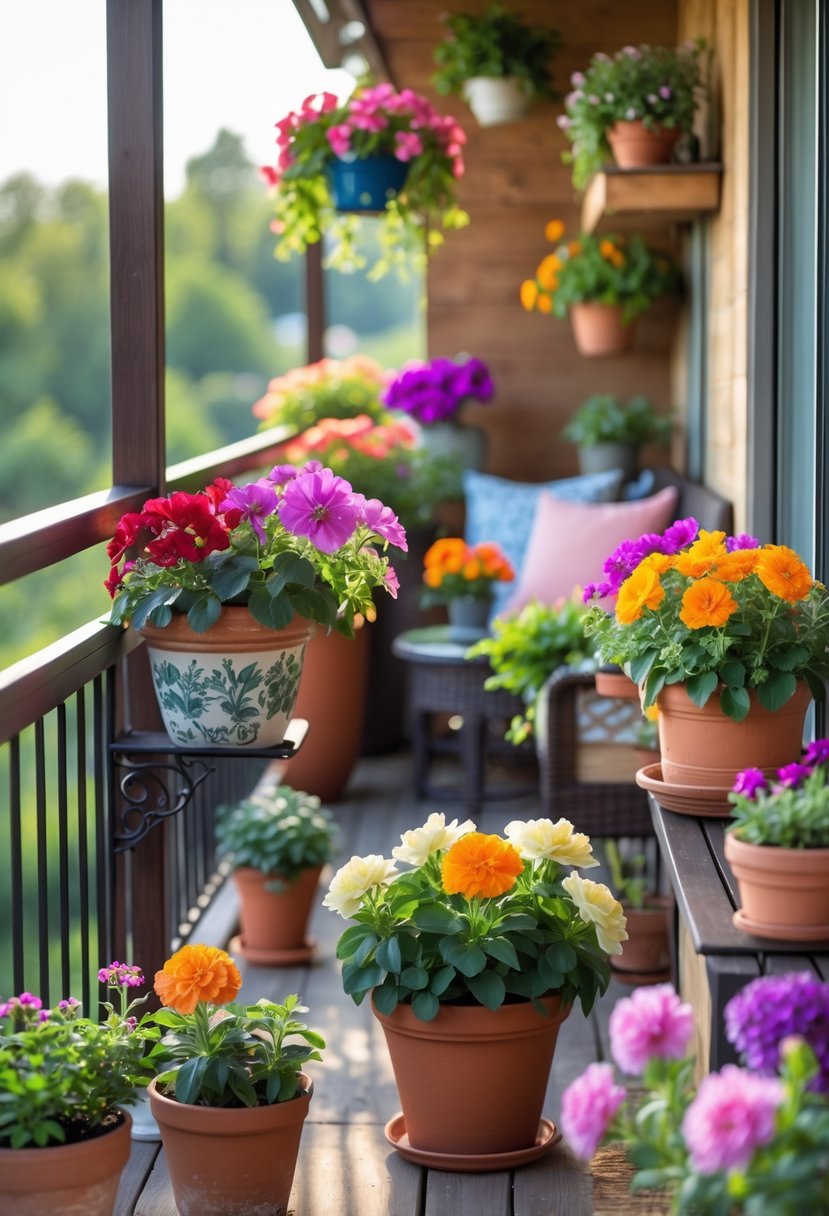
Picking the right flowers depends on your balcony’s light and space. Focus on plants that match your light, size, and scent preferences for a vibrant, manageable garden.
Assessing Sunlight and Environment
First, figure out how much sunlight your balcony gets. If you have a sunny spot, go for plants that love the sun—petunias and geraniums are great choices.
These flowers need bright light and regular watering to really thrive. For shady or semi-shaded balconies, begonias and ferns handle indirect light and add a nice green touch.
Climate matters too. In warmer places, heat-tolerant flowers like lavender or jasmine do well. Cooler climates? Try pansies—they can handle the chill.
Top Balcony Flower Varieties
Some flowers just do better in containers and bloom longer. Petunias are a classic pick, with their colorful flowers and trailing growth—perfect for pots and hanging baskets.
Geraniums are another reliable option. They need moderate watering and bring bright, clustered blooms to sunny balconies.
Begonias work well if your balcony gets partial shade, offering color without needing full sun.
Marigolds help with pest control, and snapdragons add vertical color. These plants are easy to care for and brighten up any balcony.
Flowers for Small Balconies
If you’re short on space, choose flowers with compact growth or trailing habits. Lobelia and calibrachoa are great—they spill over the edges of containers and don’t take up much room.
Pansies are another good choice for small pots, offering bright, cheerful flowers in cooler weather.
Skip large plants or those that need deep soil. Stick with varieties that grow well in shallow containers and can be grouped for a full look without crowding things.
Fragrant Flower Selections
Scented flowers make your balcony more enjoyable. Lavender’s calming aroma is a favorite and it loves sunny spots.
Jasmine brings sweet-smelling flowers and thrives on warm balconies with plenty of light.
Roses add classic beauty and fragrance, but they do need more space and care.
Fragrant flowers also attract bees and butterflies, making your balcony feel alive and connected to nature.

Container and Planter Ideas
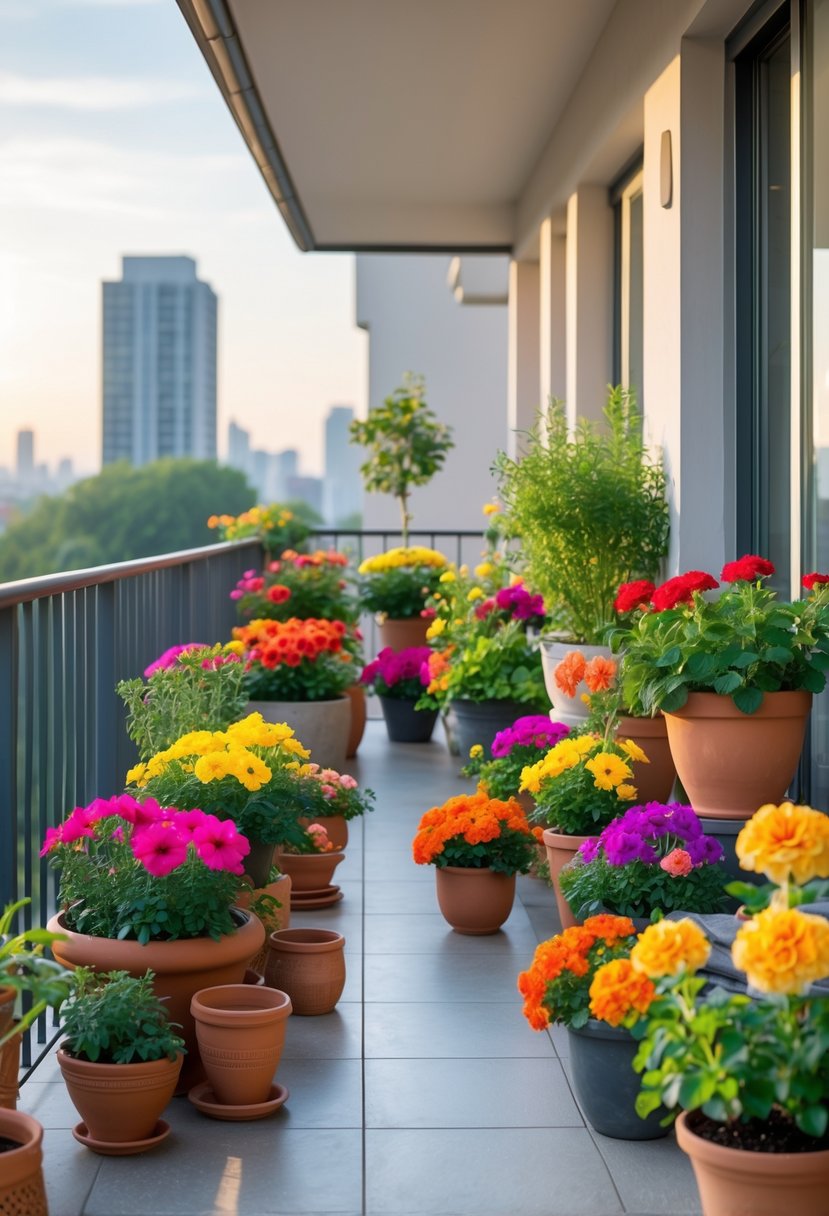
The right containers make a huge difference when you decorate with flowers. Some help you use vertical space, others keep plants organized or healthy.
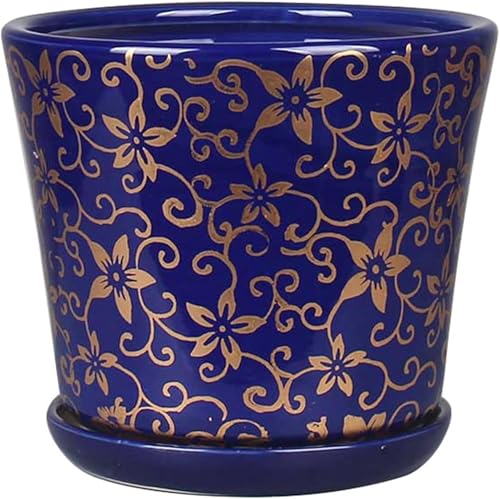
Pick pots with good drainage and materials that fit your style. That’ll help your flowers grow better and look great.
Hanging Planters for Lush Displays
Hanging planters free up floor space and add depth to your balcony. You can hang them from the ceiling or railings.
Lightweight options like plastic or wire baskets lined with coir make watering easier.
Trailing plants—think petunias, ivy, or lobelias—look fantastic here, spilling over the edges for a lush vibe. Just remember, hanging planters dry out faster, so you’ll need to water them more often.
Self-watering pots can help if you’re busy or forgetful.
Creative Flower Boxes
Flower boxes add color along balcony rails or windows. Plastic, wood, or metal boxes all work, depending on what matches your style and how durable you want them.
Rail planter boxes usually come with hooks for easy setup, while window boxes can sit on ledges or the floor. Flower boxes let you grow several plants in a row, making them great for both flowers and herbs.
They keep things tidy and maximize your space.
Choosing the Right Pots and Containers
Think about your balcony’s size and your plants’ needs when picking pots. Plastic pots are light and hold moisture well.
Terracotta pots drain better and suit succulents. Fabric grow bags are breathable and work for veggies with deeper roots.
Drainage is crucial—always pick pots with holes to let extra water out. For tiny spaces, narrow or vertical containers help you fit more plants without clutter.
Check your balcony’s weight limits, too. You don’t want to overload it.


Vertical and Space-Saving Gardening Solutions
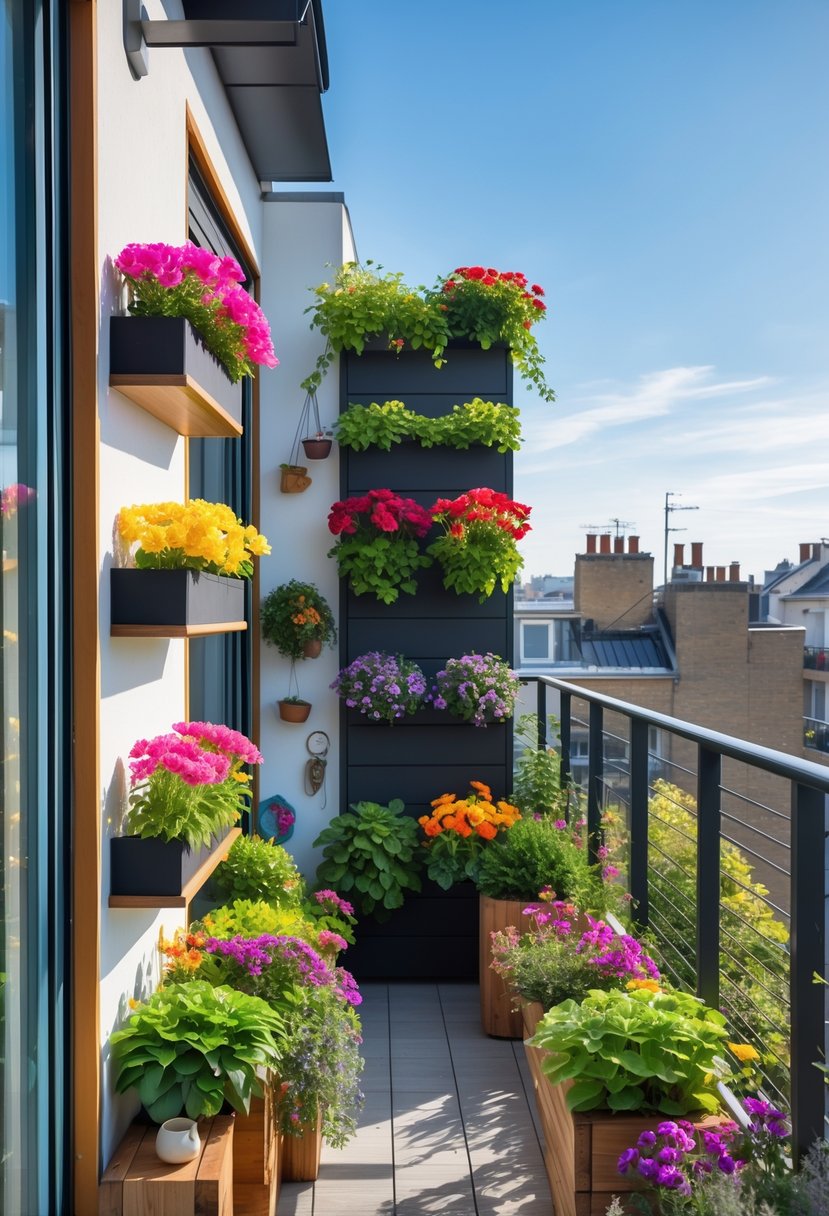
If you’re short on space, get creative with height and structure. Growing flowers upwards and using compact containers lets you fit more plants without crowding your floor.
Vertical Gardening Techniques
Vertical gardening means growing flowers on walls, fences, or railings with vertical supports. You can use trellises for climbing flowers like morning glories or clematis—they grow up naturally and add color without taking up much room.
Vertical pocket planters made of fabric or plastic are another option. They hold soil and plants in layers on a wall, making your garden look tidy and efficient.
Try recycled materials too—old pallets or plastic bottles stacked vertically work surprisingly well for flower displays and help reduce waste.
Using Tiered Planters
Tiered planters act like shelves for your plants. They stack pots in levels, giving each flower sunlight and air.
Put them against a wall or in a corner. Their vertical design saves floor space and makes use of height.
They’re perfect for small flowers like pansies, petunias, or marigolds. If they’ve got wheels, you can move them around for the best light.
Wall-Mounted Flower Arrangements
Wall-mounted flower arrangements turn blank walls into blooming displays. Attach planters directly to the wall, railing, or balcony fence.
Lightweight containers keep things safe and easy to manage. Self-watering pots are a lifesaver if you don’t want to water every day.
Mixing different flower types in modular wall panels lets you create your own colorful designs. Plus, keeping the floor clear leaves room for furniture or just walking around.


Color Schemes and Arrangement Tips
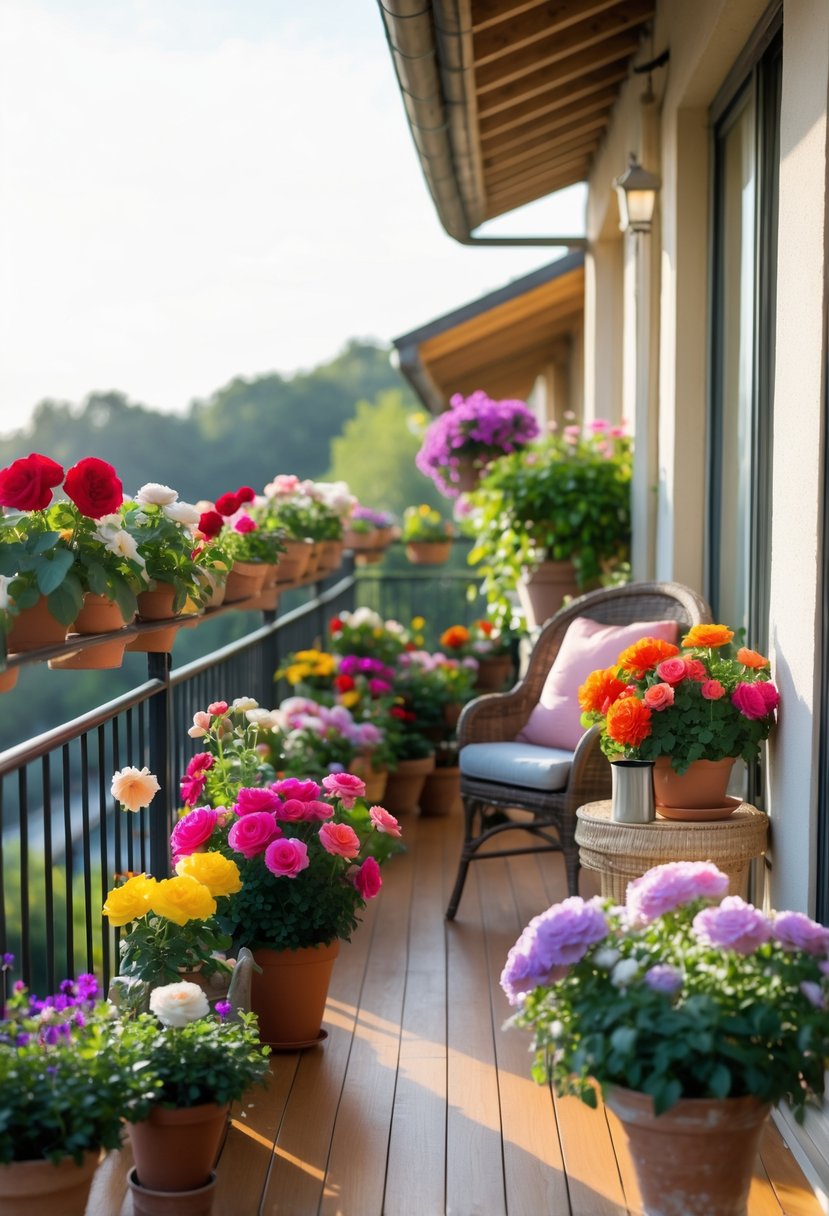
The right color choices and arrangements can make your balcony pop. Focusing on color combos, picking flowers for each season, and playing with patterns helps you create a balcony that’s both stylish and enjoyable.
Combining Colors Effectively
Pick colors that work well together or create contrast. Complementary colors—like yellow and purple—make flowers stand out.
If you want a calmer vibe, go for a monochromatic scheme with different shades of one color.
Mixing warm colors like reds, oranges, and yellows brings energy. Blues, purples, and greens feel cooler and more relaxed.
Bright colors can make small balconies look more lively and spacious.
Use color theory to group flowers with similar tones or create contrast for visual impact. This trick makes your balcony look bigger and more balanced.
Seasonal Flower Arrangements
Choose flowers that do well each season to keep your balcony fresh all year. In spring, tulips, pansies, and daffodils add cheerful color.
Summer calls for heat-lovers like petunias and geraniums. For fall, chrysanthemums and asters bring in warm reds, oranges, and golds.
In winter, hardy plants like cyclamen or ornamental kale survive the cold and keep things bright.
Switching flowers with the seasons means less maintenance and a balcony that always looks its best.
Balcony Flower Patterns
Patterns help you arrange pots and plants in a neat way. Mirroring plants on either side of a focal point (symmetry) creates balance.
Matching pots or repeating flower types adds to this organized look.
You can alternate colors or sizes for more interest, like red and white flowers along the railing. Vertical setups, such as stacked pots or trellises, maximize space and draw eyes upward, giving your balcony more depth.
Designing a Cozy and Inviting Balcony
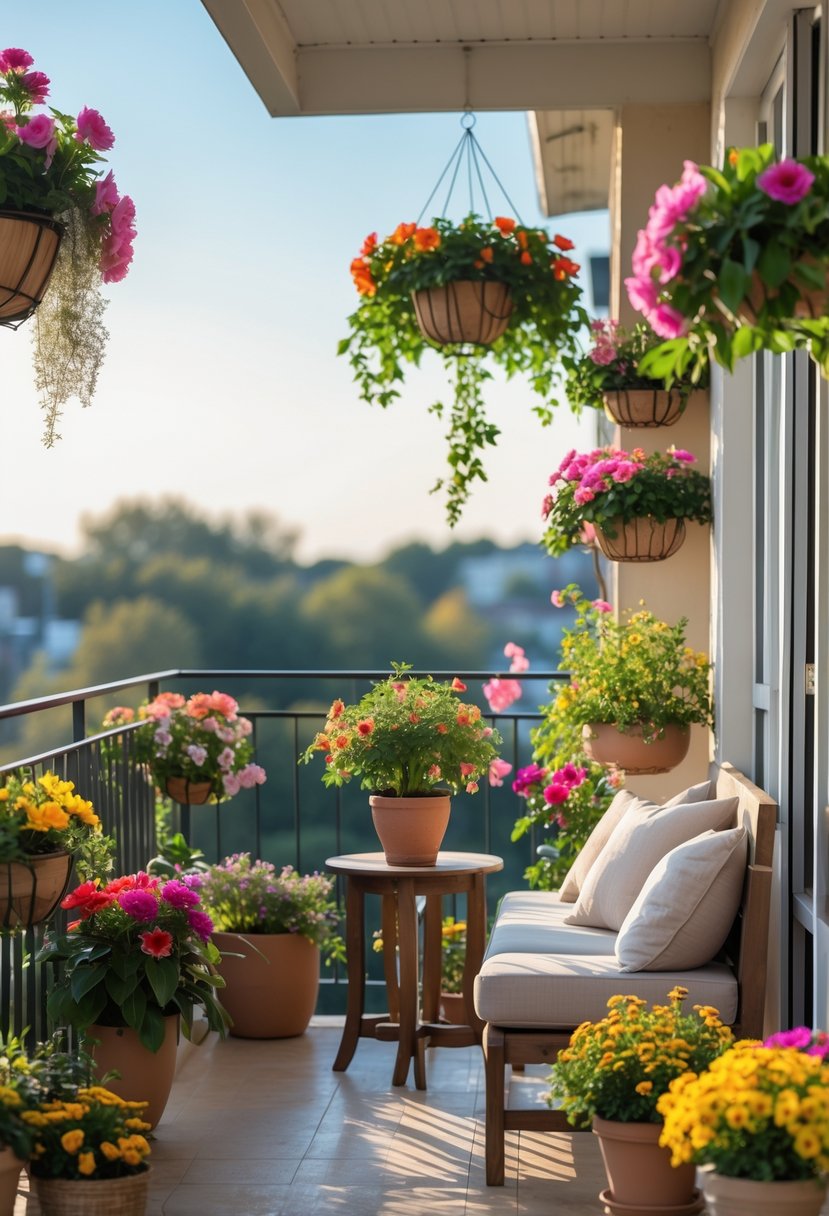
A cozy balcony needs the right mix of flowers, furniture, and lighting. You want a space that feels warm and welcoming, but still fits your outdoor area’s size and style.
Adding personal touches and focusing on comfort really makes a difference.
Integrating Flowers with Furniture
Think about how your flowers and furniture work together. Use vertical gardens or rail planters to save space and keep flowers visible without crowding your seating.
Small tables or folding chairs fit well in tight spaces and let you enjoy your blooms up close.
Pick pots that match your furniture—rustic wood for a cozy feel, or sleek modern planters for a contemporary look. Hanging pots add greenery above eye level, freeing up floor space.
Grouping plants in clusters gives a lush, natural vibe without making the balcony feel packed.
Lighting and Decorative Accents
Lighting changes everything at night. String lights or lanterns add gentle warmth, while candles in holders give a soft, flickering glow.
Decorative accents like colorful cushions, patterned rugs, and throws make things feel cozy and personal. Go for materials that can handle the outdoors but still look inviting.
Small decorative objects—ceramics, basket planters, or macramé hangings—add the final touch and show off your style.
Creating a Relaxing Atmosphere
Comfort is the heart of a relaxing balcony. Soft seating with lots of pillows invites you to sit and unwind among the flowers.
Poufs or low stools keep things casual and flexible.
Fragrant plants like lavender or jasmine fill the air with soothing scents. Place them where the breeze can spread their aroma as you relax.
Layering different textures and colors in your décor adds depth, making the balcony a peaceful spot to spend time.


Maintaining and Caring for Balcony Flowers
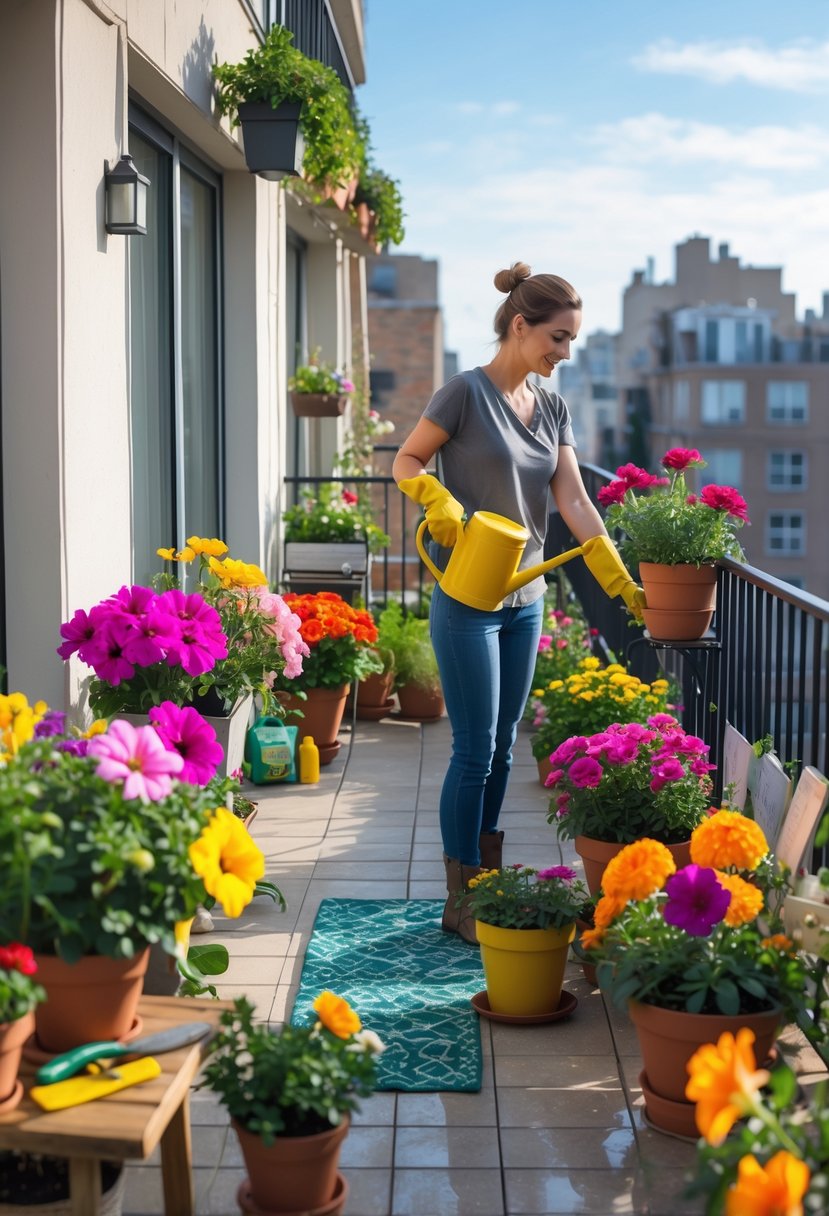
Keeping your balcony garden healthy takes some care—mainly watering, feeding, pest control, and seasonal attention. These steps help your flowers stay fresh and vibrant all year.
A bit of regular attention can turn a dull balcony into a lively outdoor retreat.
Watering and Fertilizing Basics
Watering flowers the right way is crucial. Check soil moisture daily—balcony pots dry out faster than garden beds.
Water when the top inch of soil feels dry. Don’t overwater, or you might cause root rot.
For feeding, use balanced, water-soluble fertilizers made for flowering plants. Feed every two weeks during the growing season for strong blooms.
Slow-release fertilizers work well in pots, giving nutrients bit by bit.
Always use pots with drainage holes to avoid water buildup. Watch how many plants you put in each container so you don’t overcrowd them, which can mess with their water and nutrient needs.
Pest and Disease Prevention
We check our plants often for any signs of trouble—discolored leaves, holes, or anything that looks off. Aphids, spider mites, and whiteflies show up the most.
When pests appear, we reach for gentle insecticidal soap or neem oil spray instead of harsh chemicals. That way, we protect helpful bugs and our own skin. We try to keep the balcony tidy by clearing out dead leaves and debris, which helps prevent diseases.
Good airflow makes a difference. We space our pots apart so air can move around, and we avoid spraying water right on the leaves. That helps keep mold and mildew away.
Seasonal Care and Replanting
Balcony flowers need different care as the seasons change. In spring and summer, we water and fertilize more. Taking off old flowers encourages new ones to bloom.
When it gets colder, we cut back on watering and stop fertilizing. Some plants can’t handle frost, so we bring them inside or swap them for cool-weather types.
We like to replant with fresh flowers every year. Picking plants that fit our balcony’s sunlight and climate keeps things healthy and colorful.
Adding Edibles and Unique Plants
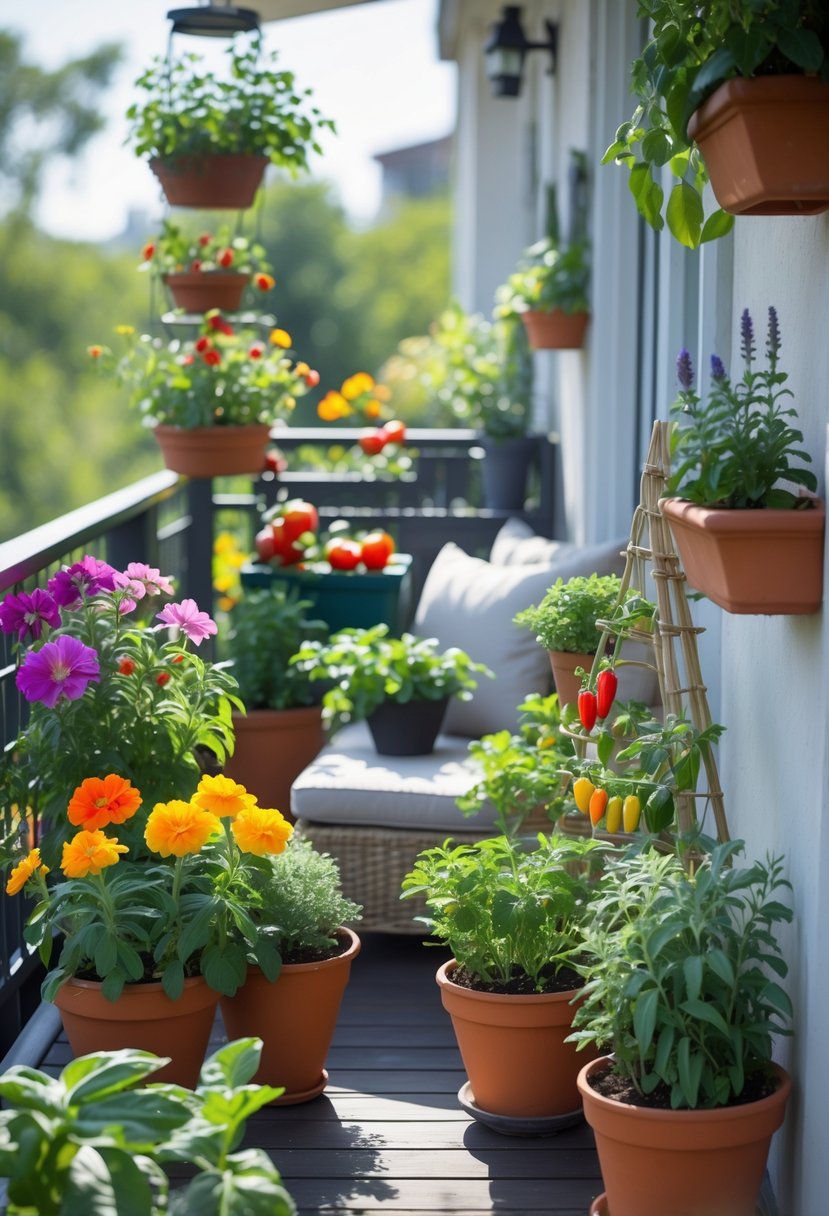
A balcony garden isn’t just about looks—it can be useful too. We love adding edible plants, like herbs and peppers, because they’re tasty and easy to grow in pots. Unique plants, like ferns, bring a soft, lush vibe to the space.
Growing Herbs and Peppers
Growing herbs on the balcony feels practical and honestly, pretty satisfying. Basil, thyme, and mint are our go-to choices. They fit nicely in small pots and need at least a few hours of sunlight every day. We water them regularly, but make sure the soil drains well so their roots don’t get soggy.
Peppers, especially smaller kinds like chilis or mini bell peppers, thrive on balconies. They want warmth, plenty of sun, and steady moisture. Medium or big pots work best, and we use fertilizer with extra potassium and phosphorus to help them along.
Adding herbs and peppers not only brightens up the balcony, but it also makes cooking at home more fun.
Incorporating Ferns and Uncommon Species
If our balcony stays shady, ferns are a solid choice. They like filtered light and a bit more humidity. Boston and maidenhair ferns are favorites for their deep green color and soft look.
Sometimes we go for something different, like edible flowers or rare tropical plants, if the weather allows. These can be a bit fussy—they might need misting or special soil. Still, choosing unique plants gives the balcony a personal touch and makes it feel like a little escape.
Mixing in ferns and unusual plants keeps things interesting and adds depth to the garden.
Frequently Asked Questions
We focus on picking flowers that work in small spaces and planning for blooms in every season. Creative containers help us fit more plants and show off our style. Arranging for sunlight, setting up good watering habits, and protecting plants from pests and weather are all important.
What are the best flower varieties for small balconies?
We usually go for compact, tough flowers like petunias, impatiens, and pansies. They don’t need much room and bring in lots of color.
How can I create a seasonal blooming plan for my balcony?
Plant spring bulbs like tulips at the right time, then switch to summer annuals such as zinnias or marigolds. When fall comes, mums and asters keep things looking lively.
Are there any creative container ideas for balcony flower arrangements?
Vertical wall planters, hanging baskets, and railing pots help us make the most of our space. We like mixing different containers—ceramic, metal, terracotta—for extra texture.
What is the ideal way to arrange flowers for optimal sunlight exposure?
We put sun-lovers right along the balcony’s edge, where they get the most light. Shade-loving plants do best tucked into corners with less direct sun.
Can you suggest watering strategies for potted flowers on balconies?
We try to water early in the morning or in the evening to save moisture. Checking the soil with a finger helps us avoid watering too much and keeps roots healthy.
How do I protect balcony flowers from pests and harsh weather conditions?
I usually reach for natural pest repellents like neem oil. Checking the plants often helps me catch any damage early.
If the weather turns harsh, I move the pots to more sheltered spots. Sometimes I’ll throw up a bit of shade cloth to shield the flowers from intense sun or heavy wind.