A French balcony combines a fixed glass panel with floor-to-ceiling doors, creating an outdoor viewing experience you can’t physically step onto. You’ll see expansive scenery through the glazed barrier while staying inside your cabin.
This design solves a structural problem: it delivers scenic views without requiring the extra support a true balcony demands.
River ships favor this approach because it maximizes sightlines while minimizing the exterior space needed.
Understanding the trade-offs between cabin types reveals which option serves your travel style best.
What Exactly Is a French Balcony?
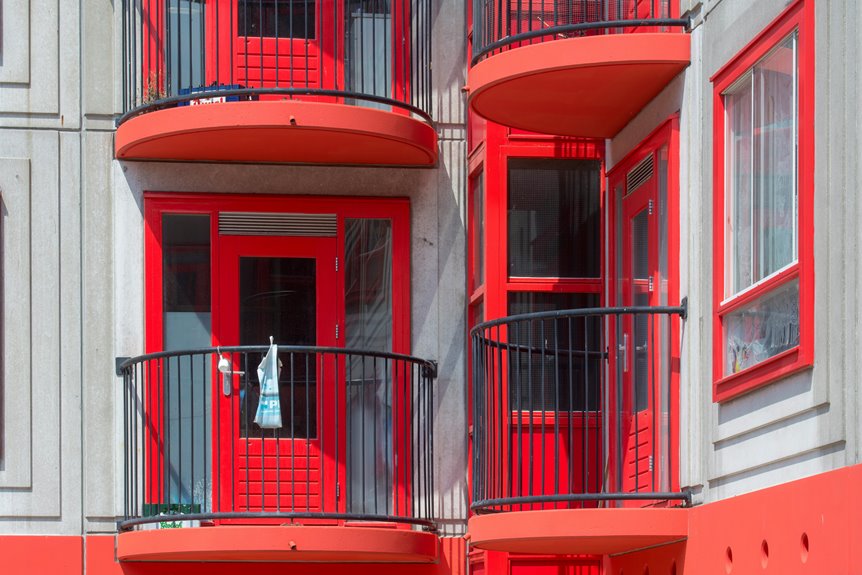
What sets a French balcony apart from a traditional balcony? You’ll find that a French balcony, also called a Juliet balcony or porte-fenêtre, functions as a non-walkable barrier rather than a usable outdoor space. Floor-to-ceiling doors or windows define this design, paired with a safety railing or glass panel fixed directly to your home’s façade. The glass panel provides protection without requiring a separate platform you can step onto. This setup creates multiple benefits. You gain panoramic views and natural light flooding your interior spaces. The design maintains safety standards while maximizing your sightlines. Unlike traditional balconies that demand considerable square footage, French balconies solve space constraints effectively, making them ideal for apartments and river cabins.
What You See From a French Balcony
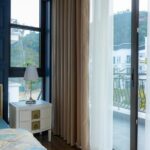
From a French balcony, how much of the outside world actually comes into view? You’ll experience expansive outdoor scenery through large glazed panels without stepping outside. The design creates an indoor-outdoor view that connects your interior space to nature’s landscape.
Experience expansive outdoor scenery through floor-to-ceiling glass panels, connecting your interior space to nature’s landscape without stepping outside.
French balconies define the viewing experience through these key features:
- Unobstructed scenery visible through floor-to-ceiling glass panels that frame the landscape
- Safety railing or glass barrier that maintains security while preserving sightlines
- French doors connecting interior and exterior, often positioning your bed toward the view
- Enhanced ventilation options where upper windows lower for fresh air circulation
River cruise cabins frequently feature variants like Open-Air Balconies, offering wider openings than traditional designs. The glass panels do their job because they simultaneously protect occupants and maximize visual access. This arrangement solves the space limitation problem effectively.
Why River Ships Choose French Balconies
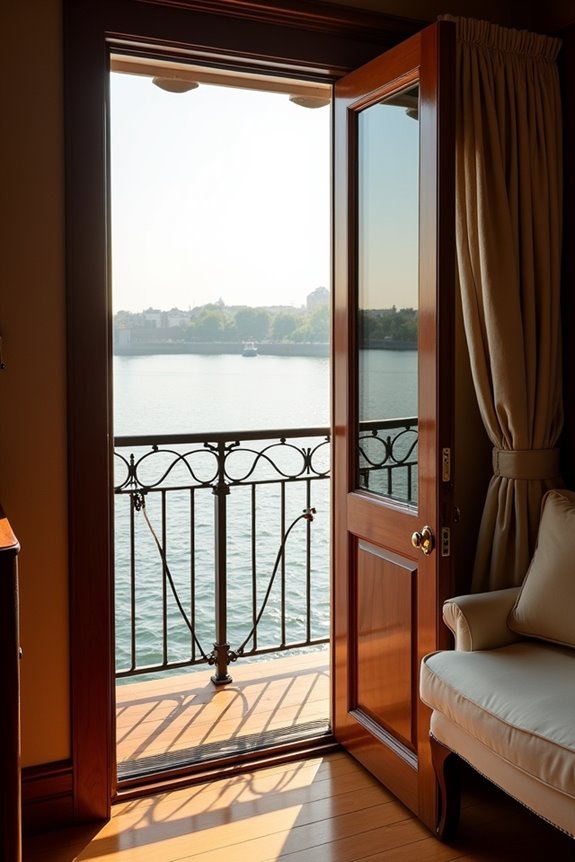
River cruise ships embrace French balconies because they solve a fundamental design challenge: narrow vessel widths don’t accommodate traditional walk-out decks. You gain an exterior view without sacrificing precious interior space. The floor-to-ceiling doors create this balance by opening fully to fresh air while a fixed railing or glass panel prevents stepping outside.
River ships prioritize cabin density and comfort. French balconies define efficient layouts that maximize passenger capacity on constrained hulls. The doors do the heavy lifting because their opening behavior provides ventilation and connection to your surroundings without requiring structural depth.
This design choice reflects practical river navigation requirements. You experience outdoor connection through these glass barriers, and river ships deliver what their architecture allows. The solution works because it respects both your comfort and the vessel’s operational constraints.
Full Balconies vs. French Balconies: What’s the Real Difference?
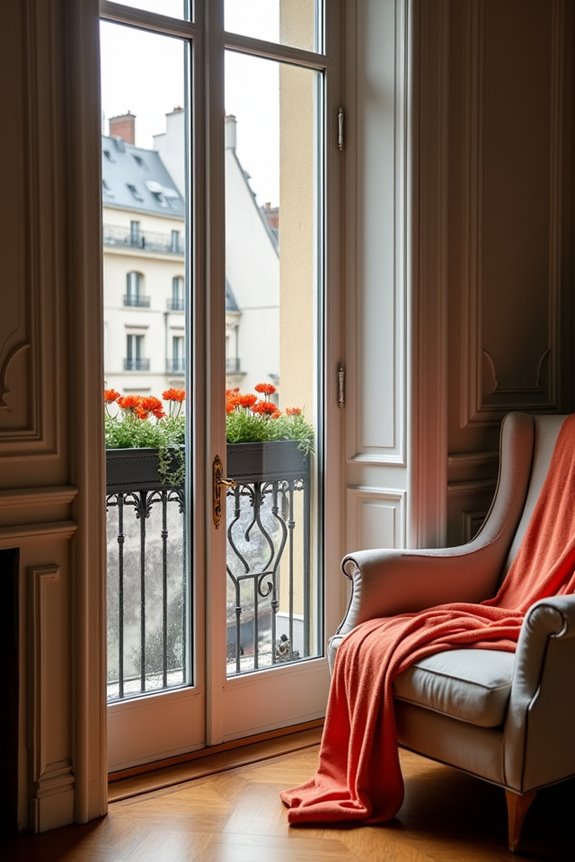
How you’ll actually use your outdoor space defines whether you’re getting a French balcony or a full balcony. The key difference lies in usability and structure. Consider these distinctions:
- French balconies feature floor-to-ceiling doors with fixed glass panels that create ventilation without walkable outdoor access
- Full balconies are cantilevered platforms you can step onto for seating and genuine outdoor living
- River cruises commonly use French balconies to maximize light while preserving cabin space and structural efficiency
- Trade-offs matter: full balconies require more exterior support; French balconies cost less and fit confined designs
The glass panel works because it provides views and airflow without requiring additional structural support. On river ships, this design choice creates better space efficiency. Your preference depends on whether you value outdoor access or design practicality.
Should You Pay Extra for a French Balcony Cabin?
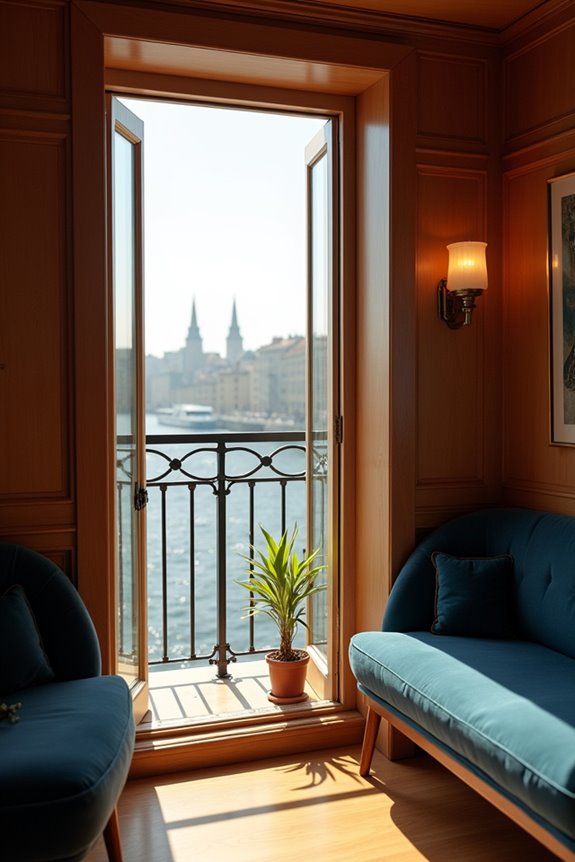
Whether you’re booking a river cruise, you’ll likely face a pricing choice between standard cabins, French balconies, and full verandas. The price difference matters when you’re planning your budget carefully.
| Feature | Standard Cabin | French Balcony | True Balcony |
|---|---|---|---|
| Floor-to-Ceiling Doors | No | Yes | Yes |
| Outdoor Space | None | No | Yes |
| Cost Premium | Baseline | Moderate | High |
| Best For | Budget travelers | View seekers | Active relaxers |
A French balcony provides access to fresh air and natural light without requiring you to pay premium rates for true balcony river cruise cabins. The floor-to-ceiling doors define your experience, offering views while reducing outdoor seating expenses. Open-air balcony variants provide enhanced openings at mid-range pricing. Your choice depends on whether you value views or actual outdoor space for your cabin investment.