

You’ll achieve optimal bedroom air purification by positioning your unit 3–5 feet from your bed’s head on an elevated surface like a nightstand. Place it in your room’s center, maintaining 1–2 feet clearance from walls and furniture to enable 360-degree intake. Keep it 2+ feet away from electronics and heat sources that interfere with sensors. Angle the outlet gently toward your breathing zone without directing air at your face.
Match your purifier’s CADR rating to your bedroom size for effective air cycling. Understanding each placement principle shows how minor adjustments improve filtration performance.
Position Your Purifier 3–5 Feet From the Bed
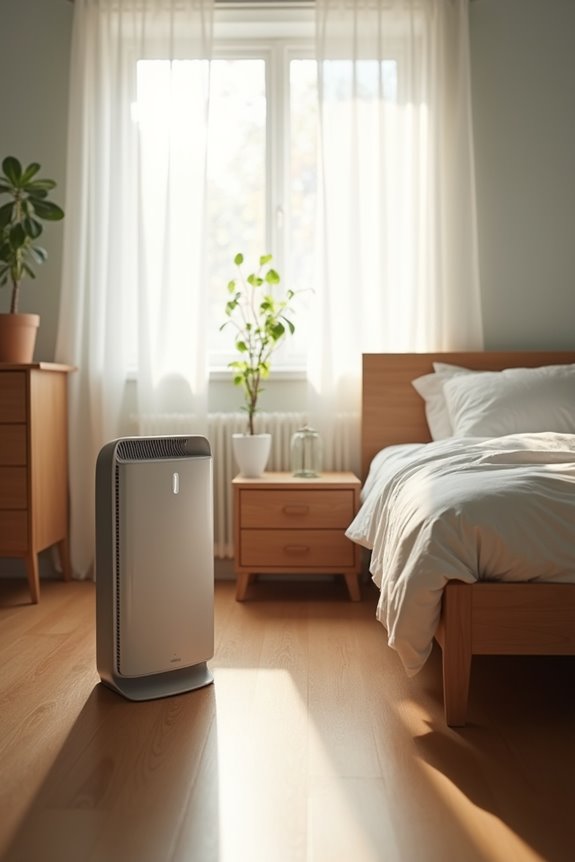
Where should you actually place your air purifier in your bedroom? Position your unit 3–5 feet from the head of your bed on a nightstand or dresser. This distance creates optimal clean air delivery aligned with your sleep zone. The placement works because it directs airflow to where you breathe without pointing air straight at your face. Angle the purifier slightly or let air flow across your bed for comfort during sleep. Maintain at least 1–2 feet of clearance from walls to prevent restricted intake and maximize circulation throughout your room. Proper bed positioning combined with appropriate CADR ratings for your bedroom size determines how effectively your air purifier performs during nighttime hours.
Elevate Placement Off the Floor for Better Breathing Zone Coverage
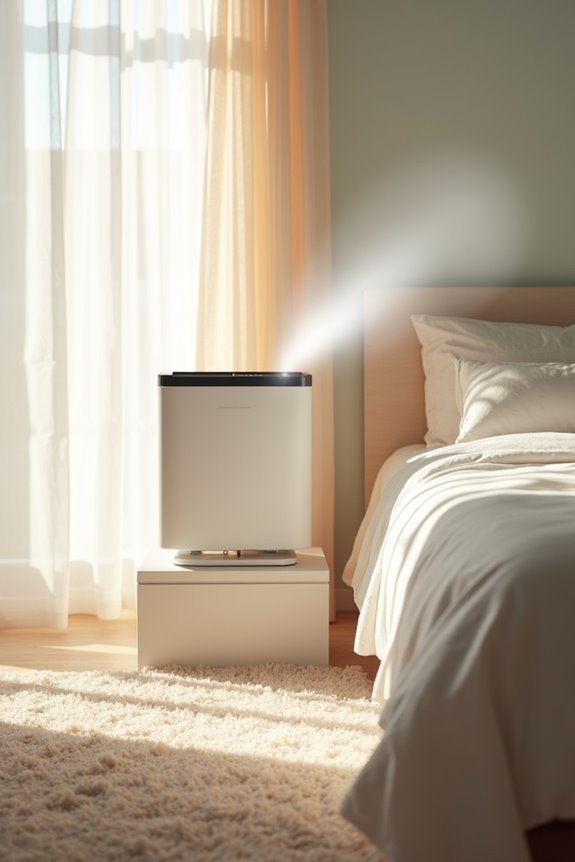
Placing your purifier on a nightstand or dresser elevates the intake and outlet into your breathing zone, which creates more direct air delivery while you sleep. The unit draws air from a higher level because ground-level placement mainly circulates air near the floor, leaving upper areas less filtered. You’ll need one to two feet of clearance from walls and furniture to prevent obstruction, though heavier models work adequately on the floor near your room’s center if elevation isn’t possible.
Nightstand and Dresser Placement
How you position your air purifier on bedroom furniture directly affects its ability to clean the air you breathe while sleeping. Placing your unit on a nightstand or dresser near your head of bed, roughly 3 to 5 feet away, creates optimal alignment with your breathing zone. This distance allows clean air to reach you effectively without direct airflow toward your face.
The elevated placement does this because it draws air from a higher level than floor positioning would allow. Your intake clearance improves when you keep sides unobstructed and maintain space around the outlet. For smaller models in room center placement on sturdy dressers, maintain adequate clearance from walls and furniture. This positioning defines the airflow pattern necessary for quiet operation while maximizing coverage throughout your bedroom environment.
Why Elevation Matters Most
Why does your air purifier’s height directly affect your sleep quality? Elevation matters because it positions your unit’s intake closer to where you actually breathe. When you raise your purifier onto a nightstand or dresser, you create better ventilation proximity to your breathing zone. This bedside positioning improves how effectively the machine captures airborne particles near your head.
Consider these elevation benefits:
- Higher intake airflow draws air from your breathing level, not floor dust
- Elevated exhaust airflow circulates cleaned air throughout your room more efficiently
- Raised placement prevents carpet obstruction and maintains unobstructed intake pathways
The purifier works better when elevated because air moves more freely around it. Maintain at least one to two feet of clearance on all sides. This clearance defines proper room circulation and maximizes your purifier placement investment for quality sleep.
Floor Versus Raised Surface
Your air purifier’s location on the floor or a raised surface fundamentally changes how it captures particles around your head. Placing your unit on a raised surface positions the intake/outlet closer to your breathing zone, improving how efficiently it pulls contaminated air. A raised surface creates better airflow patterns than floor placement because the unit avoids ground-level obstructions.
However, you must maintain purifier stability on any elevated surface. Tight shelf spaces obstruct airflow and reduce bedroom air purification performance significantly. Your raised surface should maintain 1–2 feet of clearance around the unit for unobstructed air circulation.
Larger models don’t always require elevation since they circulate air effectively from floor level. Check your model specifications to determine whether raising it benefits your particular unit. The right placement defines your bedroom’s air quality outcomes.
Move It to Room Center, Away From Corners and Walls
Positioning your air purifier in the room’s center, rather than tucking it into a corner or against a wall, creates optimal airflow patterns throughout your sleeping space. This placement strategy affects how effectively your unit cleans the air you breathe at night.
Consider these placement guidelines:
- Maintain clearance: Keep 1–2 feet of space from all walls to enable 360-degree intake and prevent airflow blockage.
- Avoid restricted areas: Don’t place your purifier directly against walls or behind furniture, which restricts intake and reduces cleaning efficiency.
- Choose open-wall placement: Center-room positions yield better overall air cleaning by promoting faster air turnover throughout your bedroom.
The purifier circulates air more effectively because center placement distributes airflow benefits evenly across your sleeping area. Open positioning allows your bedroom purifier to reach all corners efficiently.
Keep It 2+ Feet From Electronics and Heat Sources
You’ll want to keep your air purifier at least 2 feet away from electronics like TVs and computers, because their heat and sensors create interference that reduces your unit’s effectiveness. Heat sources near the purifier confuse its air quality sensors, while competing airflow from nearby fans or devices disrupts the filtration path your purifier needs to work properly. Positioning the unit away from these obstacles creates a clear zone where intake and exhaust operate without obstruction, which maintains consistent air cleaning performance.
Electronics Interference and Sensors
Why does placement matter when electronics surround your bedroom? Your air purifier’s sensors need clear space to function properly. Electronics nearby create electromagnetic interference that disrupts accurate readings and reduces sensor accuracy.
Consider these key placement strategies:
- Position your purifier at least 2 feet away from TVs, computers, and smartphones to minimize electronic interference
- Avoid clustering multiple devices together, as competing airflow disruption reduces ventilation efficiency and intake capability
- Keep the unit’s sides completely unobstructed to prevent airflow disruption and maintain proper air circulation
The electromagnetic interference damages sensor readings because proximity to electronics confuses detection systems. Device proximity also creates competing airflow patterns that interfere with your purifier’s ability to draw contaminated air effectively. This clutter around purifier placement directly defines how well your unit protects your bedroom environment and keeps sensor accuracy reliable.
Heat Source Risk Assessment
Heat sources create serious risks for air purifier performance and longevity. Radiators, space heaters, and heating vents near your unit cause sensor interference that disrupts accurate air quality readings. The thermal impact from direct heater proximity reduces your purifier’s ability to detect pollutants effectively because hot air confuses temperature sensors.
Maintain at least two feet of clearance between your unit and any heat source for optimal heat risk assessment. Radiator airflow directed toward your purifier forces the device to work harder, creating airflow obstruction that undermines filtration efficiency. Electronics proximity compounds these problems by adding competing heat.
Elevation considerations matter here too. Placing your purifier on a shelf removes it from direct floor-level heater proximity, though you should verify your model’s design specifications first. Smart purifier placement supports better performance.
Airflow Obstruction Prevention
Beyond heat concerns, airflow obstruction creates equally serious problems for your bedroom purifier. You need unobstructed pathways for proper filtration performance and intake effectiveness.
Create strategic clearance around your unit:
- Maintain at least 2 feet from electronics like TVs and computers, which interfere with sensor accuracy and block airflow patterns
- Keep curtains, fabric, and clutter away from intake and exhaust ports to preserve unobstructed air movement
- Avoid placing the purifier next to fans, which create competing airflow that reduces filtration effectiveness
The 360-degree intake works because unrestricted air reaches all filtration surfaces. Your placement defines how efficiently the unit removes contaminants. Position your purifier away from electronics proximity and heating sources. This clearance strategy maintains optimal performance throughout your bedroom. Blocked air movement defeats the purifier’s core function, so follow these spacing requirements for lasting results.
Ensure 360-Degree Air Clearance Around Your Unit
How you position your air purifier determines whether it’ll actually clean your bedroom air or just move dust around ineffectively. Your unit needs 360-degree intake on all sides to function properly. Place it in an open space around the purifier, maintaining at least one to two feet of clearance from walls, furniture, and curtains. This distance prevents airflow blockage that reduces efficiency.
Never tuck your bedroom air purifier behind furniture or into tight corners. These locations completely limit 360-degree intake capacity. For smaller models, place the unit on a nightstand or shelf to maximize air circulation into your breathing zone. The open positioning allows better purification because unobstructed airflow reaches all room areas. Proper air purifier placement impacts your sleep quality by allowing clean air to reach where you need it most.
How Should You Angle Airflow to Avoid Direct Face Contact?
While positioning your unit with proper clearance sets the foundation for clean air circulation, the direction you point that airflow matters for your comfort.
You’ll want to angle your purifier so clean air travels across your bed rather than directly at your face. This airflow angle defines your sleeping comfort by preventing uncomfortable drafts during the night.
Consider these placement strategies for your intake direction and outlet direction:
- Position the intake facing away from your bed while angling the outlet slightly toward it
- Skew the unit diagonally so air travels across your sleeping area using gentle, sideways movement
- Direct airflow toward your breathing zone without blowing into your eyes or mouth
The diagonal airflow pattern works well because it maintains air circulation while avoiding direct face contact. Your bed airflow becomes gentle and consistent, supporting restful sleep throughout the night.
Size Your Purifier Capacity to Match Your Bedroom
What capacity does your bedroom air purifier actually need? Your purifier’s CADR rating and square footage coverage directly define how effectively it cleans your specific room size. The purifier must cycle your bedroom’s air 4.8 times per hour to remove allergens and mold spores efficiently.
| Room Size | Square Footage | Recommended CADR | Purifier Type |
|---|---|---|---|
| Small | Up to 150 sq ft | 75-100 | Compact |
| Mid-sized | 150-237 sq ft | 100-150 | Standard |
| Large | 237-400 sq ft | 150-200 | High-capacity |
| Extra-large | 400+ sq ft | 200+ | Commercial |
True HEPA filtration combined with activated carbon creates superior filter performance for bedroom pollutants. Match your room’s dimensions to the purifier’s rated capacity, confirming adequate airflow. Position the unit with 360-degree intake and top exhaust, maintaining at least fifteen inches clearance from walls.