You can install peel and stick wallpaper in bathrooms, but you’ll need moisture-resistant vinyl options and proper edge sealing.
The vinyl coating resists humidity better than standard wallpaper, and you can apply it yourself without professional help.
However, avoid direct shower spray zones and run your exhaust fan during and after showers to control moisture.
Seal all edges with clear caulk to prevent water from seeping behind the wallpaper.
Success depends on material selection, ventilation, and preparation—these factors determine whether your wallpaper lasts or fails.
Yes, Peel and Stick Wallpaper Works in Bathrooms: Here’s Why
Why worry about traditional wallpaper in your bathroom? Peel and Stick wallpaper works well in moisture-heavy spaces when you choose the right materials. Moisture-resistant and waterproof vinyl-coated options create durable solutions that withstand steam and splashes without deteriorating. These specialized products offer a practical approach to bathroom design that doesn’t require professional installation.
The vinyl coating resists humidity better than standard wallpaper. You’ll apply it away from direct water exposure, keeping it outside shower zones entirely. Proper ventilation through exhaust fans extends your wallpaper’s longevity. Sealing edges with clear caulk prevents moisture from creeping behind the material.
Your bathroom becomes a personalized space that you can refresh seasonally. This accessibility means you’re investing in both style and functionality without compromise or complexity.
Moisture-Resistant Materials: The Non-Negotiable Requirement
When you select peel and stick wallpaper for your bathroom, moisture-resistant materials become the foundation of your project’s success. You’ll want vinyl-coated or laminated papers that actively resist humidity rather than absorb it. Regular paper-based wallpapers fail in bathrooms because they absorb moisture and develop mold or peeling.
The vinyl-coated option withstands steam exposure because its protective layer blocks water penetration. You can find water-resistant variants labeled specifically for humid spaces, though fully waterproof versions remain rare. Most bathroom wallpapers offer water-resistant protection best suited away from direct water contact.
Your installation matters equally. You must seal edges with caulk to prevent moisture seeping behind the wallpaper. Proper wall preparation and consistent ventilation determine how long your wallpaper maintains its integrity and appearance.
Five Mistakes That Ruin Bathroom Wallpaper (and How to Avoid Them)
You’ll avoid the biggest failures by understanding three critical mistakes: applying wallpaper to damp surfaces creates bubbles and peeling because moisture prevents adhesive from bonding properly. Selecting vinyl or moisture-resistant materials—rather than traditional paper—determines whether your wallpaper survives bathroom humidity. Managing high-moisture zones means keeping peel-and-stick away from direct shower spray and sealing edges carefully, since water exposure undermines adhesion over time.
Applying Wallpaper On Damp Surfaces
How does moisture sabotage peel and stick wallpaper faster than any other factor? Water prevents adhesive from bonding properly to your bathroom walls, creating premature failure within days. You’re setting yourself up for peeling edges and bubbling when you skip essential drying time.
Moisture blocks adhesion through these key problems:
- Wet surfaces prevent the adhesive layer from making contact with wall material
- Soap residue traps moisture underneath, weakening bonds over time
- Condensation forms a barrier that stops sticky backing from gripping properly
- Humidity in the air delays adhesive activation and curing
- Trapped dampness causes wallpaper edges to curl and separate
The wall does reject adhesion because moisture occupies the space where glue should stick. You’ll define success by allowing complete dryness and proper ventilation before installation begins.
Selecting Moisture-Resistant Materials
Now that you understand how moisture undermines adhesion, your material choice becomes the foundation for bathroom wallpaper success. You’ll want vinyl-based or laminated peel-and-stick options, which repel water far better than standard paper designs. These materials create a protective barrier against humidity that traditional wallpapers can’t match.
Check product labels for “moisture-resistant” certifications before purchasing. The adhesive works effectively because vinyl backing prevents water absorption that weakens bonds. Faux tile and marble finishes work well on bathroom walls since they’re engineered for wet environments.
Verify moisture resistance claims directly with manufacturers. Ask specific questions about humidity ratings and tested conditions. Your selection determines whether your bathroom walls maintain their appearance or develop peeling within months. Quality materials prevent future problems.
Managing High-Moisture Zones
Where does bathroom moisture concentrate most intensely? You’ll find it pooling behind sinks, toilets, and shower enclosures. These high-moisture zones demand strategic planning to prevent wallpaper failure.
Peel-and-stick wallpaper performs best when you protect vulnerable areas with waterproof vinyl wallpaper or moisture barriers. Consider these protection strategies:
- Install moisture-resistant backing behind sinks and toilets
- Apply waterproof vinyl wallpaper in splash zones exclusively
- Create sealed edges using silicone caulk around fixtures
- Position peel-and-stick wallpaper away from direct water contact
- Prioritize bathroom ventilation to reduce ambient humidity
The adhesive fails because moisture penetrates exposed edges and weakens bonding. Waterproof vinyl wallpaper creates a protective shield that traditional peel-and-stick options cannot match. Your moisture management approach determines whether wallpaper lasts months or years. Addressing high-moisture zones upfront prevents costly replacement and maintains your bathroom’s polished appearance.
Prepare Your Bathroom Walls for Peel and Stick Wallpaper
Success with peel and stick wallpaper starts with proper wall preparation, which creates the foundation for lasting adhesion. You’ll want to clean your bathroom walls thoroughly with mild detergent, removing all soap residue and grime. The wall requires complete drying because moisture prevents the adhesive from bonding properly. Wipe the surface with a lint-free cloth to eliminate dust and debris that interferes with contact.
Let your walls dry for at least 24 hours before installation. Air out your bathroom to reduce humidity levels significantly. Avoid applying wallpaper immediately after hot showers when moisture saturates the air. Inspect walls for mold or moisture damage beforehand. These preparation steps determine whether your peel and stick wallpaper stays secure or lifts after application. Proper moisture prevention keeps your bathroom update in good condition long-term.
How to Apply Peel and Stick Wallpaper Without Bubbles
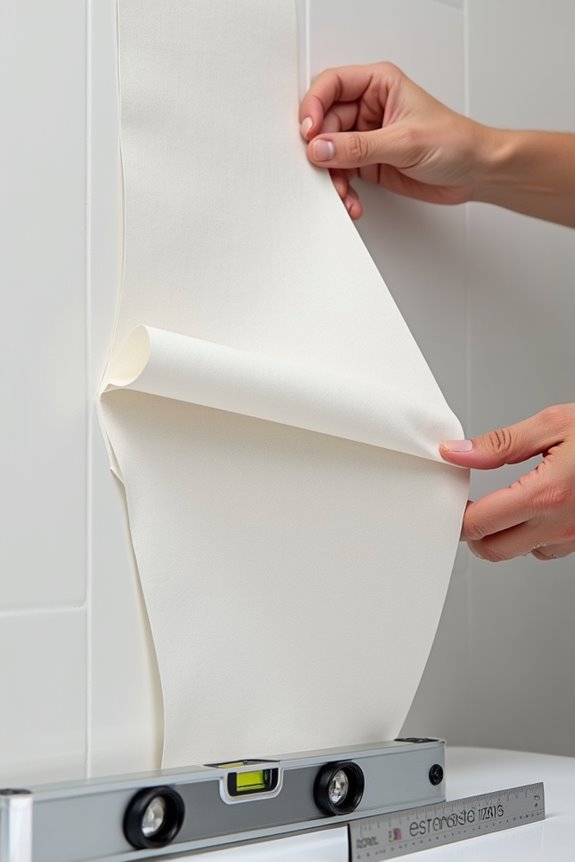
With your walls prepped and dried, you’re ready to apply the wallpaper correctly. Peel and stick wallpaper requires deliberate technique to avoid bubbles in your bathroom.
Follow these application steps:
- Peel the backing gradually, panel by panel, maintaining control throughout installation
- Position the wallpaper starting from the center, then smooth outward and diagonally
- Use a plastic smoother to press firmly, pushing air toward edges consistently
- Work in small sections to align patterns and minimize visible seams effectively
- Lift edges gently if bubbles form, then reapply and smooth from center outward
The plastic smoother works because its flat surface distributes pressure evenly. Gradual backing removal improves adhesion because you’re controlling placement precisely. This methodical approach produces professional results and prevents trapped air pockets throughout your bathroom space.
Wallpaper Around Toilets, Vanities, and Fixtures
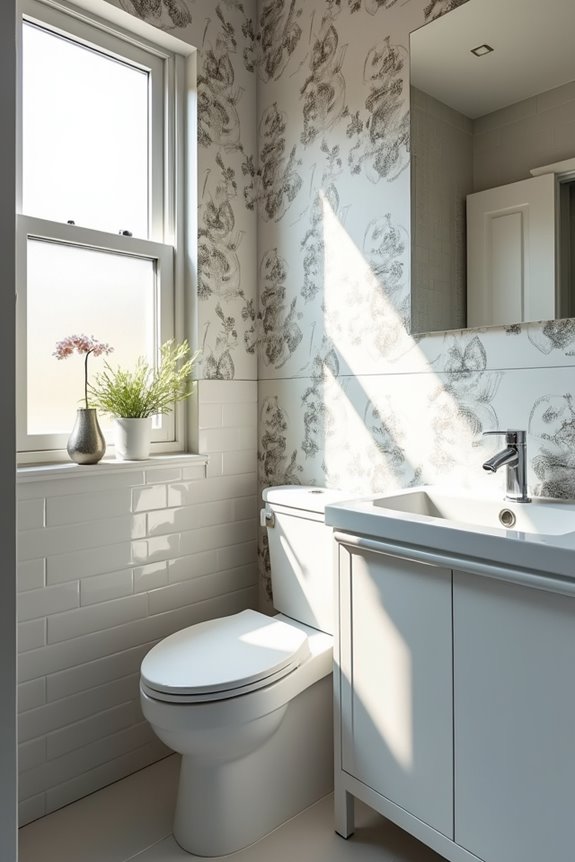
You’ll encounter tight spaces around toilets and vanities that demand precise cutting and strategic planning. Outlet coverage creates a continuous appearance when you use wallpaper scraps to camouflage seams, which prevents visible breaks in the pattern. These fixture zones require vinyl-based wallpaper because moisture resistance defines durability in high-splash areas where paper-only options fail.
Navigating Tight Fixture Spaces
How do you handle the awkward angles around a toilet tank or vanity cabinet?
Navigating tight spaces requires strategic planning and careful execution. Your peel and stick wallpaper installation succeeds when you measure precisely and cut panels to fit snugly against fixtures. This approach minimizes visible seams that draw unwanted attention.
Consider these installation techniques:
- Cut holes for outlets after applying surrounding panels for cleaner edges
- Smooth wallpaper from the middle outward to eliminate bubbles in confined areas
- Trim panels below tanks or cabinets to create flush finishes
- Apply clear caulk along seams and edges for moisture resistance
- Use two-section installations to reduce conspicuous seams
The caulk protects vulnerable edges because bathroom humidity constantly threatens adhesion. Your careful measurement accounts for irregular fixtures, while strategic trimming creates seamless results around plumbing obstacles. These techniques define professional bathroom installation that resists moisture damage and maintains aesthetic appeal.
Seamless Outlet Coverage
Outlets and switches interrupt visual flow around bathroom fixtures and require strategic wallpaper placement. Use peel and stick wallpaper scraps that match your surrounding pattern, cutting carefully around each outlet opening. The matched pattern helps maintain visual continuity across your walls by eliminating breaks in the design. After trimming the wallpaper to fit precisely, smooth it evenly to maintain clean edges throughout. Seal the edges near outlets with clear caulk to prevent moisture from seeping behind the paper. This caulking step creates a protective barrier against bathroom humidity and water damage. The sealed edges define the boundary between wallpaper and outlet, keeping your coverage intact long-term. Strategic pattern alignment combined with proper sealing establishes durable, cohesive bathroom walls.
Where Peel and Stick Wallpaper Fails in Bathrooms
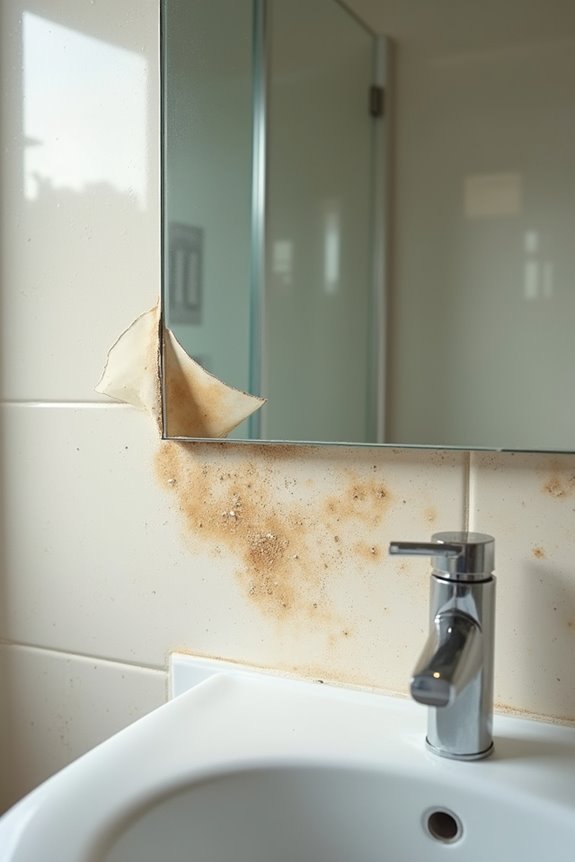
Despite being marketed as moisture-resistant, peel and stick wallpaper doesn’t perform equally in all bathroom conditions. You’ll encounter real limitations that require strategic planning and honest assessment of your space.
Despite marketing claims, peel and stick wallpaper faces real limitations in bathrooms requiring honest assessment of your space’s conditions.
Your wallpaper fails in these key areas:
- Direct shower spray zones create excessive moisture that overwhelms standard adhesion systems
- Poor ventilation defines spaces where humidity accumulates and weakens adhesive bonds
- Unsealed edges allow moisture seepage behind wallpaper, causing bubbling and peeling
- Non-waterproof adhesives fail when exposed to sustained humidity levels above 60%
- Improperly prepared walls retain moisture that prevents secure long-term adhesion
The adhesive does deteriorate because bathroom moisture exceeds what standard peel and stick products tolerate. Sealing edges with clear caulk helps, but it won’t compensate for poor ventilation or direct water exposure. Understanding these failure points protects your investment and guides smarter material choices for your bathroom’s specific conditions.
Bathroom Ventilation: Keeping Peel and Stick Wallpaper Sealed
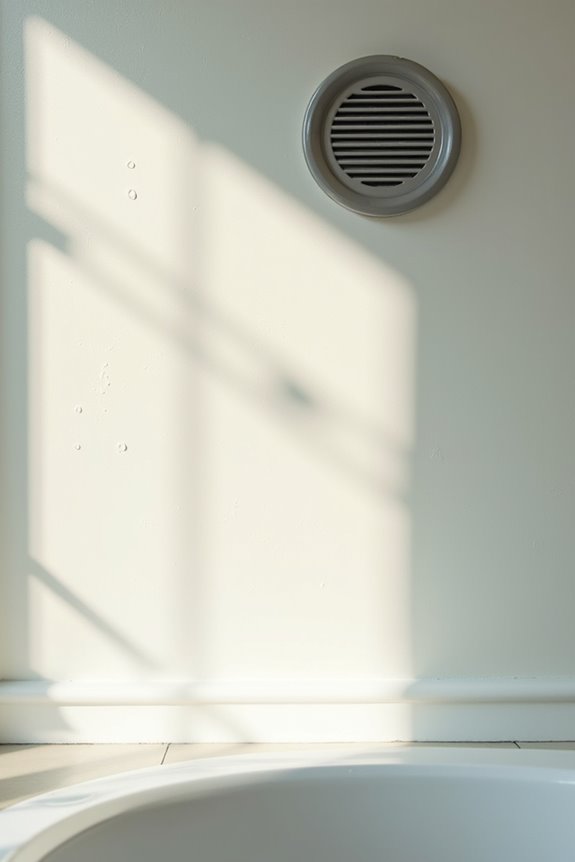
You’ll want to install an exhaust fan that runs during and after showers, since it removes moisture before it damages your wallpaper’s adhesive. Proper ventilation creates an environment where condensation doesn’t build up on walls, defining the difference between wallpaper that lasts years and adhesive that fails within months. Your moisture control strategy should include opening windows when possible and wiping walls dry after use, which together keep peel-and-stick wallpaper sealed and protected.
Exhaust Fan Installation
How does moisture damage peel-and-stick wallpaper in bathrooms? Excess humidity weakens adhesive bonds, causing edges to lift and corners to curl. Your exhaust fan becomes your first line of defense against this moisture invasion.
Proper exhaust fan ventilation and humidity control require strategic bathroom installation:
- Run your fan during showers and for 20-30 minutes afterward
- Position the fan to pull moist air directly outside, not into attic spaces
- Install fans with adequate CFM ratings for your bathroom size
- Direct ductwork to vent externally, preventing moisture recirculation
- Use humidity sensors that activate automatically when moisture rises
The exhaust fan manages moisture effectively because it continuously removes water vapor before it penetrates wallpaper seams. This ventilation approach supports long-term wallpaper durability, protecting your investment from adhesive failure and mold growth beneath the surface.
Moisture Control Strategies
When bathroom moisture builds up, it attacks peel-and-stick wallpaper from behind, weakening the adhesive bond that holds it to your walls. You control humidity by running exhaust fans during and after showers, which pulls damp air out of the room. Open windows when possible to increase ventilation and lower moisture levels faster. Wipe walls regularly with a soft cloth to prevent condensation from settling on the wallpaper surface. The adhesive performs optimally because dry conditions keep it activated and strong. Good airflow creates the ideal environment for your wallpaper, reducing peeling, bubbling, and mold growth. Maintain ventilation for 24 hours after installation to seal proper bonding. These moisture control strategies determine whether your bathroom wallpaper lasts years or fails within months.
Sealing Edges and Creating Moisture Barriers
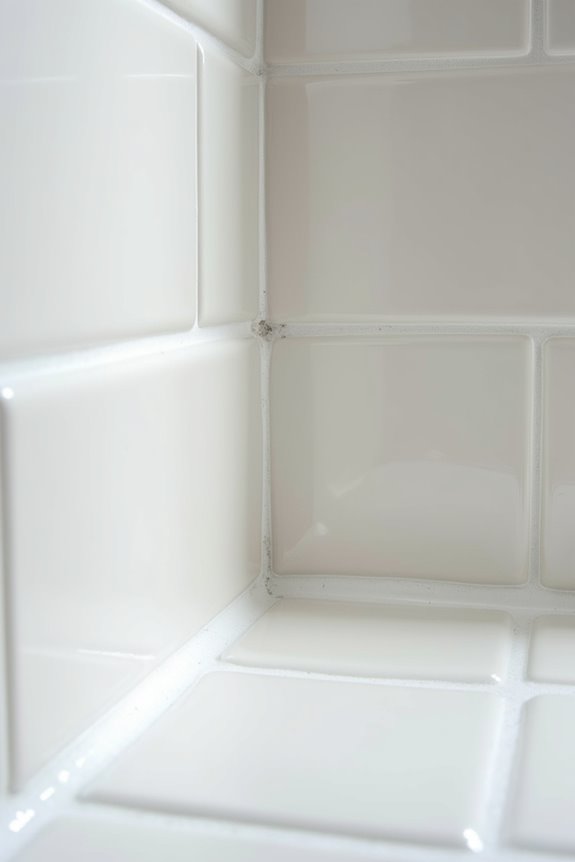
Protecting your peel and stick wallpaper from bathroom moisture requires deliberate attention to edges and seams. You’ll want to apply silicone caulk around all vulnerable areas where water might penetrate behind the wallpaper.
Sealing edges creates a moisture barrier that affects how long your wallpaper lasts in high-humidity spaces. Consider these key protection methods:
- Apply silicone caulk around fixtures, outlets, and corners to prevent water intrusion
- Use clear adhesive or caulk along all seams and edges for reinforcement
- Reinforce edges after installation by applying heat to improve long-term adhesion
- Seal around bathtub and shower edges where steam accumulates most heavily
- Create waterproof protection by finishing seams with quality sealant products
The silicone caulk works by blocking moisture from seeping behind wallpaper. These finishing touches maintain a neat appearance while protecting against peeling in damp bathroom environments.
Peel and Stick Wallpaper Designs for Small Bathrooms
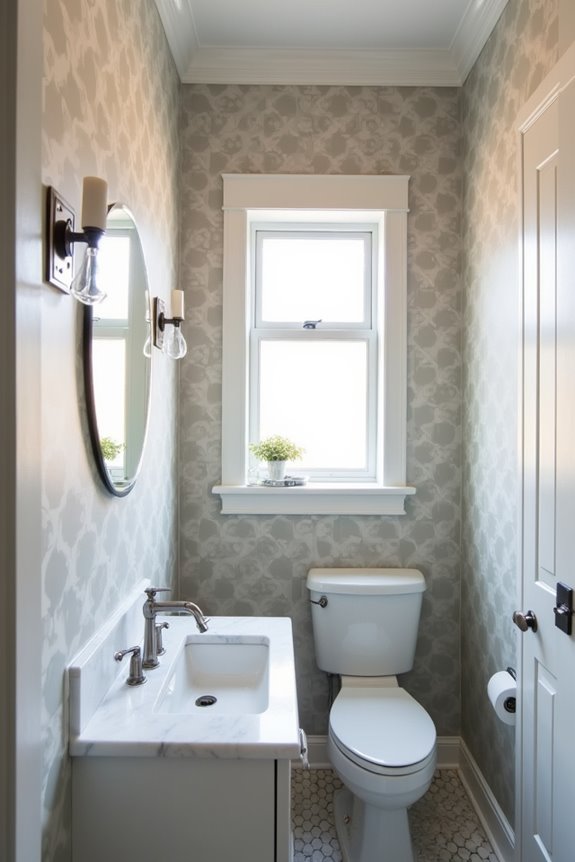
Smart design choices create the illusion of more space while keeping your bathroom walls protected from moisture damage. Light colors and bold geometric patterns work well together in small bathrooms. The light hues expand perceived space because they reflect available light throughout the room.
When selecting peel and stick wallpaper for compact bathrooms, choose vinyl-coated wallpaper that resists humidity effectively. Vertical stripe patterns draw eyes upward, making ceilings feel higher. Bold accent walls create visual interest without overwhelming tight quarters.
After installing moisture-resistant wallpaper, reinforce durability by sealing edges with clear caulk in corners and along baseboards. This step prevents peeling near moisture sources. Your design investment protects against steam and humidity while creating a cohesive bathroom space.
Fixing Peeling Edges and Cleaning Moisture Stains
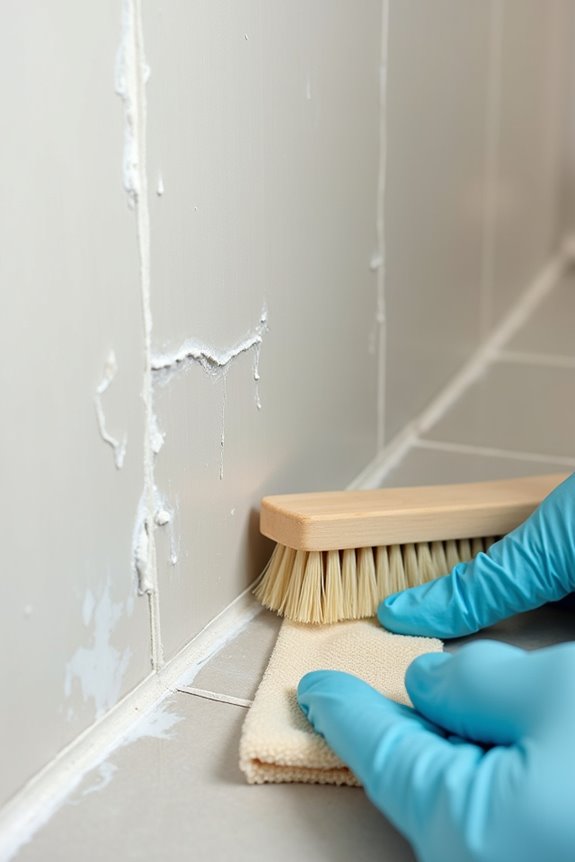
Despite your best installation efforts, peel-and-stick wallpaper edges in bathrooms will eventually lift due to steam and humidity exposure. You can restore your wallpaper by addressing these issues systematically.
Peel-and-stick bathroom wallpaper edges inevitably lift from steam and humidity, but systematic restoration methods can effectively address these issues.
To fix peeling edges effectively:
- Clean the lifted edge area thoroughly with mild detergent
- Dry the surface completely before reapplying
- Press the wallpaper firmly from center outward to restore adhesion
- Apply clear caulk or seam sealant along the edge
- Allow sealant to cure fully before exposing to moisture
For cleaning moisture stains, gently wipe affected areas and dry completely. Persistent stains warrant panel replacement rather than patching attempts. Regular ventilation prevents moisture accumulation and extends wallpaper longevity. Prompt repair of lifted edges stops water from seeping behind wallpaper, protecting both material and wall integrity. These maintenance practices support successful bathroom wallpaper longevity.
Peel and Stick vs. Traditional Wallpaper: Why Choose One for Bathrooms?
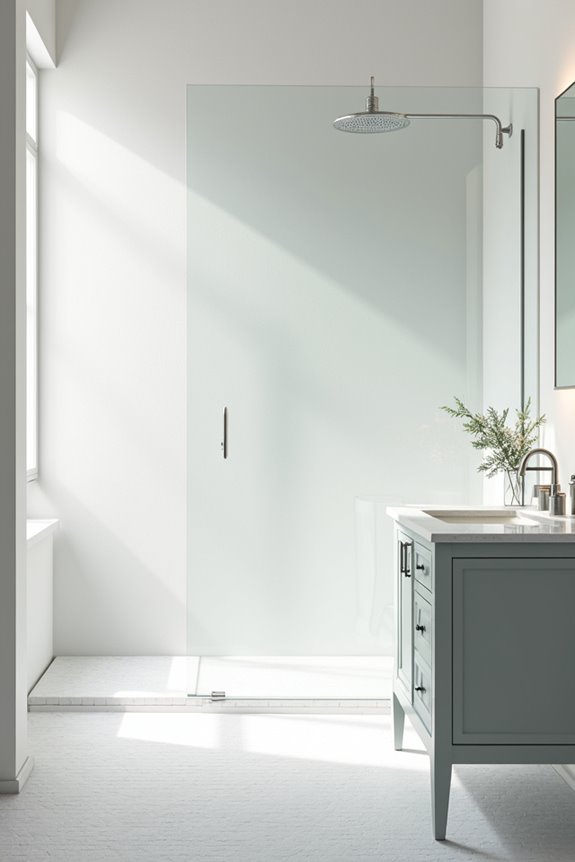
When you’re selecting wallpaper for a bathroom, understanding the differences between peel-and-stick and traditional options matters substantially. Peel-and-stick wallpaper creates an advantage because moisture-resistant vinyl-coated varieties withstand humidity better than paper-based designs. You’ll appreciate the practical benefits: easier removal, less mess, and straightforward application without paste or tools.
Traditional wallpaper demands professional installation and leaves residue when removed. The peel-and-stick option defines accessibility for homeowners tackling upgrades independently.
Both require proper preparation and ventilation to perform well. You should apply either type away from direct water spray and seal edges with clear caulk to prevent moisture infiltration. Strong exhaust fans and good airflow reduce humidity buildup, extending wallpaper life regardless of type. These foundational steps determine long-term success in bathroom environments.
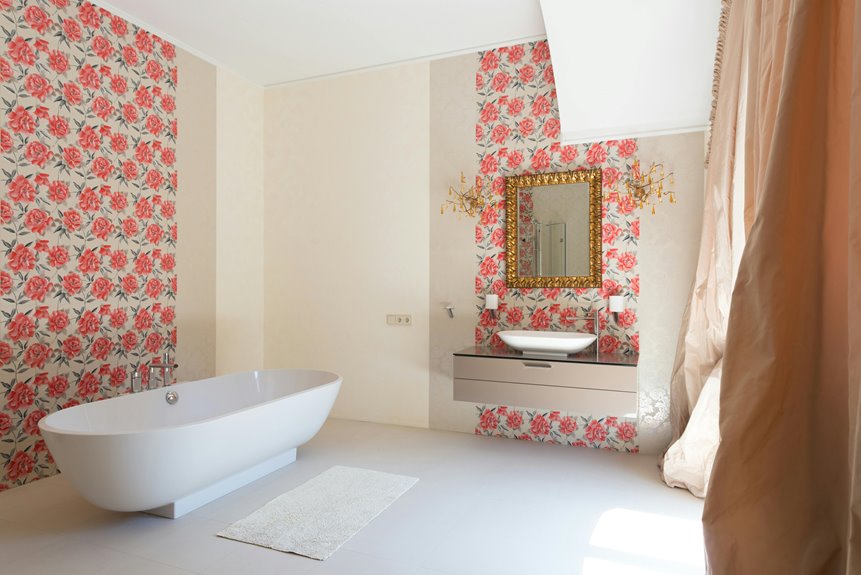
Popular Bathroom Prints: Tropical, Floral, and Tile-Inspired Designs
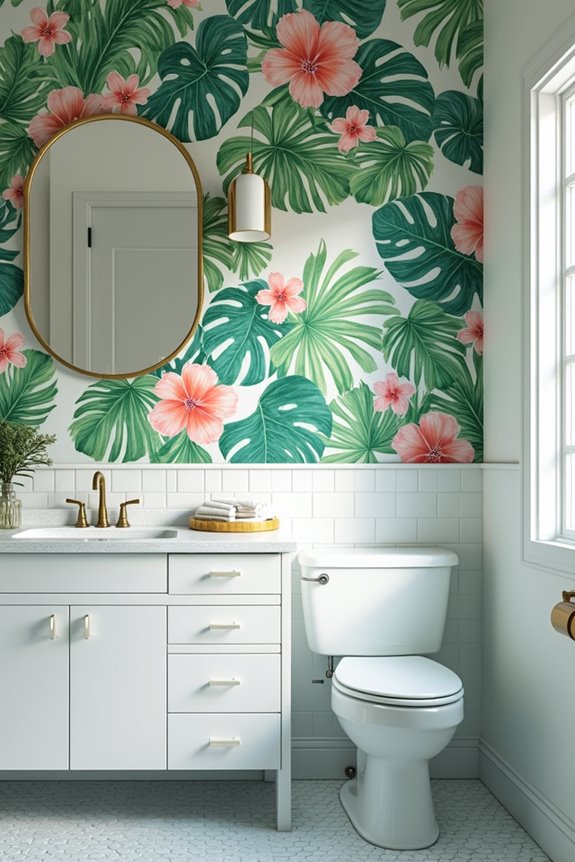
Your bathroom’s visual impact hinges on the print you select. Tropical prints and floral wallpaper create garden-like atmospheres in small spaces. These designs add visual interest while managing bathroom humidity through quality peel-and-stick durability.
Tropical prints and floral wallpaper transform small bathrooms into garden-like spaces while quality peel-and-stick designs resist humidity.
Consider these popular options:
- Painted Palm and Havana Palm evoke lush, tropical atmospheres
- Floral Medallion and Bird Botanical establish sophisticated garden vibes
- Tile-inspired designs mimic imported tile aesthetics without grout maintenance
- Mermaid Toile and Marine Fish prints define coastal accent walls
- 200+ available color variations customize any palette instantly
Bold, high-contrast patterns brighten confined bathrooms effectively. The peel-and-stick format resists moisture because quality adhesives bond securely to properly prepared surfaces. Softer floral patterns create calmer moods in shared spaces. These designs personalize your bathroom while delivering reliable peel-and-stick durability against bathroom humidity.