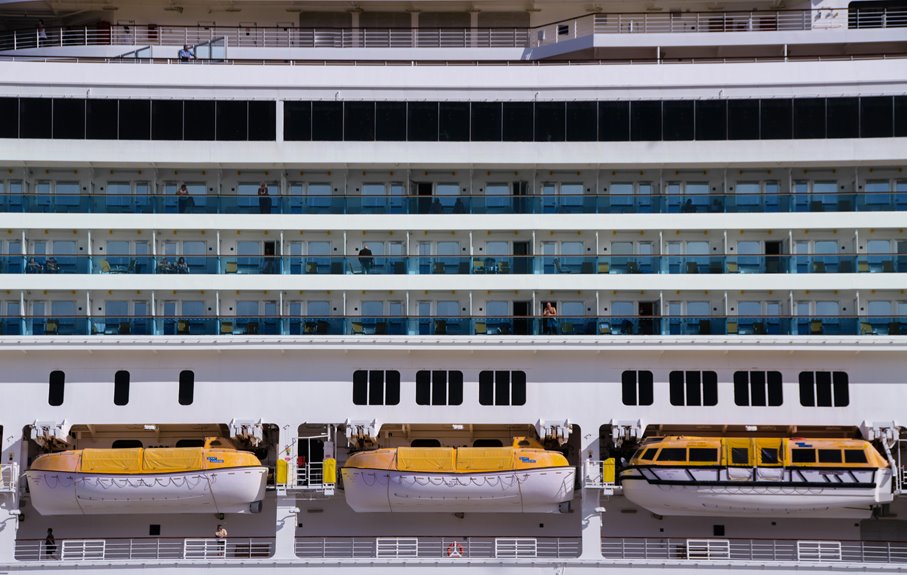
A cove balcony on Carnival is a recessed cabin balcony on lower decks that creates roughly 45 square feet of outdoor space—about 10 square feet larger than standard balconies. Solid partition walls define the design, offering privacy from neighboring cabins and foot traffic.
You’ll sacrifice expansive ocean views because the recessed alcove and overhead lifeboat structures reduce sightlines while providing consistent shade. The premium costs 10–25% more than standard balconies. Book one if privacy matters more than scenery; skip it if unobstructed vistas drive your cruise experience. Specific factors like deck location and weather patterns influence whether this tradeoff suits your priorities.
What Is a Cove Balcony on Carnival?
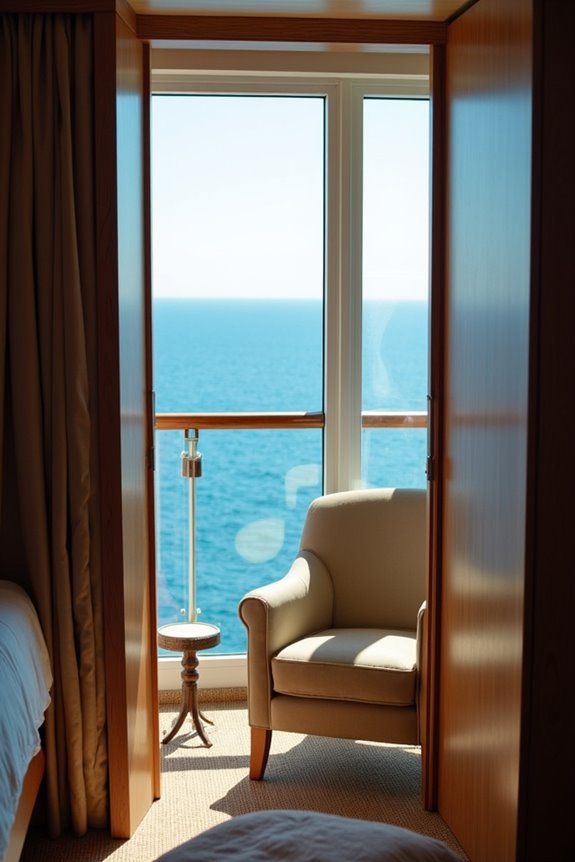
A cove balcony is a cabin design option available on Carnival’s ships that differs from standard oceanview balconies. Located on lower decks, primarily deck 2 and Main, these cabins provide a more sheltered outdoor area. The cove balcony features solid walls and a smaller opening than regular balconies, offering increased privacy with a separating wall between your cabin and adjacent ones. Your balcony measures approximately 45 sq ft, providing more space than standard balconies at 35 sq ft. You get a small ledge for drinks or breakfast service. The enclosed structure offers overhead protection from lifeboats, which reduces sunlight and noise depending on your ship’s layout.
How Do Cove Balconies Differ From Standard Balconies?
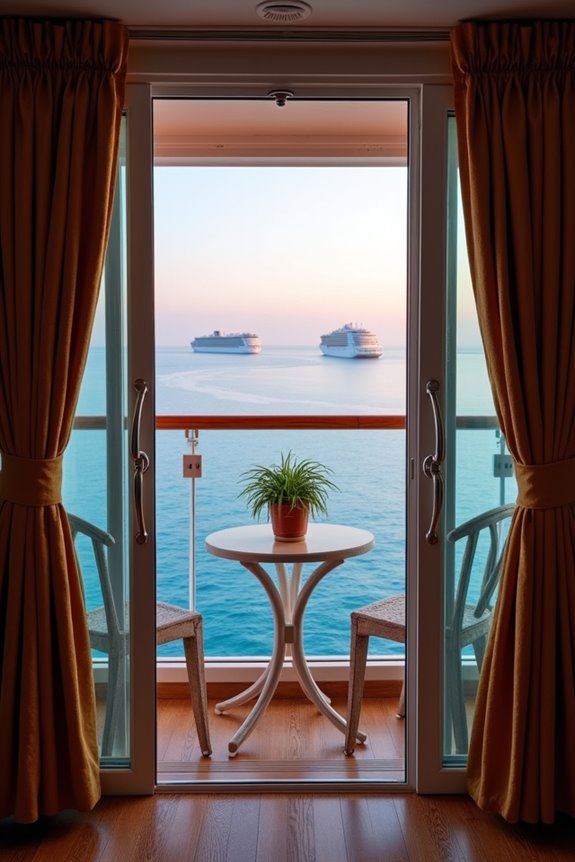
Cove balconies share the basic function of standard balconies—offering outdoor space connected to your cabin—but they’re built quite differently. The cove balcony vs standard balcony distinction centers on privacy, size and view.
Cove balconies measure roughly 45 square feet, while standard ones offer only 35. This extra space creates a more comfortable area for relaxing. Solid walls separate your cove from neighboring balconies, which defines the privacy advantage you’ll experience.
However, views differ considerably. You’ll look down at the ocean rather than directly to water. Standard balconies provide clearer sightlines and more direct sunshine. Cove balconies sit lower, sometimes shaded by lifeboats overhead, making them quieter but potentially darker.
Both styles include ledges for drinks and breakfast service. The choice depends on whether you prioritize privacy and coziness over expansive views and natural light.
Cove Balcony Privacy: Your Main Advantage
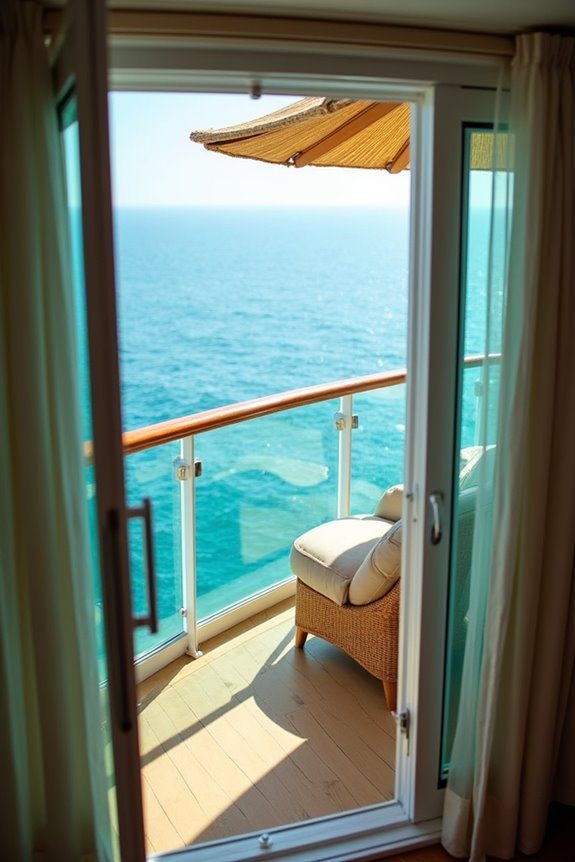
Why do cove balconies feel more secluded than standard ones? Solid wall panels separating your space from neighbors create genuine privacy that you won’t find elsewhere on the ship. The cove balcony’s design defines seclusion through strategic placement and physical barriers. These enclosed spaces shield you from promenade deck activity, reducing unwanted visibility and noise.
Your seclusion deepens further on lower decks like Main or Deck 2, where fewer passersby interrupt your quiet time. The separating walls do their job because they block direct sight lines to adjacent cabins. Lifeboat overheads add another layer, enhancing the protected atmosphere.
Privacy extends to your ocean views too—you’ll enjoy exclusive downward vistas rather than sharing inland-facing perspectives. This comprehensive approach to seclusion makes cove balconies worthwhile if peaceful retreats matter to you.
Cove Balcony Shade and Weather Protection
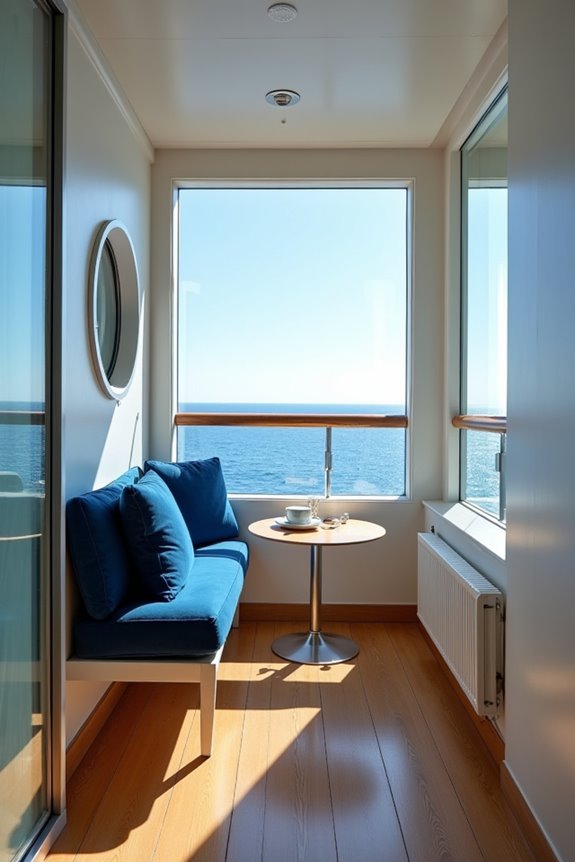
How much shade does a cove balcony actually provide? Your cove balcony shade comes from its recessed design and overhead lifeboat proximity. This setup creates substantial protection you won’t find on standard balconies.
| Feature | Benefit | Trade-off |
|---|---|---|
| Recessed alcove design | Blocks direct sunlight | Less natural light |
| Overhead structures | Weather protection | Reduced sky views |
| Enclosed positioning | Wind-driven spray reduction | Potential dampness |
The glass railing design does protect you because it shields against ocean spray while maintaining sightlines. However, rough seas can make your space feel enclosed despite weather protection benefits.
You’ll experience fewer wet conditions than exposed balconies, yet wind-driven spray still reaches cove spaces occasionally. Daily use requires waterproof attire during rough weather. The shade trade-off means you’ll sacrifice direct sunlight for this sheltered environment, defining the cove experience as practical rather than sun-soaked.
Why Cove Balconies Actually Feel Roomier
You’ll notice cove balconies measure about 45 square feet compared to 35 square feet for standard balconies, which creates noticeably more usable space. The solid partition walls between adjacent coves define distinct territories, and this enclosed design eliminates wasted sightlines that regular open railings require. Your balcony feels larger because the layout minimizes visual clutter and dedicates every square foot to functional living area.
Square Footage Advantage
Beyond the cabin walls, cove balconies deliver measurable space that standard balconies simply can’t match. You’re looking at a cove balcony square footage of roughly 45 sq ft compared to 35 sq ft on standard units. That 28% increase creates genuine usability differences. The balcony size comparison matters because you’re gaining approximately 10 additional square feet. This expanded area includes a small ledge designed for drinks or room-service breakfast items. The ledge provides practical surface space because it’s positioned within arm’s reach. While your interior cabin remains unchanged, the 45 sq ft vs 35 sq ft distinction defines how you’ll actually experience your balcony. You’re not gaining cabin square footage, but you’re gaining outdoor living space where you’ll spend considerable time.
Open Partition Flexibility
While that extra 10 square feet gives you genuine outdoor space, the real roominess advantage comes from the partition design itself. You’ll find that cove balcony partitions create flexible configurations depending on your ship and stateroom category. When you’re alone, the separating wall between adjacent balconies defines your private retreat. However, when friends join you, you can open these partitions to expand your usable area significantly. The partition flexibility lets you shift from isolated to connected without sacrificing privacy. This design choice matters because it adapts to your actual needs rather than forcing a single layout. Dream and Breeze class ships offer varying partition options, so availability differs by vessel. You get privacy on demand paired with the option to enlarge your gathering space when desired.
Cove Balcony Views: Unique Angles for Watching Wildlife
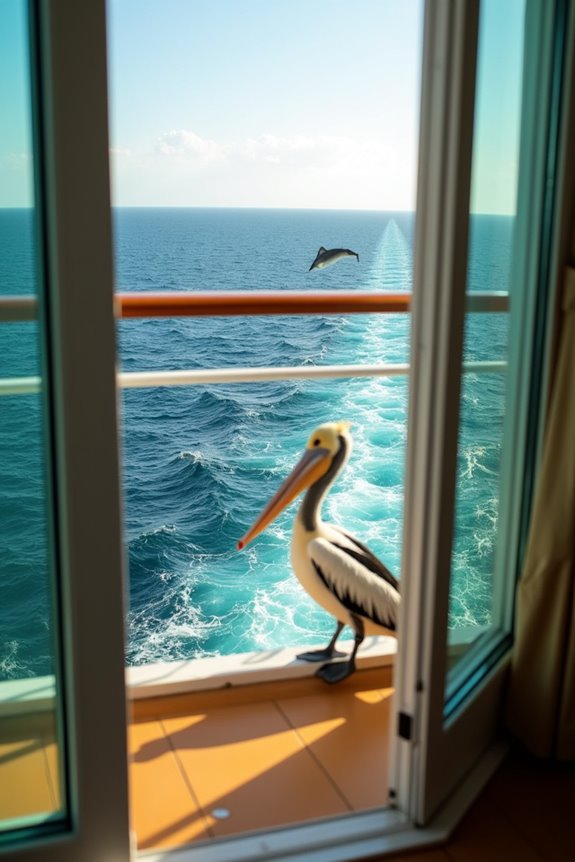
What makes a cove balcony particularly suited for wildlife observation? The unique positioning creates an ideal vantage point for spotting dolphins and other aquatic life. Your cove balcony views offer a look-down perspective where you’ll see the ocean clearly, though sightlines don’t always extend straight down to the water. The separating wall between adjacent balconies defines your privacy, reducing direct views from neighbors while you photograph wildlife undisturbed.
However, deck location matters substantially. Lower deck coves on ships like the Dream and Breeze can experience shade or sea spray, which affects visibility depending on wind conditions. The lifeboat placement above sometimes partially obstructs your sightline. These variables mean wildlife sightings remain unpredictable. You’ll gain enhanced privacy and unique angles for observation, but you’re trading traditional panoramic views for focused wildlife-watching opportunities.
Cove Balcony Noise: How Location Matters
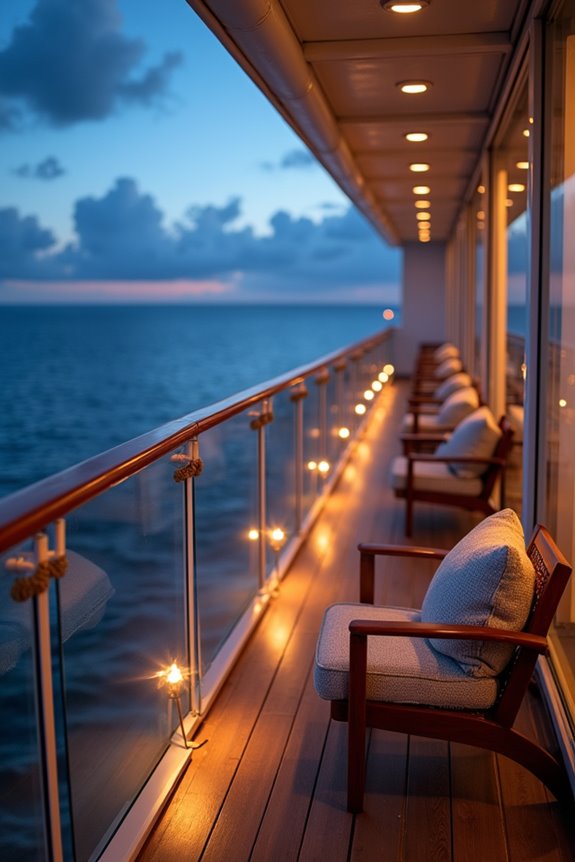
Your cove balcony’s noise level depends heavily on which deck and location you select. Coves positioned directly beneath galleys or dining rooms create persistent sound during meal service hours, while forward-positioned coves experience wind-driven noise instead. Checking the ship’s deck plan before booking defines whether you’ll enjoy quiet or accept unavoidable activity noise.
Galley and Dining Noise
Because cove balconies sit tucked into the ship’s side, some cabins end up positioned directly below galleys or dining areas. This ship deck location creates persistent noise that travels downward throughout the night. The galley noise includes clattering dishes, equipment operation, and staff movement starting early morning. Dining area activity compounds this problem, especially during meal preparation and service hours.
Study deck plans before booking. Some cove balconies sit far from these spaces and remain quiet. Others face constant disturbance from overhead kitchen or restaurant operations. The structural design does amplify sound because metal decks conduct vibrations efficiently. Sound-sensitive guests benefit from choosing higher deck positions or cabins positioned away from galleys entirely. Strategic cabin selection defines your comfort level throughout your cruise.
Deck Proximity and Quietness
How much does your cove balcony’s vertical position matter for noise control? Being two decks above water, you’re positioned far enough to escape direct wave sounds. However, this deck proximity creates a look-down view rather than an eye-level perspective with the ocean.
The lifeboat structures above your cove define shade and shelter during daytime hours. This overhead protection reduces sun exposure but also dampens ambient noise from above decks. The elevated position means you hear fewer vibrations traveling from water movement below.
Your noise levels improve compared to lower balconies because distance absorbs sound naturally. Consider that forward cove locations experience more salt spray and wind noise despite the height advantage. This vertical separation offers practical benefits for sleep quality, though it trades direct water connection for quieter surroundings.
Sun Exposure on a Cove Balcony: Trade-Offs
When you’re deciding between a cove balcony and a regular balcony, sun exposure becomes a practical consideration. Cove balconies trade direct sunlight for consistent shade, which creates distinct comfort advantages during peak heat hours.
| Feature | Cove Balcony | Regular Balcony |
|---|---|---|
| Sun Exposure | Limited, shaded | Maximum, open |
| Afternoon Heat | Reduced significantly | More intense |
| Privacy Level | Enhanced | Standard |
| Wind/Spray | Variable by position | Consistent |
The recessed design and overhead lifeboats do block sunlight because they’re positioned directly above. This shade proves valuable in hot climates, though you’ll sacrifice some brightness. Your deck location and orientation ultimately define your experience. Forward positions sometimes experience more wind and spray affecting perceived light quality. Both balcony types become hot under intense sun, making cove shade a meaningful advantage for extended outdoor time.
Cove Balconies and Ship Activities: Distance Trade-Off
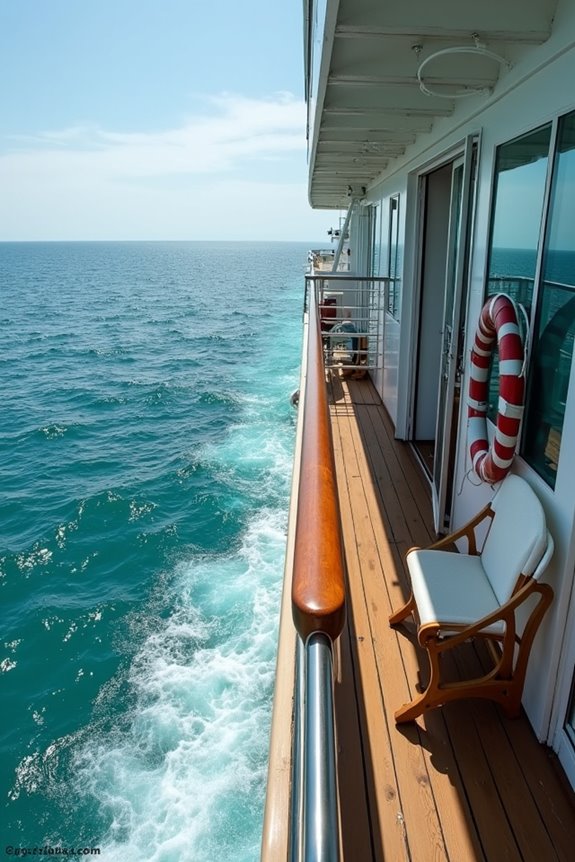
Where you’re positioned on a Carnival ship substantially shapes your access to onboard activities and waterside experiences. Cove balcony distance from main activity hubs creates a practical trade-off you’ll want to consider carefully.
Your cove balcony’s location on lower decks positions you farther from upper-deck pools, fitness centers, and entertainment venues. This distance defines your daily movement patterns throughout the ship. The privacy and sea view trade-off becomes apparent when you weigh quieter surroundings against longer walks to activities.
However, proximity to port-side entry points streamlines beach excursions and tendering processes. Glass or metal railings on your balcony allow unobstructed views regardless of deck positioning. You’ll need to honestly assess whether you’ll spend significant time on your balcony or prefer staying near activity centers before booking.
Deck 2 Access: Easier Embarkation for Cove Guests
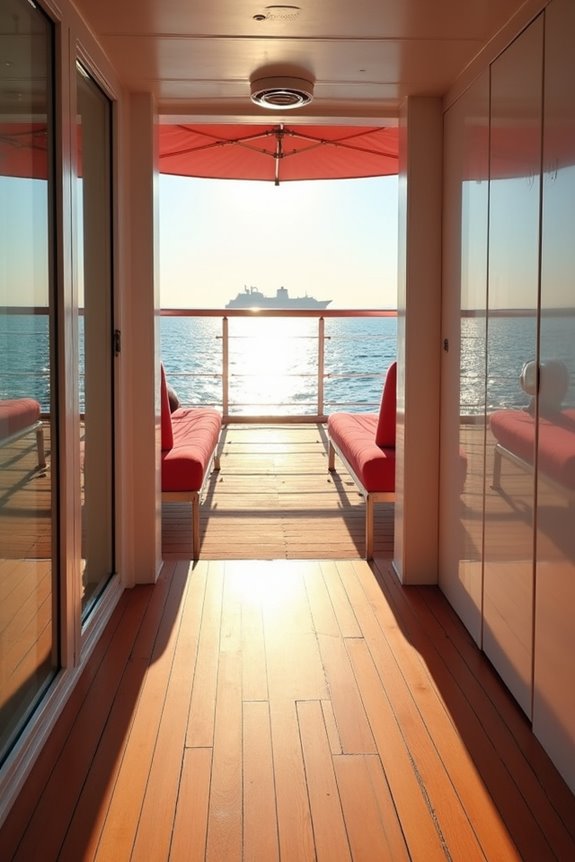
Cove balconies’ positioning on Deck 2 creates a distinct advantage that directly addresses the embarkation challenges mentioned earlier. You’ll notice the deck 2 access reduces your travel time significantly when boarding and disembarking your ship. This lower-level placement means you’re steps away from port entries rather than navigating multiple decks and corridors.
| Embarkation Factor | Cove Balcony Benefit | Traditional Cabin | Time Saved |
|---|---|---|---|
| Distance to gangway | Immediate access | Multiple deck levels | 10-15 minutes |
| Luggage handling | Shorter transport route | Longer hallways | Considerable |
| Port excursion entry | Quick departure | Delayed boarding | Significant |
| Return logistics | Faster cabin access | Extended elevator waits | Notable |
The Cove balcony does reduce walking substantially because deck 2 positioning places your cabin nearest the embarkation points. You’ll appreciate this practical advantage during busy port days when crowds create bottlenecks on upper decks. Verify your specific ship’s deck plan though, since embarkation convenience varies by vessel.
When Rough Seas Close Your Balcony
During storms, your balcony access will be restricted by safety protocols that Carnival implements to protect guests from unpredictable wind and spray. The cove’s lower deck positioning creates stronger motion and weather exposure, which is why crew members may seal balcony doors during rough conditions. You can still view the ocean through your window, but you’ll lose outdoor access until seas calm and safety conditions improve.
Storm Doors and Safety Protocols
What happens to your balcony access when waves grow rough? Carnival installs storm doors on Cove balconies as a safety protocol during severe weather. These doors seal off your balcony area to prevent water intrusion and wind-driven spray from entering your cabin. The storm doors create a protective barrier because rough seas generate powerful forces that threaten passenger safety.
You’ll notice closure times vary depending on your ship class and specific sailing conditions. Some voyages experience intermittent balcony access throughout your voyage. When storm doors close, you’ll still see your main cabin window, but you won’t access the outdoor space itself.
Plan accordingly. Rely on your interior cabin during rough conditions rather than expecting consistent balcony availability. Understanding these safety measures helps you decide whether a Cove balcony matches your cruising expectations.
Weather-Related Access Restrictions
Beyond storm door closures, weather conditions themselves create real constraints on your balcony’s usability. You’ll experience temporary access restrictions during rough seas and hurricane season, especially for coves positioned beneath galley or dining areas.
Consider these weather-related factors:
- Amplified movement and spray – Coves under food service areas experience intensified salt spray and wind dynamics, reducing comfort even when technically accessible.
- Temporary closure protocols – Storm conditions seal off your balcony entrance, preventing safe passage to the outdoor space.
- Seasonal limitations – Hurricane season defines extended periods when your cove access remains restricted for passenger safety.
The salt spray does damage railings and furniture because ocean moisture accelerates corrosion. You’ll want to weigh these weather-related access restrictions against the cove’s privacy benefits before booking.
Rough Seas Impact on Usability
How much usable time you’ll actually spend on your cove balcony depends heavily on sea conditions. Rough seas create significant limitations that define your experience at sea.
| Condition | Impact | Usability |
|---|---|---|
| Calm waters | Minimal restrictions | Full access |
| Moderate waves | Occasional closures | Limited hours |
| Rough seas | Extended lockdowns | Severely restricted |
When waves intensify, crew members seal cove balconies for weather safety reasons. Deck 2 Main locations show higher sensitivity to movement and sea state. Forward-facing coves experience increased salt spray and wind exposure during storms. Some guests report persistent water exposure and noise even in sheltered positions, depending on your ship class.
The rough seas impact on cove balcony usability extends beyond just viewing. Crews restrict access to protect passengers effectively. Understanding these weather patterns helps you decide whether booking a cove balcony aligns with your sailing schedule and expectations.
Cove Balcony Pricing: Understanding the Cost Premium
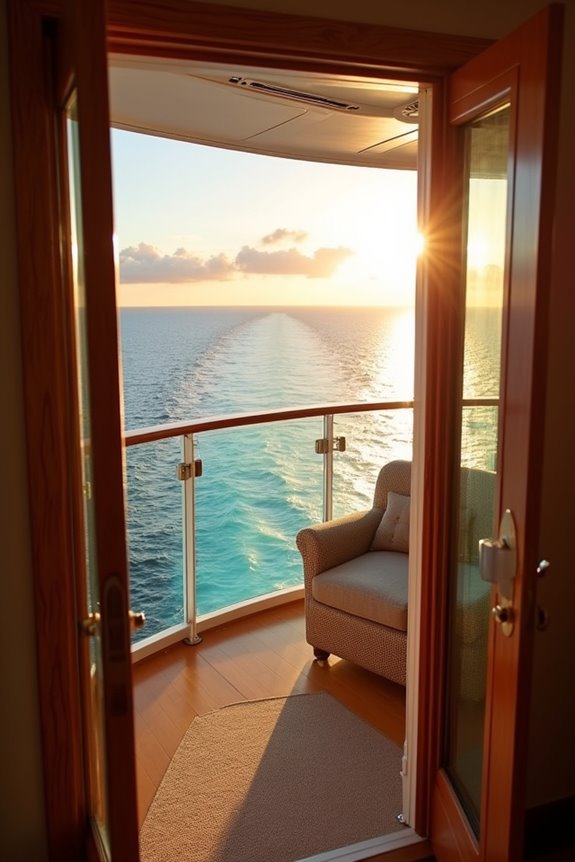
Most Cove balconies command a noticeable price premium over standard balconies, typically ranging from 10-25% higher depending on your ship and sailing dates. Understanding Cove balcony pricing helps you evaluate whether the investment aligns with your cruise priorities.
Several factors define your actual cost:
- Ship class and deck location — Excel and Vista-class vessels price Cove categories differently; lower decks often cost less than midship positions
- Itinerary and sail date — Peak seasons and popular routes increase premiums; off-season sailings create more competitive pricing
- Availability and discounts — Last-minute sales reduce costs significantly; early bookings sometimes secure better rates
The extra 45 square feet versus standard balconies’ 35 square feet justifies the increase for many cruisers. However, reduced sun exposure and potential wind spray represent trade-offs you’ll want to consider carefully before committing financially.
How to Choose Between a Cove and Regular Balcony?
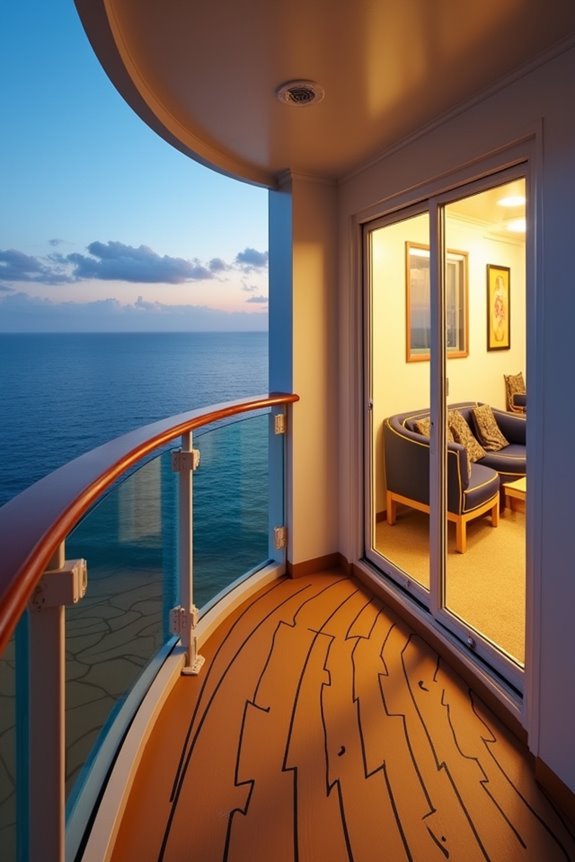
Which cabin layout serves your cruise priorities better—privacy or views?
Your choice hinges on what matters most. If privacy defines your ideal cruise experience, a cove balcony delivers with solid side walls and reduced visibility from passing foot traffic. The enclosed design creates a personal retreat, though you’ll sacrifice expansive ocean vistas.
Cove balconies prioritize privacy with solid walls and reduced foot traffic visibility, though you’ll sacrifice expansive ocean views for seclusion.
Regular balconies prioritize open views and broader sight lines. You’ll enjoy unobstructed panoramas, but you’ll also accept less seclusion.
Consider your sun exposure needs. Cove balconies on lower decks may receive limited direct sunlight due to overhead structures. Regular balconies offer more consistent sun access.
Evaluate the privacy-view trade-offs honestly. The cove balcony vs regular balcony decision ultimately reflects whether you value solitude or scenery during your voyage.