You’ll create a functional bedroom by starting with mood, then prioritizing your bed, dresser, and nightstand—the pieces you use daily. Platform beds maximize storage without premium pricing; engineered wood with quality drawer glides offers durability on budget. Upholstered beds add softness at reasonable cost. Measure your space first to avoid costly doorway mishaps and maintain 24–36 inches of walking clearance. Mix furniture scales intentionally so your room doesn’t feel cramped. Financing options protect your timeline while quality construction defines long-term value, and specific strategies exist for each budget tier.
Start With Mood and Vision, Not a Furniture List
Before you browse bedroom furniture listings, take time to define the mood you actually want in the space. A mood-first approach shapes every purchase decision. You’ll find that warm wood tones create comfort, while clean lines define modern simplicity. Softer upholstered beds establish calmness because their texture invites relaxation.
Define your bedroom’s mood first—it shapes every furniture choice, from warm wood tones to soft upholstered textures.
Start by collecting finished bedroom photos that match your vision-driven shopping goals. Look for repeating patterns: color palettes, material choices, and design details. These patterns reveal what resonates with you.
Prioritize high-use pieces—your bed, dresser, and nightstand—before selecting accessories. The bed anchors your room because it occupies the most visual space. Let mood guide these essential selections rather than matching a furniture set.
This focused approach reduces regret and accelerates your shopping process.
Build a Realistic Budget Around Daily-Use Pieces
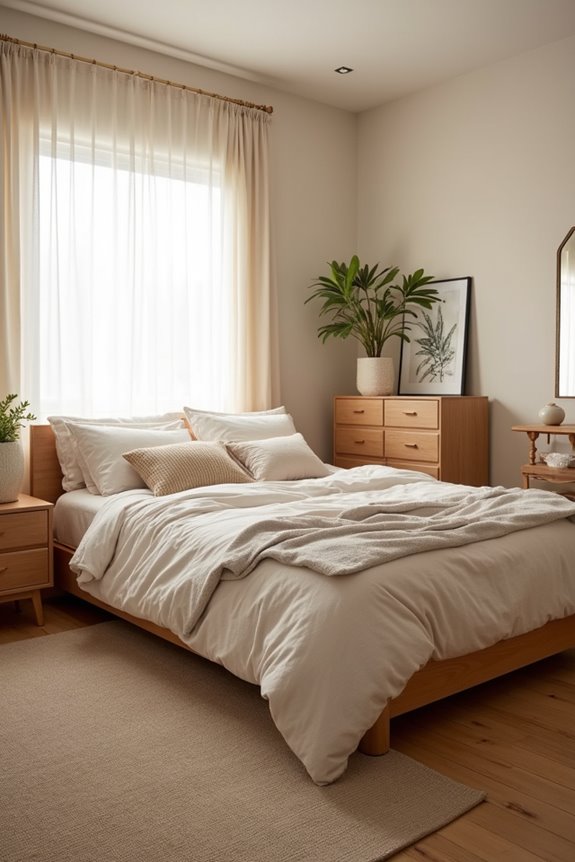
How do you know where to spend first? Your bedroom budget works best when you prioritize daily-use pieces that define both comfort and function. The bed anchors your room because you spend roughly eight hours there nightly. A quality dresser creates essential storage while grounding the space visually. Your nightstand serves you every morning and evening, making it worth the investment.
List what you need now—these core furniture pieces deserve your largest allocation. Separate items that can wait, like accent chairs or chests. Set a realistic spending cap to prevent impulse purchases that derail your plan. This framework creates flexibility. You’ll allocate remaining funds toward finishing touches: lamps, mirrors, and decor that enhance perceived value without overextending finances.
Measure Your Space: Avoid Costly Mistakes Free
Once you’ve identified your core pieces and set your budget, taking precise measurements of your bedroom prevents expensive delivery problems and furniture that won’t fit. Measure your room’s length and width to understand usable floor space accurately. Note ceiling height, doorway dimensions, and any hall turns that affect how large pieces enter your home. Document window sill heights and curtain projections because they define bed placement and natural lighting. Record outlet locations, floor vents, and how bedroom doors swing to maintain drawer clearance. Space planning requires capturing these details. Your layout clearance strategy should maintain 24 to 36 inches of walking space around beds and dressers. This approach creates functional rooms where furniture serves daily needs without obstruction.
Materials That Last on a Budget: Engineered vs. Solid Wood
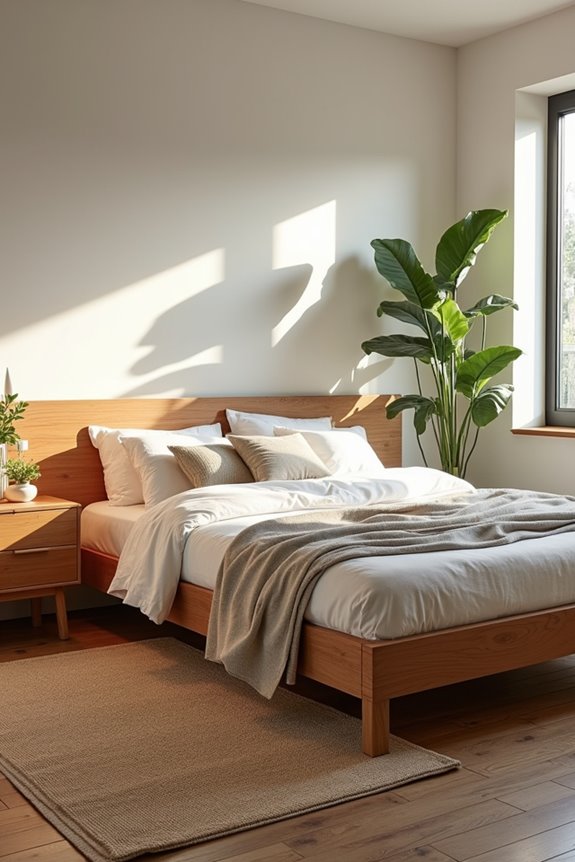
When you’re shopping for bedroom furniture on a budget, you’ll find that engineered wood with veneers creates durable surfaces at lower costs than solid wood alternatives. The real difference in longevity comes down to construction details—kiln-dried framing, metal drawer glides, and corner blocking define whether your piece lasts five years or longer. You’ll want to examine veneer depth and drawer fit consistency, since these hidden qualities matter more than the material type itself.
Engineered Wood Benefits And Trade-Offs
Why settle for furniture that warps and shifts with the seasons when engineered wood creates stability without the solid wood price tag? Engineered wood’s plywood core with veneers delivers consistent performance in your bedroom’s changing humidity levels. The dense materials resist warping because their layered construction distributes stress evenly. You’ll find veneers mimic walnut, oak, and cherry tones authentically, enabling varied aesthetics at fraction costs.
Trade-offs exist, though. Engineered wood offers limited repairability compared to solid options, and resale value typically runs lower. Deep scratches can’t be sanded away like solid wood pieces. However, well-constructed engineered furniture provides solid durability through proper joinery and quality drawer glides. You’re choosing practical longevity over investment potential—a sensible balance for budget-conscious bedroom upgrades.
Solid Wood Construction And Durability
Solid wood furniture offers a different value equation when you’re building a bedroom that’ll outlast trends. Real wood creates inherent durability through dense grain structure and natural stability. The wood resists warping because its solid composition absorbs moisture evenly, unlike engineered wood’s layered construction.
Quality solid wood construction defines longevity through superior joinery methods. Corner blocking reinforces frame joints, preventing wobbling and structural failure over years. Metal hardware and sturdy fasteners extend usable lifespan significantly.
However, solid wood demands maintenance. Finishes require periodic renewal, and scratches reveal raw wood underneath. Engineered wood, by comparison, offers consistent veneer surfaces that hide imperfections more effectively.
Your choice hinges on priorities. Solid wood delivers durable construction and repairability. Engineered wood provides cost-effective stability. Both deliver bedroom solutions when construction quality matters more than material type alone.
Hidden Details That Determine Longevity
Beyond material choice, construction details separate furniture that lasts five years from pieces lasting fifteen. You’ll find that drawer hardware—specifically metal glides rather than plastic—creates smoother operation over decades. Construction quality matters more than you’d think. Corner blocking and reinforced joinery define how well a piece resists wobbling and warping.
The core material’s density does work because compressed engineered wood resists moisture damage better than cheaply made solid alternatives. Kiln-dried framing prevents seasonal swelling that cracks finishes. Materials durability depends on finish application too; quality lacquer or polyurethane protects against daily wear.
When examining pieces, look at consistent drawer fit and smooth operation. These observable details predict satisfaction far better than price tags alone.
Platform Beds: Maximum Storage Without Premium Pricing
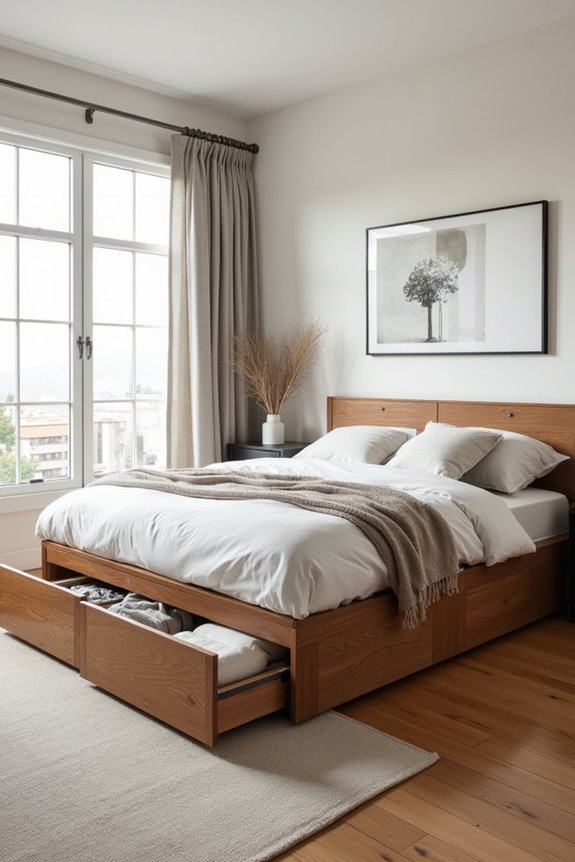
Platform beds solve the storage puzzle by placing your mattress directly on the frame instead of requiring a box spring. This design creates a lower profile that maximizes visible floor space in smaller bedrooms.
You’ll find platform beds commonly feature built-in drawers or hollow frames underneath. These integrated storage options increase bedroom capacity without adding bulk to your room. The beds come in wood, engineered wood, or metal materials in various tones. This range enables you to match existing furniture while maintaining a streamlined look.
The minimalist, flat-panel design of most platform beds offers an affordable and versatile aesthetic. You achieve a finished bedroom appearance at a reasonable cost. When selecting your platform bed for maximum storage, prioritize solid construction and sturdy drawer hardware. Compatible storage accents like low benches or matching headboards further define your space.
Dressers: The Storage Anchor That Defines Your Room
You’ll want to examine how your dresser’s drawer slides and frame construction define its longevity, because quality hardware prevents wobbling and sticking during daily use. The proportions you choose—whether a wide five-drawer model or a narrow four-drawer version—creates different visual weight in your room and determines how much floor space remains available. Your dresser’s finish, whether natural wood, painted lacquer, or laminate veneer, directly affects how well it resists dust and moisture in your bedroom’s climate.
Drawer Construction and Quality
Most quality differences in dressers aren’t visible at first glance. You’ll find the real story by examining drawer hardware and construction quality underneath. Metal ball-bearing glides create smooth operation because they distribute weight evenly across the drawer’s path. When you pull a drawer, it should glide without resistance or wobbling.
Solid wood frames with proper joinery define durability. The drawer box functions properly because kiln-dried wood resists warping and splitting over time. Consistent drawer fit matters too—gaps shouldn’t widen or narrow as seasons change.
You’ll notice engineered wood with veneers performs well in humid climates, resisting damage better than cheaper solid-wood options. These construction choices solve real problems: sticky drawers, misalignment, and premature wear. Quality construction keeps your dresser functional for years.
Scale and Proportion Matters
Why does a dresser’s size matter more than its finish? Because dresser scale directly defines your room proportions and how you move through the space. A piece that’s too deep shrinks your walking area and reduces the entire room’s quality. An appropriately sized dresser preserves balance with your bed and nightstands, maintaining open sightlines throughout.
Your furniture sizing choices create visual harmony. A taller dresser paired with lower nightstands reinforces cohesive room scale. The dresser’s top surface—whether holding a mirror or lamps—contributes to proportional design. Matching the dresser’s footprint to surrounding clearances allows comfortable movement around the bed and entry points.
Quality hardware and solid construction matter beyond appearance. These details define perceived value and durability, anchoring your bedroom’s overall aesthetic strength.
Finish Durability For Daily Use
A dresser’s finish determines how well it survives years of daily pulls, spills, and dust accumulation. You’ll want finishes that resist fading and scratching in real homes, not just showroom lighting. Engineered wood with veneers or laminates outperforms cheaper solid woods in long-term wear. The drawer hardware does its job because quality metal runners support repeated opening without binding or misalignment.
| Finish Type | Durability Rating | Best For |
|---|---|---|
| Lacquer | High | Modern styles |
| Polyurethane | Very High | Family use |
| Veneer | Medium-High | Budget options |
| Laminate | High | Moisture areas |
| Solid wood stain | Medium | Traditional rooms |
Solid construction with kiln-dried framing creates rigidity that preserves your dresser’s shape. Precise drawer fits define smooth operation over years of daily activity. These choices protect your investment.
Nightstands: Scale and Accessibility Over Matching Sets
When selecting nightstands, prioritize scale and accessibility over matching your bedroom set. You’ll want nightstands that fit your bed’s proportions without overwhelming the room. Narrower options work best in compact spaces, preserving walkable pathways and allowing drawers to open fully.
The nightstand’s height does matter because it should align with your mattress top. Aim for 24 to 36 inches of clearance around walking areas to maintain unobstructed access. Oversized pieces create scale mismatches with tall beds, shrinking visible space and disrupting room flow.
Choose designs with practical storage—drawers or shelves—that support daily tasks and keep surfaces organized. Pair lower-profile beds with compact nightstands to maintain proportion and simplify bed making. This approach defines functional bedrooms that work for your lifestyle, not decorative bedroom sets.
Upholstered Beds: Softness and Style Without Luxury Pricing
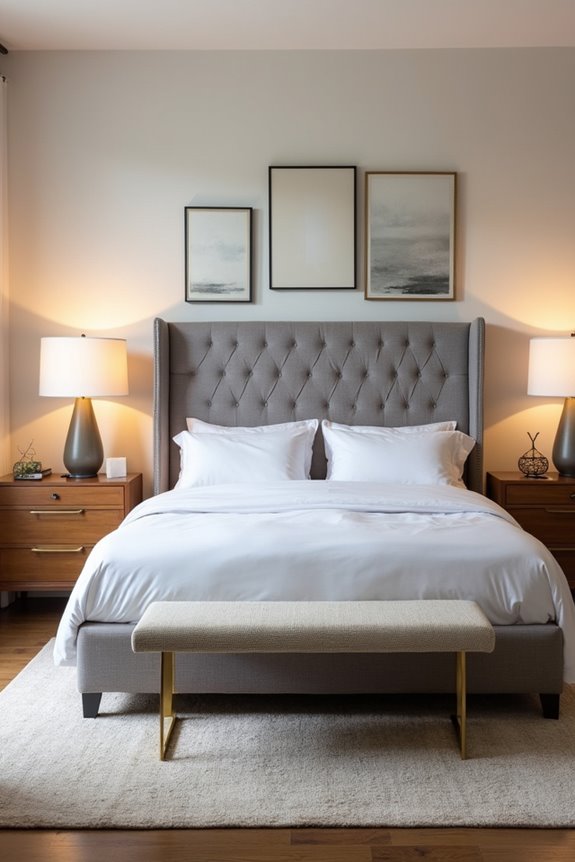
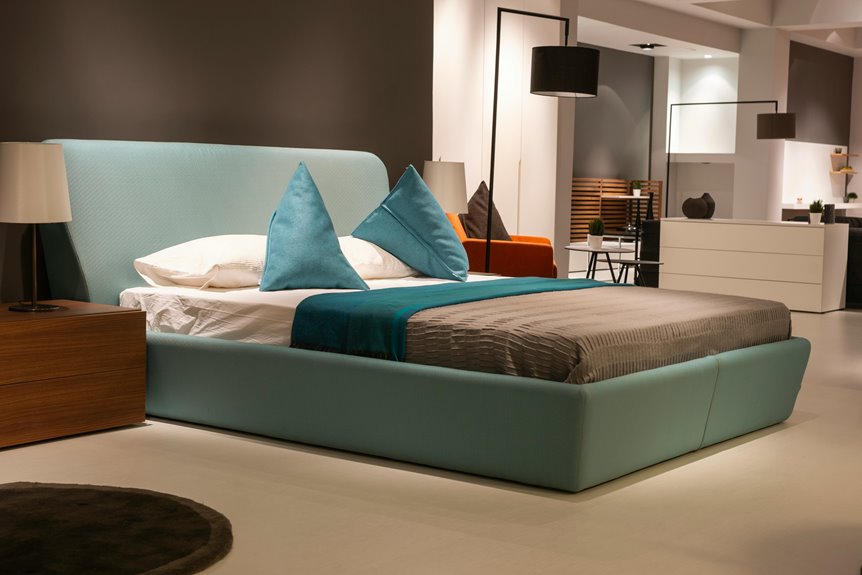
Upholstered bed frames offer soft fabric textures that increase bedroom comfort at accessible prices. You’ll find that neutral fabrics like linen, cotton, and polyester blends provide flexibility for future decorating changes. These materials work well because they pair seamlessly with existing pieces. Quality upholstered beds maintain their appearance through years of use.
Colorful or patterned upholstery adds personality to your space, establishing character that lasts through design trends. You can balance an upholstered bed by pairing it with simple, restrained dressers and nightstands. This approach keeps your room cohesive without visual clutter.
Natural fiber upholstery offers versatility across different bedroom styles, from modern to traditional. Softness improves your sleeping environment without requiring significant investment.
Avoid the Cramped Look: Mixing Furniture Scales Intentionally
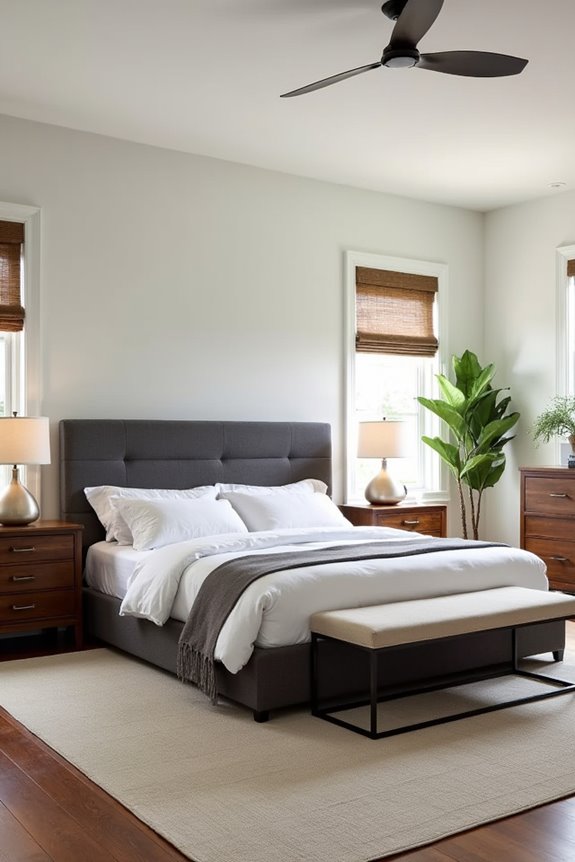
You’ll notice that mismatched furniture scales—pairing a low dresser with a towering bed frame—creates visual balance and defines functional pathways through your room. The key strategy involves matching nightstand heights to your bed’s proportions, because this alignment maintains sightlines and prevents awkward spacing around your sleeping area. Strategic placement of deeper pieces on opposite walls preserves the 24–36 inches of clearance you need for daily movement and drawer access.
Scale Matching With Proportions
How do you prevent a bedroom from feeling cramped when you’re mixing different furniture sizes? Scale matching with proportions creates balance. You’ll want to pair tall pieces with low ones rather than clustering similar heights together. A high chest pairs well with a low dresser because contrasting silhouettes define visual interest without overwhelming the space.
Prioritize clearance around key areas. You need 24 to 36 inches around your bed and drawers for comfortable movement. The nightstand matters greatly because mismatched proportions—like tiny tables beside a massive bed—cheapen the room visually.
When choosing pieces, measure your entry paths and room dimensions first. Bulkier case goods require adequate delivery space. Select smaller or lower-profile alternatives if larger items create tight clearances. Intentional scale mixing prevents cramped feelings while distributing furniture thoughtfully across your bedroom.
Spatial Flow And Clearance
Understanding your room’s walking paths matters as much as selecting individual pieces. You’ll want to maintain 24 to 36 inches of clearance around key areas to prevent that cramped feeling. Your space planning should prioritize walkways near the bed, in front of drawers, and around entryways.
The layout fit determines how functional your bedroom actually is. Deeper dressers or multi-box bed frames often fail to pass through doorways, so measure your entry paths before purchasing. You’ll avoid costly mistakes by testing dimensions against your actual space.
Clearance around furniture creates comfortable daily movement and makes rooms feel larger. Drawers need accessible space in front. Nightstands shouldn’t overwhelm narrow passages. When you plan layouts with purpose, you’re not just arranging items—you’re defining how you’ll live in that space daily.
Financing and Delivery: Protect Your Budget and Timeline
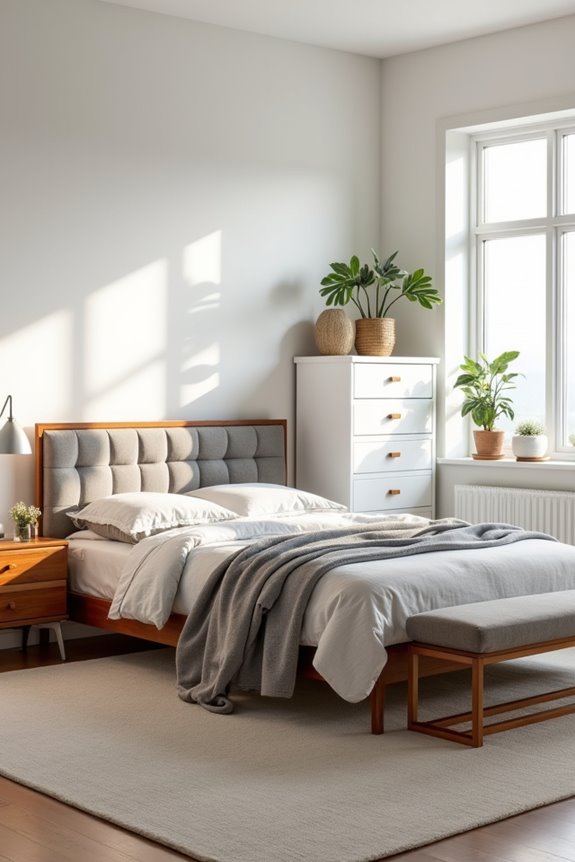
When does your bedroom furniture need to arrive, and what monthly payment fits your wallet?
Financing creates flexibility that aligns your budget with quality pieces. You’ll find delivery timelines vary considerably across retailers and item types:
- In-stock items ship within one week for immediate needs
- Custom upholstery requires weeks to months for personalization
- Designer collaborations extend lead times but offer unique styles
- Standard stock balances wait time with affordability
- Made-to-order options let you define specific finishes and materials
The payment plan does relieve financial pressure because spreading costs monthly keeps your overall bedroom budget manageable. Many retailers offer in-store or virtual design assistance to match financing options with realistic delivery schedules. Durable construction and appropriate finishes maximize long-term value within your budget constraints. Your timeline and financial capacity should guide every furniture selection you make.