

Cabinets consume 29% to 40% of your kitchen remodel budget, making them your largest single expense.
You’ll spend $5,000 to $30,000+ depending on whether you choose stock ($100–$300 per linear foot), semi-custom ($150–$650), or custom options ($500–$1,200+).
Cabinet quality directly defines durability and daily function through material selection, hardware, and installation.
To control costs, choose semi-custom cabinets that balance craftsmanship with affordability, set a 10–15% contingency for surprises, and compare material options.
Understanding how cabinet choices cascade through your entire project budget requires examining each component separately.
What Percentage of Your Budget Should Go to Cabinets?
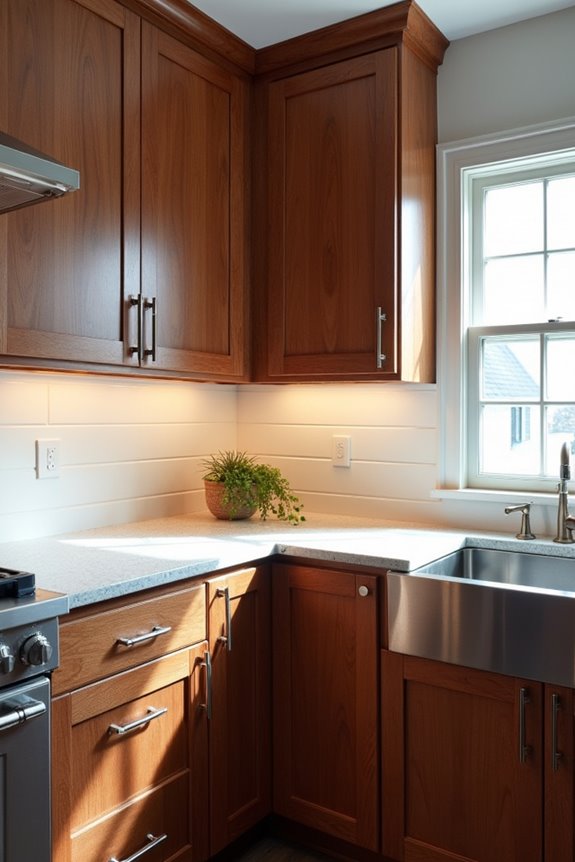
Why do cabinets consume nearly a third of your kitchen remodel budget? They’re the largest visible elements in your space, requiring skilled installation and quality materials. Cabinets typically account for 29% to 40% of your total remodel investment, making them the single most expensive component.
Your cabinet costs directly depend on the type you choose. Stock cabinets run $100–$300 per linear foot, while semi-custom options range from $150–$650 per linear foot. Custom cabinetry reaches $500–$1,200+ per linear foot. Overall, budget $5,000 to $30,000+ depending on kitchen size and finishes.
The percentage varies substantially based on material selections and project scope. Prioritizing cabinet quality creates durability and defines your kitchen’s functionality for decades. This investment supports your long-term satisfaction and home value.
Why Cabinet Costs Consume Nearly 30% of Your Budget
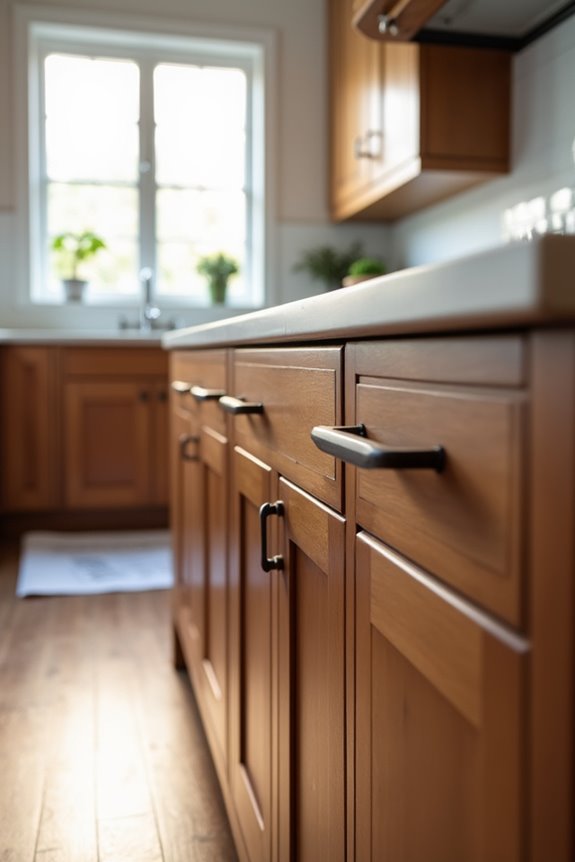
What makes cabinets your kitchen’s biggest budget line item? Cabinetry costs consume nearly 30% of your kitchen remodel because cabinets cover extensive wall and base space. You’re investing in quality materials, precision craftsmanship, and skilled installation that defines your kitchen’s functionality and appearance.
| Factor | Impact |
|---|---|
| Material quality | Durability and longevity |
| Hardware and hinges | Daily usability and wear |
| Custom sizing | Maximized storage efficiency |
| Finish options | Aesthetic cohesion |
Your budget allocation reflects the reality that semi-custom cabinets and fully custom options require specialized labor. The cabinetry quality you select directly influences how your kitchen performs daily. These aren’t decorative afterthoughts—they’re structural elements that solve storage challenges throughout your home.
What Do Countertops Cost in a Kitchen Remodel?
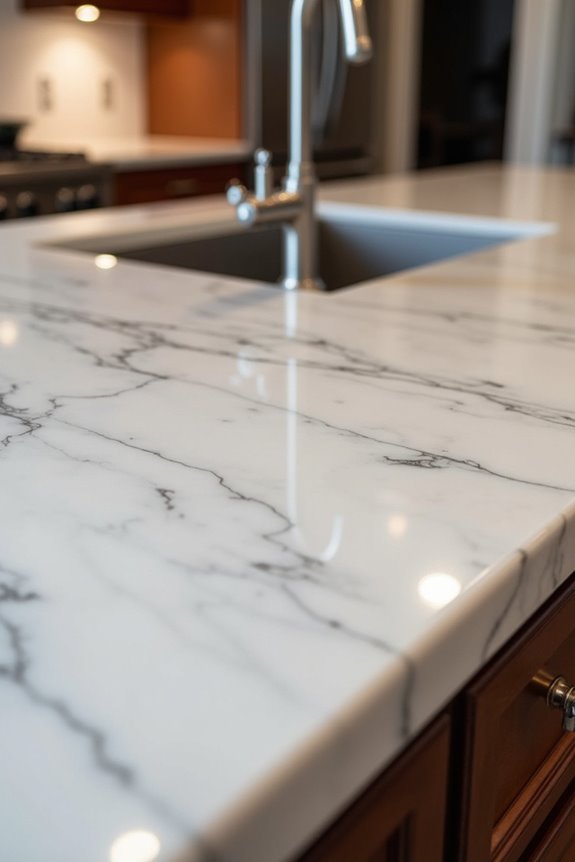
You’ll find countertop costs range from $2,000 to $10,000+, with your material choice—granite, quartz, laminate—defining both the price tag and how long your surfaces last. Premium options like Caesarstone offer durability that withstands daily prep work, while budget selections require more frequent maintenance and replacement. Installation and labor expenses add another layer to your total, so you’ll want to balance upfront investment against the years of performance you’ll actually receive.
Countertop Material Price Ranges
Countertops represent your kitchen’s hardest-working surface, and material choice dramatically shapes both your budget and long-term satisfaction. You’ll find that countertop material options create vastly different price points and performance levels.
Consider these popular countertop choices:
- Laminate: $10–$25 per square foot, budget-friendly but less durable
- Granite: $40–$100 per square foot, natural stone with unique patterns
- Quartz countertops: $55–$120 per square foot, engineered for consistency and durability
- Solid surface: $35–$65 per square foot, seamless and repairable
Quartz options like Cambria and Caesarstone work well in high-end kitchens because they resist stains, heat, and scratches without sealing. The countertop cost ultimately depends on your square footage and lifestyle demands. Material durability matters since your countertops endure daily prep work and heat exposure consistently.
Quality Versus Budget Selection
Once you’ve narrowed down material options, the real decision centers on balancing what you want against what you can spend. Your material choice defines both durability and daily maintenance demands. Quartz countertops like Cambria cost more upfront but require minimal upkeep, creating long-term value. Budget options exist, though they may demand more frequent sealing or care. The countertops work hardest when matched thoughtfully to your cabinetry. They create visual continuity because aligned finishes strengthen your kitchen’s cohesion. Consider what matters most: appearance, longevity, or initial savings. Mid-range selections often deliver the best balance. Your investment maximizes resale appeal when you select materials that endure without demanding constant attention.
Installation and Labor Expenses
How much of your remodel budget actually goes toward getting countertops installed? Installation and labor costs typically consume 13% to 35% of your total remodel budget, depending on project complexity and whether you hire professionals or tackle work yourself.
Your countertop installation creates hidden expenses beyond material prices:
- Removal of existing surfaces and proper disposal
- Custom fabrication for sink cutouts and backsplash edges
- Professional sealing treatments that protect against stains
- Contractor fees for carpentry and plumbing adjustments
The labor costs rise significantly when your project requires integrated sinks or appliance modifications. Premium materials like Cambria quartz demand more precise installation work than laminate options. Understanding these contractor fees upfront helps you allocate resources strategically and avoid budget surprises during your kitchen remodel.
Kitchen Appliance and Installation Costs: What’s Typical?
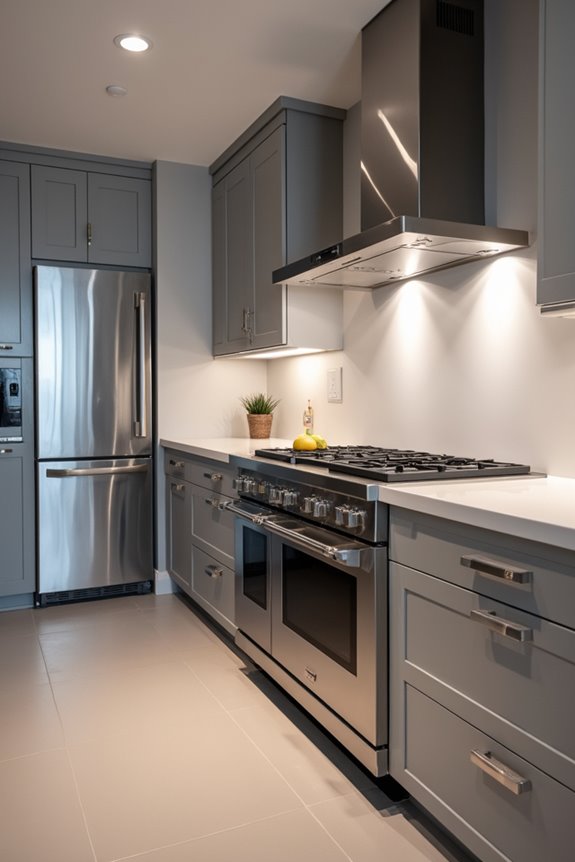
When you select appliances for your kitchen remodel, you’re looking at costs ranging from $3,000 to $15,000+ depending on brand quality and feature sets. Your installation labor adds another significant layer, as professional placement and connection of appliances creates proper function and safety compliance. Understanding both appliance pricing and installation expenses helps you allocate your overall remodel budget smartly, since appliances typically consume about 17% of your total project cost.
Appliance Selection and Pricing
What you’ll spend on appliances often defines the entire kitchen remodel budget. You’re looking at $3,000 to $15,000+ nationally, depending on quality and features. Your choices create ripple effects throughout your project costs and timeline.
Consider these appliance priorities:
- Refrigerators, ranges, and dishwashers deserve your investment since you use them daily
- Energy-efficient models cost more upfront but reduce utility bills significantly over time
- Integrated appliances blend seamlessly into cabinetry, creating a polished look
- Counter-depth options fit flush with cabinets rather than protruding into your space
Layout changes complicate appliance costs. New venting, gas lines, or electrical upgrades add thousands quickly. The refrigerator’s location shift might require extra wiring. A professional range needs upgraded ventilation systems.
Balancing function with budget means prioritizing what you use most. Defer luxury appliances until later phases.
Installation Labor and Costs
Installation labor typically represents 13% of your total kitchen remodel budget, though some projects see labor costs climb to 20%–35% depending on scope and location. You’ll find that cabinets, countertops, and appliances drive the highest installation expenses. Cabinetry alone often consumes your largest budget portion because proper fitting requires skilled work.
Regional differences matter markedly. High-cost metro areas push installation costs up 30%–40% above national averages. Your budgeting strategy should account for these variables early.
The installation process defines your final result because quality workmanship creates proper alignment and functionality. You can control expenses through three approaches: DIY installation, partial professional help, or full-service contractor work. Each option produces different labor-to-material price breaks. Understanding these distinctions helps you allocate resources effectively throughout your remodel.
How Do Kitchen Size and Layout Drive Overall Expenses?
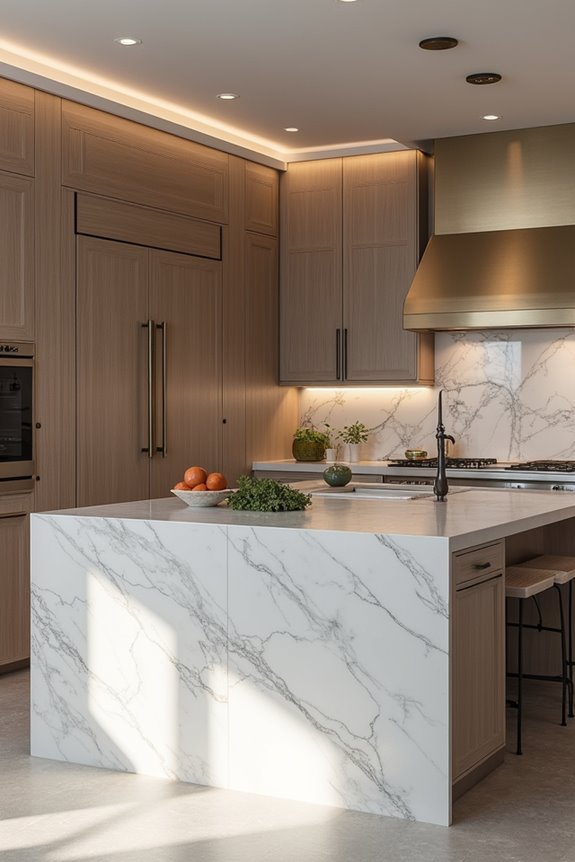
Why does kitchen size matter so much to your budget?
Your kitchen’s dimensions directly determine material quantities and labor demands. Larger spaces require more cabinetry, countertops, flooring, and appliances, increasing expenses. Smaller kitchens present a different challenge: they often cost more per-square-foot when you choose premium materials or custom cabinetry.
Layout changes create significant cost impacts beyond base installations:
- Moving plumbing lines adds thousands to your mid-range remodel budget
- Relocating electrical outlets requires licensed electrician involvement
- Gas line adjustments demand specialized professionals and permits
- Each infrastructure shift compounds your overall project expenses
The cabinetry itself drives your spending because it consumes 25% to 40% of total remodel costs. Larger kitchens benefit from economies of scale, yet they demand more total materials. Understanding these relationships helps you allocate funds strategically and avoid unexpected expenses throughout your renovation.
How Material Quality Impacts Your Kitchen Remodel Cost
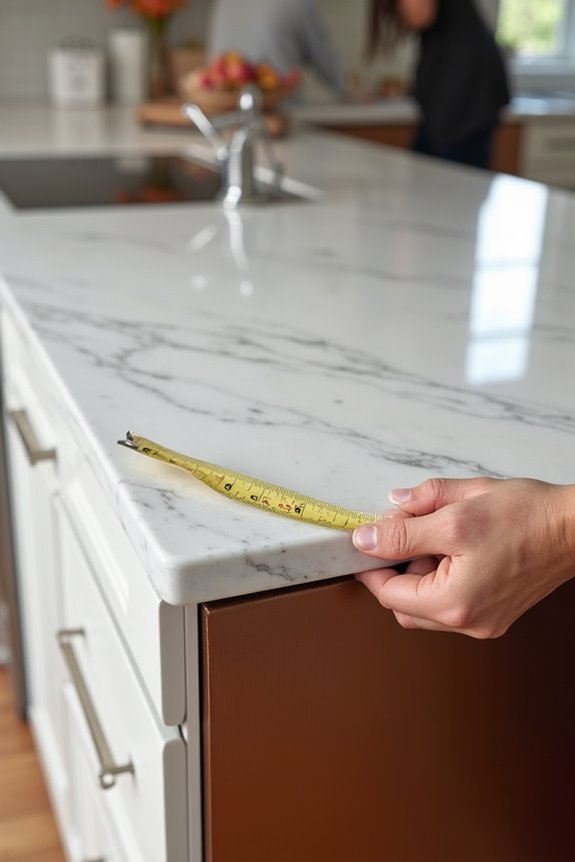
Material choices directly determine both your cabinet costs and how long your investment lasts. Solid wood cabinetry costs significantly more than laminate or MDF, yet provides superior long-term durability that protects your kitchen for decades. Stock vs semi-custom options define your budget differently: stock cabinets run $100–$300 per linear foot, while semi-custom ranges $150–$650. Custom cabinets demand $500–$1,200+ per linear foot because they’re built to your exact specifications.
The material you select does impact resale appeal because quality construction signals value to future buyers. Solid wood withstands daily wear better than composite materials, reducing repair costs over time. When you invest in durable cabinetry materials now, you’re avoiding expensive replacements later. Your material quality choice shapes both immediate expense and long-term financial sense.
Hidden Kitchen Remodel Costs: Permits, Plumbing, and Electrical
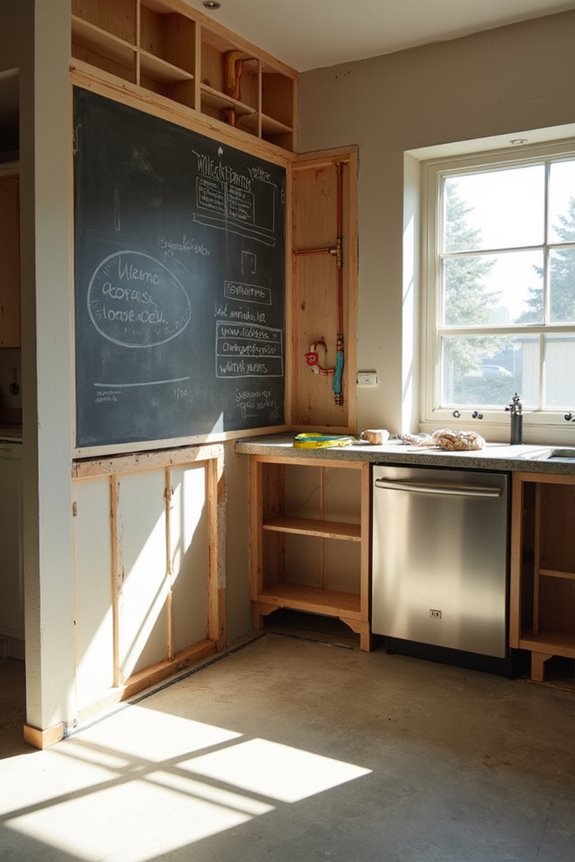
When you move beyond cabinet selections and surface finishes, a different category of expenses emerges—one that homeowners often underestimate. These hidden costs can reshape your entire budget and timeline significantly.
Consider these critical expenses:
- Permits create mandatory fixed costs that you can’t avoid, and they define your project’s legal compliance
- Plumbing work drives substantial expenses when you relocate fixtures or install new lines throughout your kitchen
- Electrical upgrades add considerable costs for new outlets, lighting, and code compliance requirements
- Contingencies (10–15% of your budget) protect you against water damage, mold, or structural surprises behind walls
The plumbing does the heavy lifting because moving even one sink location requires new supply lines and drainage. Electrical changes similarly compound expenses when you reconfigure layouts. Permits and inspections, though administrative, create necessary delays that inflate labor costs. Coordinating these three elements—permits, contractor schedules, and inspection timelines—prevents cascading delays that derail budgets entirely.
Budget Breakdown: Low, Medium, and High-End Remodels
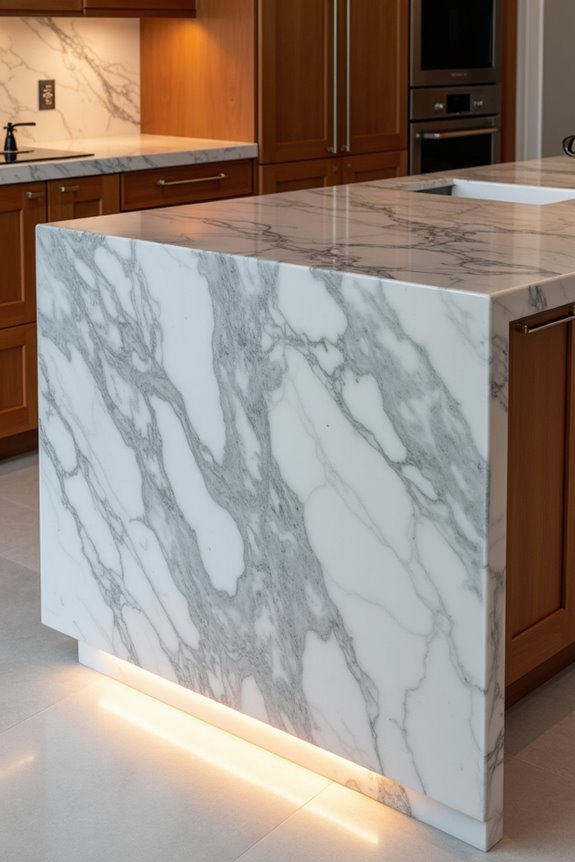
How much you’ll actually spend depends entirely on which tier you choose. Your low-end remodel allocates 29–40% toward cabinets, making them the dominant expense. Stock cabinets run $100–$300 per linear foot, creating budgets around $5,000–$15,000 total.
Mid-range projects shift focus differently. Semi-custom cabinets cost $150–$650 per linear foot, defining a more balanced budget breakdown. You’re investing in better finishes and hardware without full customization.
High-end remodels prioritize premium materials elsewhere. Custom cabinets command $500–$1,200+ per linear foot because wood species, finish quality, and internal mechanisms cost substantially more. Cabinet costs reach $30,000+, though the percentage of total budget may decrease as countertops and appliances receive greater investment.
Regional location matters significantly. High-cost metros push cabinet costs 30–40% higher, reshaping your entire budget breakdown regardless of tier.
Kitchen Remodel Cost-Cutting Strategies That Actually Work
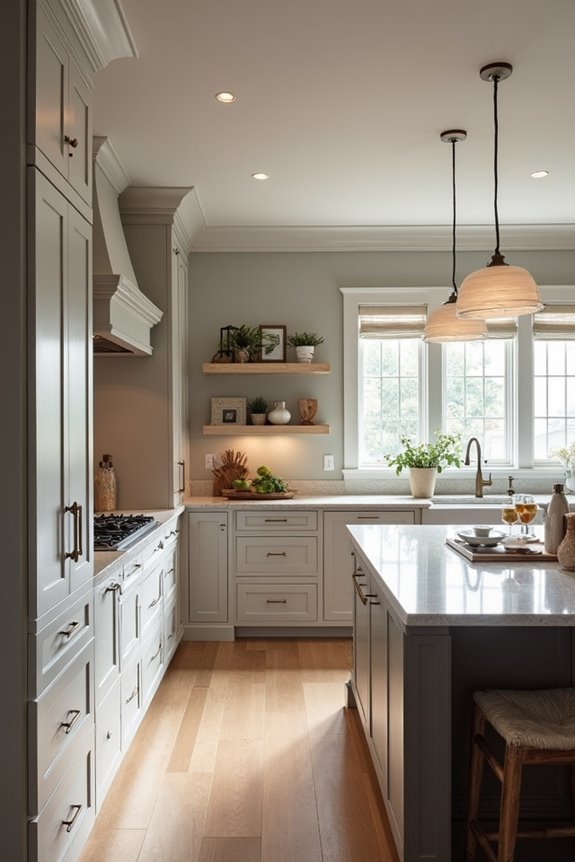
Kitchen cabinets consume roughly one-third of your remodel budget, but you’re not locked into paying premium prices. Smart decisions create significant savings without compromising function or appearance.
Consider these proven strategies:
- Choose stock or semi-custom cabinets instead of fully custom options that run $500 to $1,200+ per linear foot
- Refinish or reface existing cabinets to preserve your layout while dramatically reducing total spend
- Keep your current kitchen layout to avoid expensive plumbing, electrical, and gas-line relocations
- Prioritize essential upgrades like appliances and functional cabinetry before considering luxury additions
The layout remains your most influential decision. Moving utilities defines project costs because each relocation requires licensed professionals and permits. Stock cabinetry delivers quality construction at a fraction of custom pricing, making it ideal for budget-conscious homeowners who want reliable results without overspending.
Keeping Your Current Layout: The Easiest Way to Cut Costs
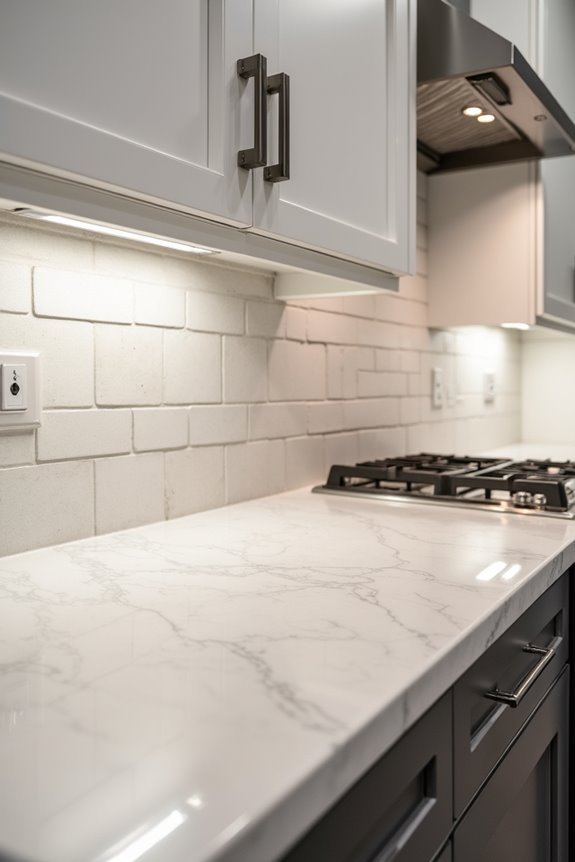
The single most powerful cost-reduction strategy you’ll encounter is this: don’t move anything. Keeping your current layout avoids expensive plumbing, electrical, and gas relocations that dramatically inflate budgets. You’ll also sidestep costly structural changes and permit requirements that slow projects down.
Your cabinets define the kitchen’s functionality because they consume the largest share of remodel budgets. Reusing them creates immediate savings. The existing footprint reduces labor complexity while minimizing hidden wall issues that typically add 10–15% to costs.
This approach shortens timelines substantially. Fewer contractor coordination needs mean faster completion. Staying put isn’t glamorous, but it’s practical. You’re choosing measured investment over expensive reshuffling, protecting your budget from unnecessary surprises.
DIY or Hire a Pro? Where You’ll Actually Save Money
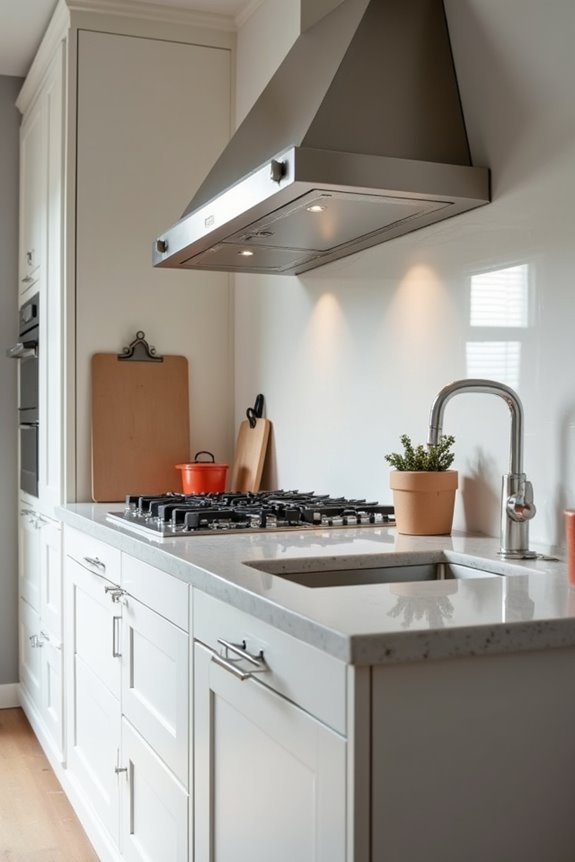
Where should your labor dollars actually go in a kitchen remodel? You’ll find the smartest budget allocation by understanding where professional expertise truly matters.
Smart labor allocation in kitchen remodels means investing in professional expertise where it truly impacts quality and safety.
Consider these strategic labor decisions:
- Cabinetry installation: Hire pros for custom or semi-custom work since precision defines functionality and appearance
- Electrical and plumbing: Licensed professionals are required by code for safety and inspections
- Drywall finishing: Professional drywall creates seamless surfaces that DIY often struggles to achieve
- Flooring: Handle basic installation yourself if confident, but hire pros for complex patterns
DIY can save you roughly 30% on overall project costs when you manage the general contractor role. However, cabinetry cost represents 29–40% of your budget, making this your highest labor investment. Stock cabinets reduce initial expenses compared to custom options. The practical approach balances work you can handle against high-detail work requiring professional skill.
Which Kitchen Upgrades Return the Most Resale Value?
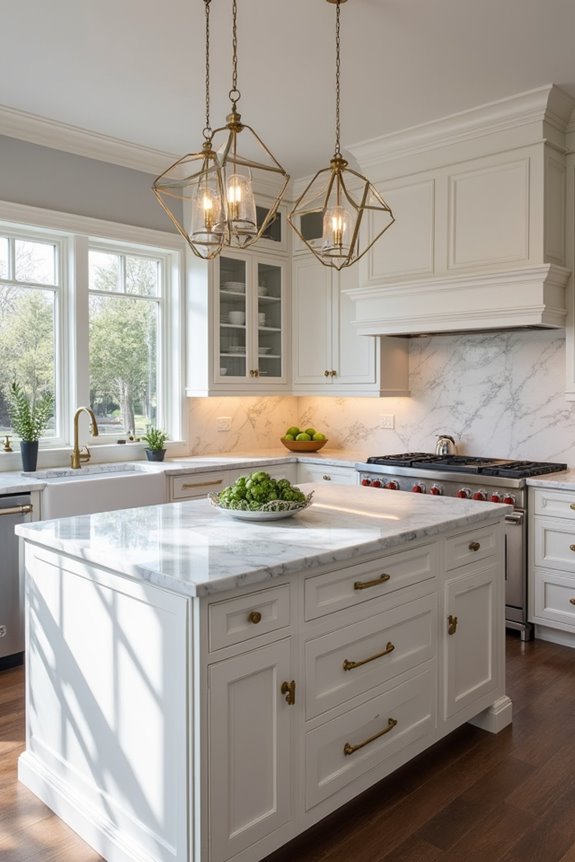
You’ll recover roughly 50–60% of your cabinet investment at resale, making strategic choices in materials and finishes critical to your ROI. Quality cabinetry in neutral tones—soft white, warm gray, or natural wood—creates broad buyer appeal because these palettes complement diverse decorating styles. Your cabinet selection defines the kitchen’s visual foundation and durability, so prioritizing mid-range semi-custom options over budget stock or high-end luxury upgrades delivers the strongest financial return.
Kitchen Elements With High ROI
Which kitchen upgrades actually pay you back when you sell?
You’ll want to focus on elements that define your kitchen’s functionality and appeal. Quality cabinetry creates the foundation for your entire space because it covers the most visual area and handles daily wear. The cabinet quality you choose directly influences your home’s perceived value at resale.
Consider these high-ROI investments:
- Quality cabinetry—accounts for 29–40% of your budget and drives the strongest resale impact
- Durable countertops—pair with cabinets to create a cohesive, lasting surface
- Efficient layouts—maximize usable space and workflow patterns
- Professional installation—reduces future repairs and labor costs
Your cabinetry costs typically range from $5,000 to $30,000+, depending on stock versus custom options. Aligning these investments with your home’s market value and neighborhood expectations delivers real financial returns on your kitchen remodel.
Strategic Investment Priorities
Now that you understand which kitchen elements deliver strong resale returns, the real question becomes how to allocate your budget wisely. For a mid-range remodel, strategic budgeting means prioritizing cabinetry cost as your foundation. Quality cabinetry creates lasting value because homebuyers notice material quality, hardware, and fit immediately.
Soft-close hinges and premium pulls demonstrate quality without excessive expense. The cabinet doors do the heavy lifting because they’re visible daily and set your kitchen’s entire design tone. Resist the temptation to over-improve with luxury finishes that exceed your home’s market value. Instead, invest in functional upgrades that match neighborhood expectations.
Your resale value depends less on fashionable aesthetics and more on durable materials and smart construction choices.
How to Build a Kitchen Budget You Can Actually Stick To
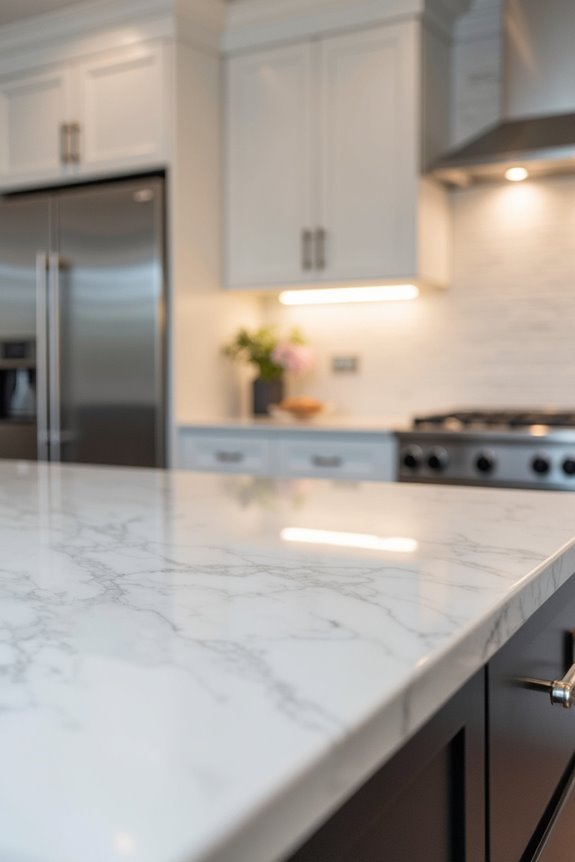
Since cabinets consume 25–40% of your total remodel cost, establishing a realistic budget starts with understanding where your money actually goes. You’ll want to allocate approximately 29% toward cabinetry budgeting to create a solid foundation for your entire project.
Here’s how you can build a budget you’ll actually maintain:
- Get line-item estimates that break down labor, materials, and permits separately from your contractor
- Choose semi-custom cabinets to balance quality and cabinetry cost without overspending on full custom designs
- Plan a budget contingency of 10–15% extra for surprises hidden behind walls during demolition
- Compare stock versus semi-custom options to find where material upgrades deliver the most value
The budget contingency serves an important function because unexpected discoveries—rotted framing, outdated plumbing—derail timelines and finances. Semi-custom cabinets provide affordability while maintaining craftsmanship. Line-item estimates define exactly where each dollar goes, eliminating confusion and building confidence in your spending decisions.