
You can grill on your balcony if you obtain written approval from building management first.
Electric grills are typically permitted because they create less fire risk than gas or charcoal.
Follow the ten-foot clearance rule from combustibles, railings, and neighboring units.
Position your grill on a level surface with a fire extinguisher nearby.
Notify neighbors one to two days beforehand.
Check your insurance policy, as standard coverage often excludes balcony grilling.
Each building defines specific requirements that determine whether your setup succeeds safely.
Can You Grill on Your Balcony? Check Building Rules First
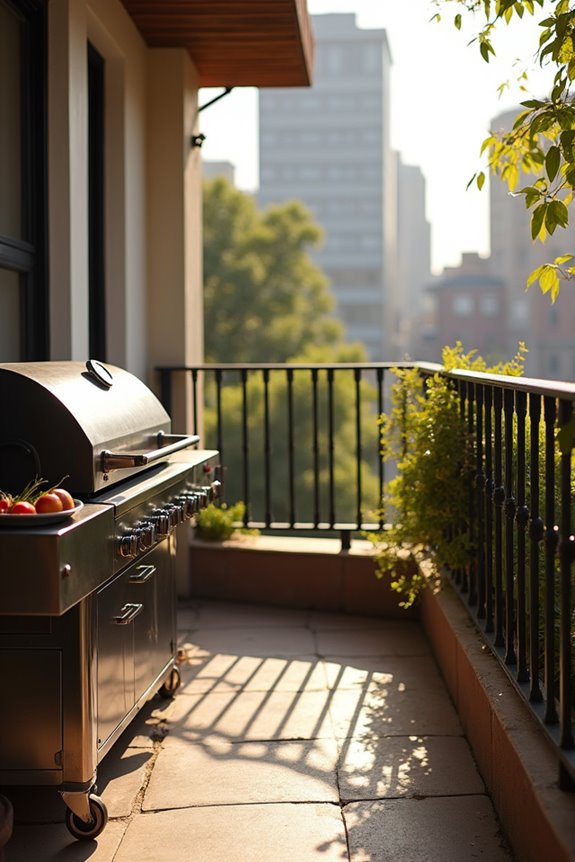
Before you set up a grill on your balcony, here’s what you need to know: building rules often prohibit it. Your co-op, condo, or HOA defines specific balcony grilling rules that you must follow. Check your proprietary lease or house rules immediately. These documents outline whether grilling’s permitted and what safety clearance requirements apply.
Building regulations create restrictions for good reason. Fire codes require ten-foot clearance from combustibles, which most urban balconies can’t accommodate. Your building may ban gas grills entirely, restricting propane tanks on multi-family properties. Electrical grills often present safer alternatives that buildings more readily approve.
Before purchasing equipment, contact your building management. Verify whether electrical grills require licensed electrician approval and specific electrical capacity upgrades. Documentation matters. Take photos showing distances and clearances. This compliance evidence protects you during insurance claims or building inspections.
Choose an Electric Grill Over Gas or Charcoal
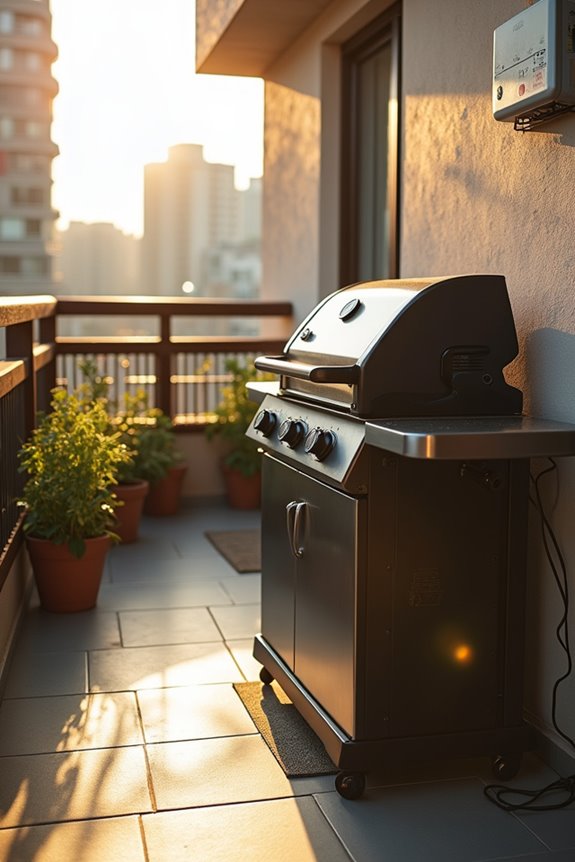
Why should you choose an electric grill for your balcony? Electric grills create safer cooking conditions than gas or charcoal options. They eliminate open flames, defining flame-free grilling as your primary advantage. You’ll appreciate smokeless operation since minimal smoke means fewer neighbor complaints and better air quality.
| Feature | Electric | Gas | Charcoal |
|---|---|---|---|
| Flame Risk | None | High | High |
| Smoke Output | Minimal | Moderate | Heavy |
| Temperature Control | Precise | Good | Difficult |
Electric models reach temperatures up to 370°C, providing effective cooking performance. Most building codes permit electric grills because they pose lower fire risks than alternatives. The flame-free design reduces balcony safety concerns significantly. Additionally, you’ll gain flexibility since electric grills work indoors when outdoor space becomes impractical.
Balcony Grilling Clearance: The 10-Foot Rule
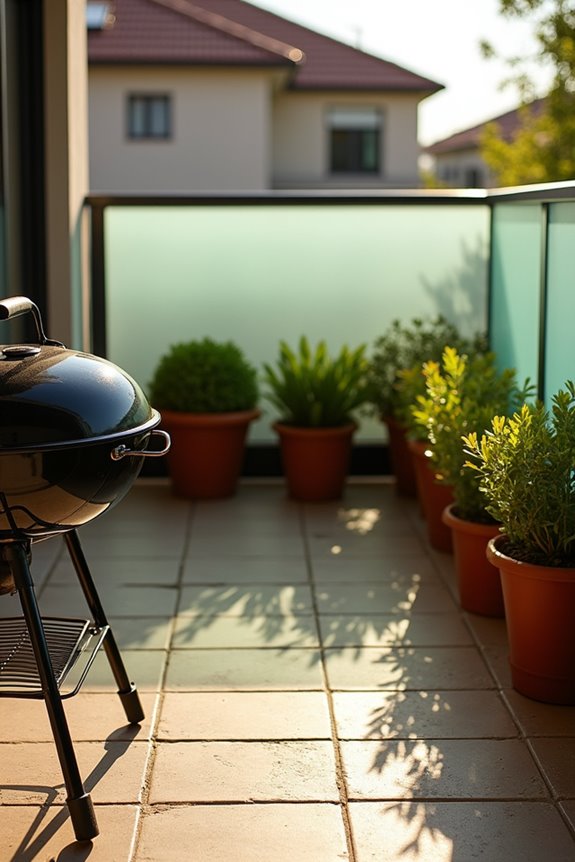
How much space do you actually need for safe balcony grilling? You’ll need to follow the Fire Code’s 10-foot rule, which defines the minimum clearance required for all grill types. This safety standard creates a protective zone around your cooking area.
Your balcony grilling clearance must account for:
- Distance from wooden railings, furniture, and deck surfaces
- Space between the grill and exterior walls or siding
- Room away from plant containers and storage items
- Clearance from overhead structures like awnings
- Buffer zone from neighboring balconies and shared walls
The 10-foot rule exists because combustible materials ignite easily near heat sources. Many Manhattan apartments can’t meet this requirement, making balcony grilling effectively prohibited in those spaces. Always measure your available space before purchasing equipment. Violating clearance standards results in fines and potential insurance claim denials.
Layout Your Grill, Seating, and Safety Zones
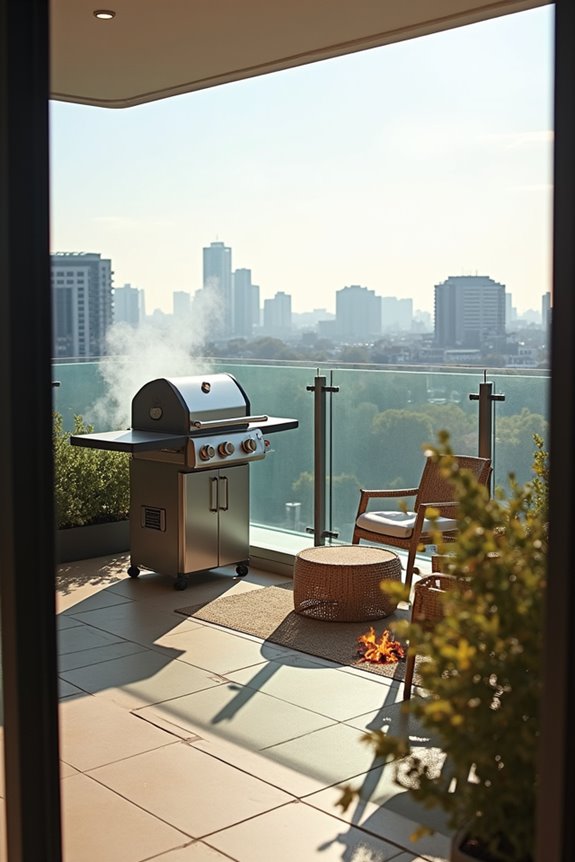
You’ll position your grill on a firm, level surface away from railings and overhanging branches, which prevents tipping and heat damage to nearby structures. Arranging seating and tables at a strategic distance from the grill creates a clear safety zone that minimizes smoke exposure for your guests and defines a safe movement path around the cooking area. Having a fire extinguisher with at least a 4-A rating and a garden hose within arm’s reach establishes your backup plan before you light the grill.
Strategic Grill Placement
Strategic Grill Placement
Because balcony space is limited and fixed, thoughtful grill placement becomes your foundation for safe entertaining. You’ll want to position your grill on a firm, level surface away from walls, railings, and overhangs. This placement creates a buffer zone that protects combustible materials from heat exposure.
Consider these strategic placement elements:
- Position the grill at least 10 feet from the nearest combustibles per fire code requirements
- Place seating areas upwind from smoke to keep guests comfortable without blocking airflow
- Maintain a three-foot safety perimeter around the grill for children and pets
- Locate water access or a fire extinguisher within arm’s reach during cooking
- Site the grill where you can supervise it continuously without obstruction
Your layout defines how safely you’ll operate the grill while maintaining open flames at appropriate distances.
Safe Distance Zones
Strategic placement sets the foundation, but creating distinct distance zones builds that foundation into a functioning, safe entertaining space. You’ll designate a dedicated safety zone around your grill, keeping children and pets at least three feet away at all times. This boundary creates protection by establishing clear separation between the heat source and vulnerable individuals. Position seating and tables away from your grill on the balcony, allowing smoke to disperse freely without affecting guests. Arrange furniture to define movement pathways that keep people clear of the cooking area. Station a fire extinguisher with a minimum 4-A rating nearby for quick access. The extinguisher works because immediate response prevents small incidents from escalating. These intentional zones establish the secure entertaining environment your family deserves.
Never Leave Your Grill Unattended and Keep Water Ready
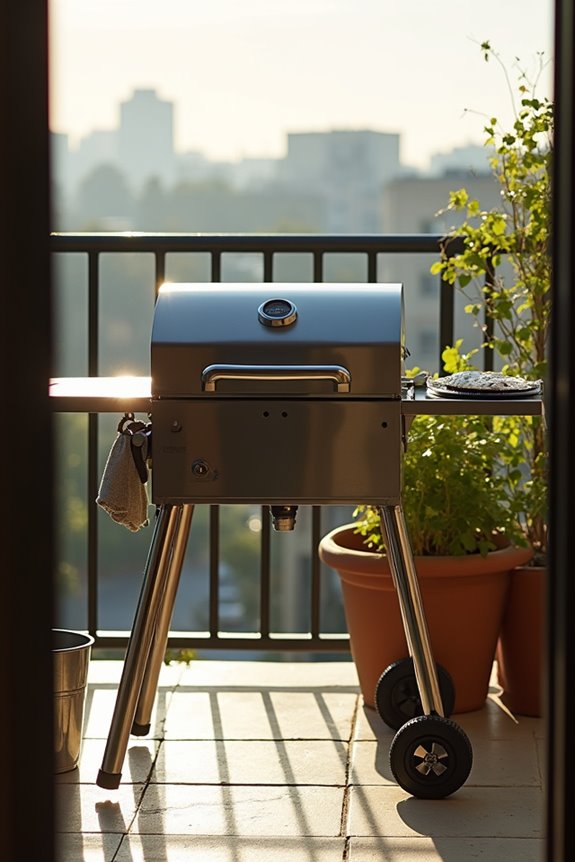
Constant supervision while grilling creates the foundation for safe balcony cooking. You’ll need to stay present whenever your grill operates, as sparks can drift toward cushions or indoor spaces. Never step away without assigning another adult to watch. This practice defines responsible balcony grilling and protects your home.
Keep safety resources immediately accessible:
- Position a fire extinguisher within arm’s reach of your grill
- Maintain a water source nearby for quick response
- Store matches and lighters away from children completely
- Set your grill on a firm, level surface
- Turn off burners and close the propane cylinder when finished
An unattended grill presents serious fire risks. The water source does prevent small flames from spreading because immediate action stops fires before they grow. Your constant presence and prepared safety equipment work together to protect your family and property effectively.
Give Neighbors Notice and Consider Inviting Them
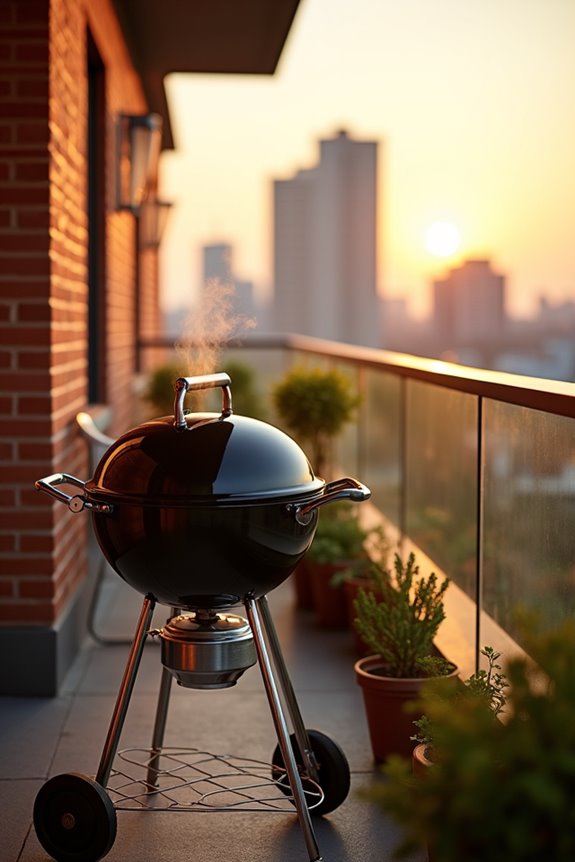
You’ll want to notify neighbors one or two days before your balcony grilling plans, which creates goodwill and prevents surprise complaints about smoke or noise. Inviting them to join defines your gathering as a community event rather than a solo activity, turning potential friction into shared enjoyment. A simple note or quick conversation demonstrates respect for shared living spaces and builds the cooperative relationships that make apartment living more pleasant.
Notification Timing and Methods
When should neighbors hear about your balcony barbecue plans?
Give notice one or two days before your event. This timing creates space for neighbors to prepare and adjust their routines. Your balcony notification approach defines how well your community relationships develop.
Consider these notification methods:
- Call or text neighbors directly for personal contact
- Leave a written note on apartment doors nearby
- Use building chat groups or community apps
- Speak face-to-face when you see neighbors
- Email your building management for broader awareness
Remind neighbors again shortly before lighting the grill. This second notice helps them close windows if smoke becomes bothersome. Early balcony notification about timing demonstrates respect for shared spaces. Check your lease for compliance requirements first. Your neighbors appreciate advance warning because it shows consideration for their comfort and living environment.
Building Community Through Inclusion
Notification alone won’t solve every challenge with balcony grilling. You’ll strengthen neighbor inclusion by actively inviting those nearby to join your gathering. This approach shifts balcony etiquette from rule-following into genuine community building. When you extend invitations, you create opportunities for connection and reduce potential friction before it starts.
Inclusive participation defines successful outdoor entertaining in shared spaces. The grill does more than cook food because it becomes a gathering point for relationship-building. You’ll foster safety awareness naturally when neighbors understand your plans and feel welcomed rather than excluded.
Consider seating arrangements that accommodate guests from adjacent units. Position your grill to minimize smoke drift toward neighboring balconies. These practical decisions demonstrate respect while showing that balcony grilling strengthens community bonds rather than straining them.
What to Do if Your Building Prohibits Balcony Grilling
If your building restricts balcony grilling, your first step should be reviewing the specific rules that define the prohibition. Check your lease, house rules, and building bylaws because many properties prohibit grilling regardless of fire code clearance requirements. Understanding why your building enforces this balcony grilling prohibition protects you from unexpected fines and liability issues.
Your alternatives include:
Using community grills, installing approved electric models, or consulting management are practical alternatives to balcony grilling restrictions.
- Using community grills in shared spaces within your building
- Installing electric grill approval models that meet building standards
- Consulting a licensed electrician to verify electrical capacity
- Reviewing fire code clearance distances from combustibles
- Contacting your building management for approved exceptions
The building rules and fines create accountability that protects all residents. Documenting your compliance efforts demonstrates good faith. Consider consulting a real estate attorney if you believe restrictions violate local codes. This approach keeps you connected to your community while respecting collective safety standards.
Don’t Ignore Insurance: What Could Go Wrong
Beyond securing your building’s approval, you’ll need to address a critical gap that many balcony grillers overlook: insurance coverage. Your standard renter’s or homeowner’s policy likely excludes balcony grilling entirely. This exclusion creates significant financial exposure if a fire occurs. Violating fire code requirements defines your claim as denied, leaving you personally liable for damages and relocation costs.
Documentation protects you here. Photograph your grill setup showing distances from the building’s exterior and nearby combustibles. These images demonstrate fire code compliance to insurers. Review your actual policy language carefully. Contact your insurance provider before installing any grill. A Manhattan real estate attorney can clarify coverage gaps specific to your building. This proactive approach prevents costly surprises after an incident occurs.
Verify Your Building Approval and Test Your Grill
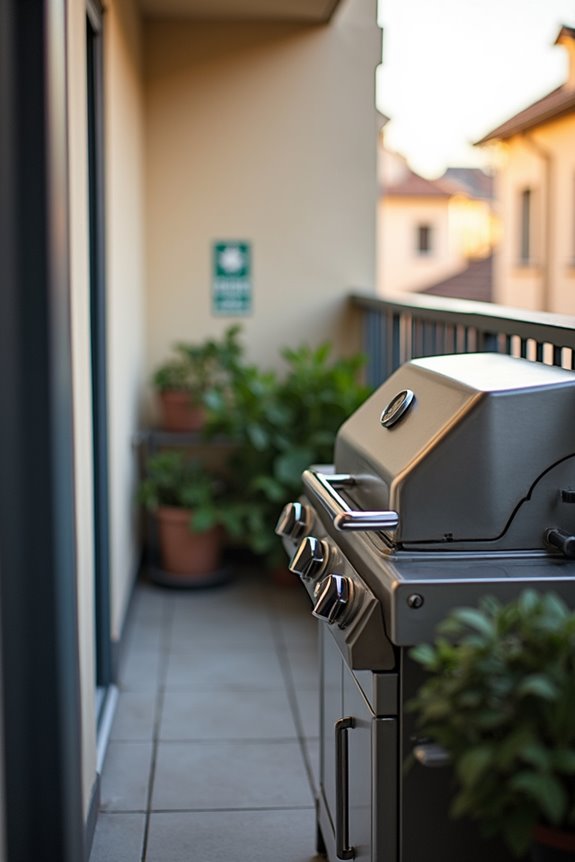
Before you purchase or install any grill, you’ll need written approval from your building management or condo board. This step creates a clear record of permission and protects you legally. Your balcony grilling approval defines what type of equipment you can use and where.
Before purchasing any grill, obtain written approval from your building management or condo board to establish legal permission and define equipment guidelines.
Request documentation that confirms:
- Your building allows balcony grilling without restrictions
- The 10-foot clearance requirement is met from adjacent units
- Fire safety equipment placement locations are approved
- Compliance documentation standards your building requires
- Any inspection schedules or maintenance protocols
Test your grill thoroughly before regular use. Check all connections, burners, and safety features. The propane valve controls fuel flow safely. Position your portable fire extinguisher within arm’s reach. Document everything with photos showing distances and setup details. This verification process prevents costly violations and meets all safety standards for your grilling setup.