
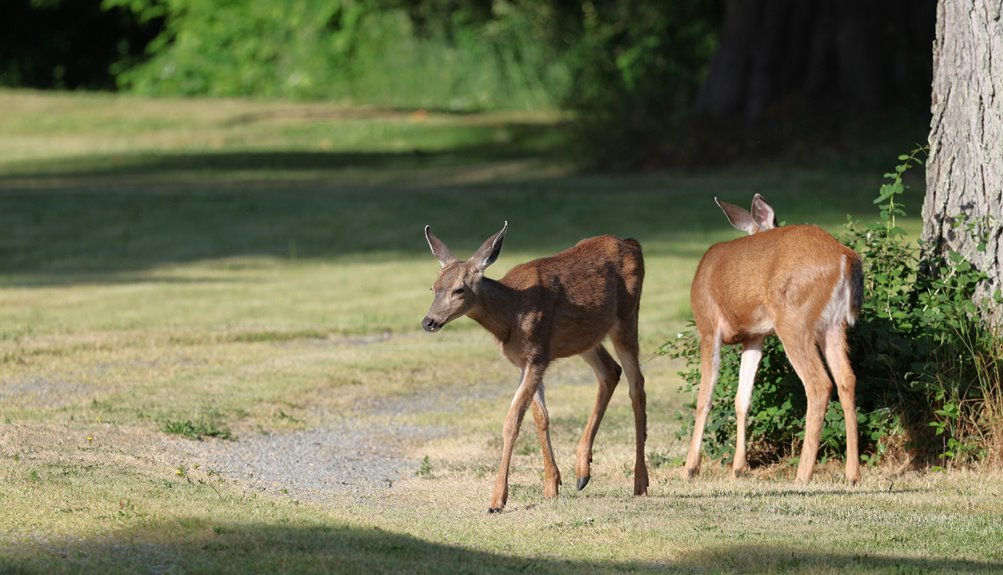
You can safely feed deer hickory nuts, acorns, organic vegetables, and hay during fall and winter months.
Spring and summer require low-protein, high-fiber options like browse from shrubs and leaves.
Mineral blocks scattered throughout your feeding area provide essential calcium and phosphorus.
Avoid corn and bread entirely, as these create digestive problems.
Set up a ground-level station at least 10–15 feet from your home with clear escape routes nearby.
Limit supplements to modest amounts that complement natural forage rather than replace it.
Understanding seasonal diet shifts reveals how you can support deer health responsibly.
What Do Wild Deer Actually Eat?
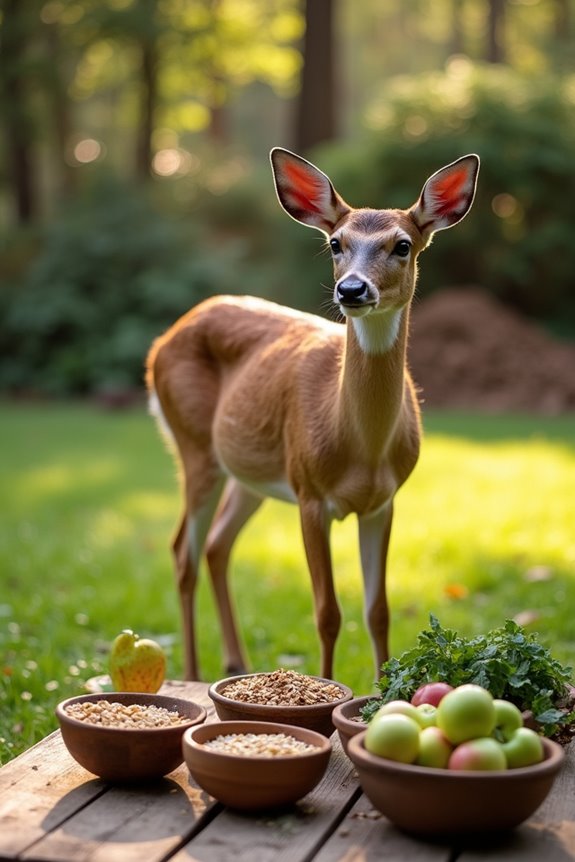
How do wild deer survive in forests, fields, and even urban neighborhoods? They’re selective eaters, not lawn grazers. You’ll find them browsing on leafy plant parts, buds, blooms, bark, and twigs throughout the year. This browse provides essential fiber and vitamins that support their digestive systems.
Seasonally, deer seek mast—energy-rich fruits and nuts like acorns and hickory nuts. The mast creates abundant nutrition during specific times, defining their feeding patterns. Their diet shifts based on regional habitat and season availability. Browse and forbs sustain them during lean months when mast isn’t accessible.
Deer adapt remarkably well across environments. They consume invasive plants like multiflora roses when native options disappear. This dietary flexibility allows them to thrive in forests, deserts, and cities alike, adjusting their feeding strategies to available resources.
Should You Feed Deer? (The Case for Not)
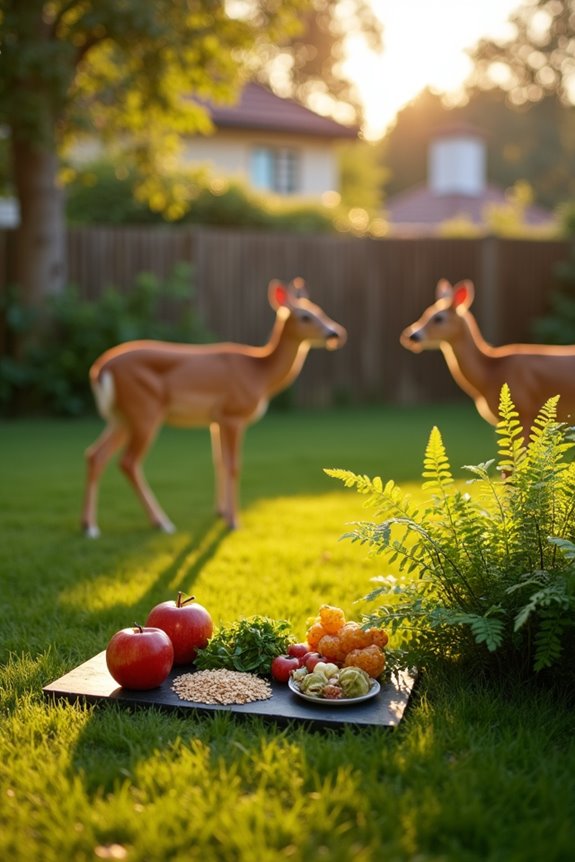
Why resist the urge to feed deer in your backyard? Feeding creates dependency and attracts unwanted wildlife to your property. When you offer supplemental food, deer lose their natural foraging instincts and return repeatedly, expecting more meals. This habituation leads to increased deer damage to your landscape and gardens.
Feeding deer also invites predators and generates unsafe human-deer interactions. Your neighbors may experience property destruction from the same animals you’ve drawn in. Deer cannot distinguish intentional feeding from landscape plants, so supplemental food encourages them to browse your ornamentals indiscriminately.
Regulations vary by region regarding wildlife feeding. Check local ordinances before offering any food to comply with laws and reduce legal risk. Instead, observe deer from a distance and implement non-feeding measures like fencing or repellents. This approach protects your property while respecting natural deer behavior.
Why Corn and Bread Harm Deer

Although corn appears like a natural food choice, it actually creates serious digestive problems for deer. You’re inadvertently disrupting their gut microbiome when you offer corn, since it’s high in carbohydrates and low in fiber. This imbalance causes diarrhea and dehydration in deer populations you’re trying to help.
| Food Type | Problem | Health Impact |
|---|---|---|
| Corn | Low fiber, high starch | Digestive upset, diarrhea |
| Bread | Causes indigestion | Metabolic stress |
| Both | Empty calories | Poor body condition |
Bread creates similar problems. High-starch baked goods trigger indigestion and metabolic stress in deer systems. You’re providing empty calories that don’t sustain their nutrition long-term. Regular corn feeding also disrupts their natural foraging behavior and increases disease risk. These foods represent poor supplemental choices for backyard deer populations.
7 Safe Foods to Feed Deer by Season

You’ll notice that deer nutritional needs shift dramatically across seasons, and your feeding strategy must adapt accordingly to support their survival cycles. Spring and summer allow you to offer lighter forage like shrubs and modest vegetable scraps, while fall demands high-carbohydrate foods such as acorns that help deer build essential fat reserves before winter arrives. Winter feeding creates the greatest challenge, requiring you to provide energy-dense options like oat-based feeds that sustain deer when natural food sources disappear beneath snow and frozen ground.
Spring And Summer Nutrition
When warmer months arrive, deer’s nutritional needs shift considerably from winter requirements. You’ll notice deer naturally browse on shrubs, leaves, and grasses during spring and summer. This seasonal diet emphasizes low protein and high fiber content that matches their digestive system.
You can supplement their natural foraging with safe foods like hickory nuts and organic vegetables. The hickory nuts do provide necessary nutrients because they contain beneficial fats and minerals. Scattered supplemental food at designated stations creates additional forage options without replacing natural browse.
Avoid corn entirely, as it disrupts their digestive health. You shouldn’t overfeed deer, since excess food encourages unhealthy dependence on human sources. Focus on offering modest amounts of safe plant-based foods that complement their spring and summer grazing patterns effectively.
Fall Carbohydrate Buildup
As temperatures drop and natural food sources become scarcer, deer shift their feeding behavior to prepare for winter’s demands. You’ll notice deer prioritizing high-energy foods during autumn months. Acorns from oak trees create an ideal nutrition source because they’re naturally abundant and carbohydrate-rich. Grasses and shrubs also provide the carbohydrates that deer need for fat storage.
You can supplement scarce local resources by offering hay, which delivers steady carbohydrate intake without disrupting digestive systems. Plant-based foods like leafy greens work similarly. The balanced approach produces successful fall feeding because it prevents nutritional imbalances while supporting energy reserves.
Avoid grain-heavy feeds during this season. They create digestive problems rather than support natural winter preparation. Focus instead on readily available, natural carbohydrate sources that mirror what deer find in their environment.
Winter Supplemental Feeding
How does winter feeding differ from fall preparation? You shift focus from building fat reserves to maintaining energy through cold months. Winter supplements provide sustained nutrition when natural browse becomes scarce.
| Winter Supplement | Daily Amount | Benefits | Best Practice |
|---|---|---|---|
| Oats-based deer feed | 1–2 liters per deer | High calories, gentle digestion | Keep dry at station |
| Mineral blocks | Available continuously | Essential nutrients | Accessible location |
| Deer-formulated blends | 1–2 liters per deer | Higher fat content | Cold-month specific |
| Natural browse | Primary source | Maintains rumen function | Encourage foraging |
You’ll limit feeding to small groups—roughly 6–8 deer per season—preventing overcrowding and competition. The designated feeding station serves two purposes: it controls portions and keeps feed accessible during snow. Each deer typically feeds for 2–3 minutes before resuming natural foraging. Avoid whole corn or wheat entirely; these high-starch options disrupt digestion. Your winter deer feed strategy supports their survival through harsh conditions.
Seasonal Feeding Guidelines: Spring Through Winter

Your deer’s nutritional needs shift dramatically throughout the year, requiring you to adjust what you offer at each season. Spring and summer call for natural plant matter with modest supplements. You’ll provide shrubs, leaves, and grasses while avoiding overfeeding, which prevents digestive upset. Fall demands higher-calorie options as deer build fat reserves. You can offer acorns, grasses, and shrubs, supplementing with hay if local forage runs low. Winter requires your most careful attention to seasonal guidelines. You’ll prioritize available green plants or grass, then add oats-based feeds at a designated station. The strategic rotation of deer feed throughout seasons creates stable digestion and prevents dependency. Scatter mineral blocks around feeding areas. Monitor intake consistently to maintain your deer’s health year-round.
How to Set Up a Feeding Station (Legally and Safely)
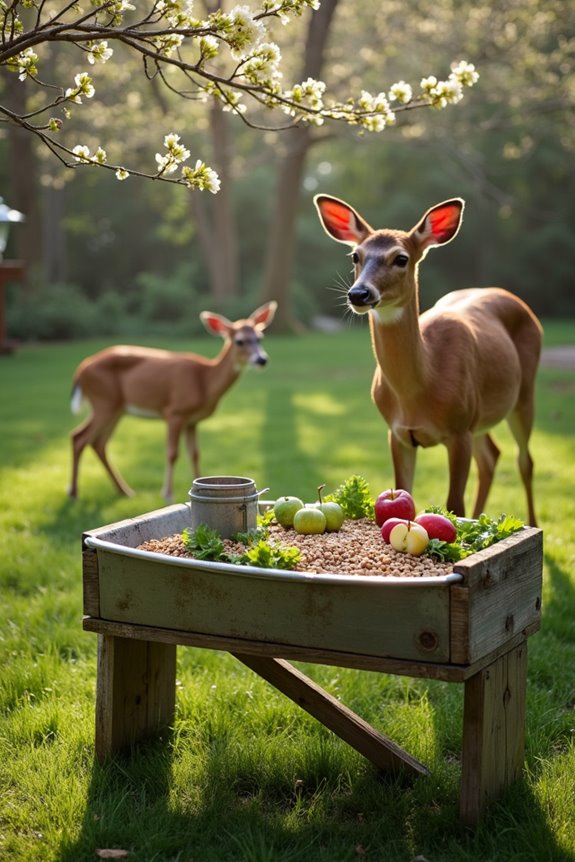
Where should you place your feeding station? Strategic placement defines how effectively you’ll reduce garden damage while keeping deer calm. Position your feeding station at least 10–15 feet from your home and garden beds. This distance creates safety for visiting deer and protects your vegetables. Check local regulations first—feeding laws vary by location and season.
Strategic placement of your feeding station at least 10–15 feet from home and gardens protects vegetables while keeping deer calm.
Your setup requires these essential elements:
- Ground-level or raised platform with stable, weatherproof surface
- Wildlife feeds or peanut-based products from local feed stores
- Clear escape route to nearby woods or open space
- Location away from fruit trees and human activity zones
The platform keeps feed dry and accessible year-round. Appropriate wildlife feeds work better than shelled corn, which attracts unwanted predators. This thoughtful design minimizes stress for deer while preventing dependency on your property.
Deer Feeding Supplements: Mineral Blocks and Nutrients
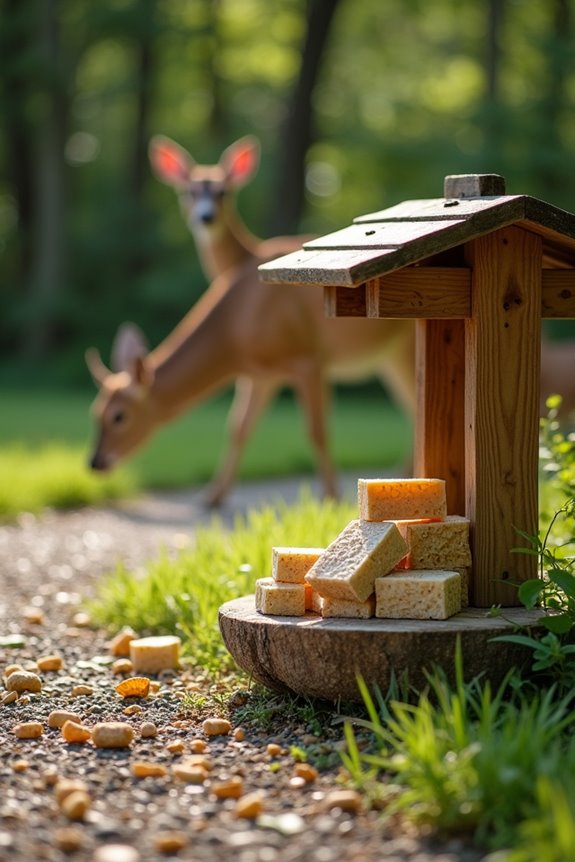
You’ll want to scatter mineral blocks throughout your feeding area because deer need essential nutrients that natural forage alone doesn’t provide. These blocks—typically made from compressed salt and trace minerals in white, tan, or brown colors—create a supplemental source that balances your deer’s diet when paired with natural plant matter. Safe placement means positioning blocks away from your feeding station’s center, spacing them at least 10-15 feet apart to reduce competition and allow multiple deer access without conflict.
Mineral Block Benefits
What makes mineral blocks such a practical addition to deer feeding? These supplements create health benefits that natural forage alone can’t provide. Mineral blocks support your deer’s metabolic functions and overall wellness throughout the year.
Here’s what you’ll observe when you provide quality mineral blocks:
- Dense, salt-based blocks positioned away from grain feeds prevent digestive upset
- Consistent consumption patterns that indicate proper mineral intake levels
- Healthier coat conditions and stronger bone development in resident deer
- Reduced deficiency symptoms, especially during winter months when forage lacks nutrients
The mineral block works effectively because it supplements wild vegetation during seasons when natural mineral availability drops notably. You’ll notice deer visiting placement areas regularly, demonstrating their nutritional needs. However, remember these supplements complement natural diet—they shouldn’t replace varied forage entirely. Monitor consumption carefully, adjusting quantities based on observed deer behavior and seasonal changes.
Essential Nutrient Supplementation
Since mineral blocks alone can’t deliver all nutrients deer need year-round, combining supplements with natural forage creates a more complete diet. You’ll strengthen deer health by pairing mineral blocks with browse, grasses, and safe produce. This approach prevents dependency while supporting proper rumen function.
| Supplement Type | Best Season | Primary Benefit |
|---|---|---|
| Mineral blocks | Year-round | Calcium and phosphorus |
| Salt licks | Summer-fall | Electrolyte balance |
| Fruit scraps | Fall-winter | Natural carbohydrates |
| Vegetable matter | Winter | Fiber and vitamins |
| Browse plants | All seasons | Essential roughage |
Monitor your deer’s response carefully. The mineral blocks work best because they’re placed strategically around feeding areas, reducing overconsumption. Avoid bread and high-starch grains—these damage digestion. Rotate supplement placement every few weeks to prevent dependency. You’ll notice healthier coats and stronger antlers when you maintain balanced nutrient supplementation alongside natural food sources.
Safe Placement Strategies
Proper placement of mineral blocks creates the foundation for successful deer supplementation. You’ll want to position your deer feed strategically across your property to maximize benefits and minimize problems.
Strategic placement considerations:
- Level, dry ground prevents moisture damage and keeps blocks accessible
- Areas away from heavy traffic reduce contamination and trampling
- Multiple locations encourage deer to visit different yard sections
- Periodic rotation prevents overuse of single spots
The mineral block does attract consistent visits because deer recognize nutritional value. Position blocks where you can observe consumption patterns easily. This visibility defines your ability to monitor health responses effectively. Rotate placement every few weeks to distribute grazing pressure throughout your property. Remove blocks immediately if you notice excessive consumption or adverse reactions in visiting deer. This practical approach maintains supplementation benefits while protecting your herd’s wellbeing.