
You’ll need to contact your city or county planning department to verify that backyard goats are permitted on your property. Check local zoning ordinances, which define herd size limits and lot requirements—most areas allow two to five miniature goats on residential lots under 20,000 square feet. Review HOA covenants if applicable, then apply for permits and schedule inspections to confirm your shelter, fencing, and drainage meet municipal standards. Obtaining written approval before purchasing goats prevents costly violations. Understanding these foundational legal requirements keeps your setup compliant with local regulations and protects your investment.
Check Your Local Town or City Ordinances for Backyard Goats
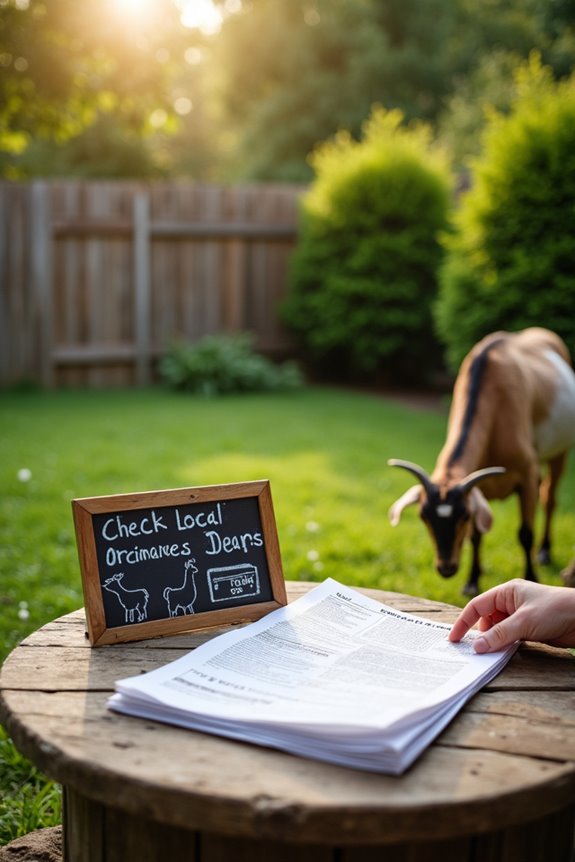
Before you bring goats home, you’ll need to understand what your local government allows. Your city or town defines specific rules about backyard goats through local ordinances. These regulations create clarity around whether you can legally keep livestock on your property.
Start by contacting your city hall or checking their website for zoning compliance requirements. Local ordinances often specify how many goats you’re permitted to own. Some areas ban backyard goats entirely, while others allow them with restrictions.
Zoning compliance means your residential property must qualify for agricultural use under local code. Suburban areas frequently require size limitations and fencing standards. Review all relevant municipal standards before purchasing goats. This step prevents regulatory violations and keeps your plan aligned with community rules.
Verify Zoning Rules for Keeping Backyard Goats
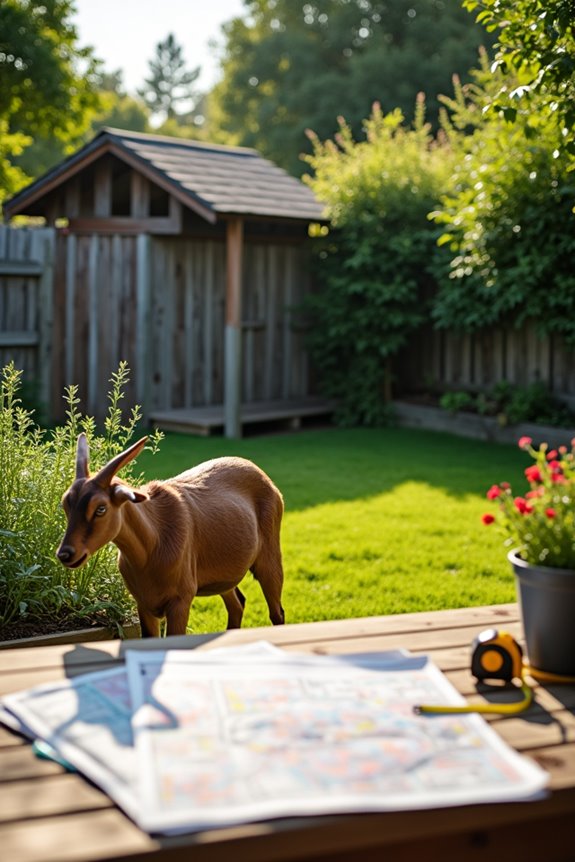
After you’ve confirmed that your area permits backyard goats, you’ll need to examine the specific zoning rules that govern how you can keep them. Your zoning regulations define whether residential properties allow agricultural use, which directly affects your backyard housing options. Check if your lot size meets minimum acreage requirements for goat keeping. Many municipalities specify how many goats you can maintain per acre or per residential lot. These rules exist because they create enforceable standards protecting neighborhood density and animal welfare. The zoning ordinance does this by establishing clear limits, since unregulated livestock keeping creates problems. Review whether your area classifies goats as agricultural animals or pets. This classification determines which housing standards apply. Some zones require goats remain completely on your property. Understanding these specific restrictions prevents costly violations and keeps your backyard goat operation compliant.
Apply for Permits and Schedule Inspections (If Required)
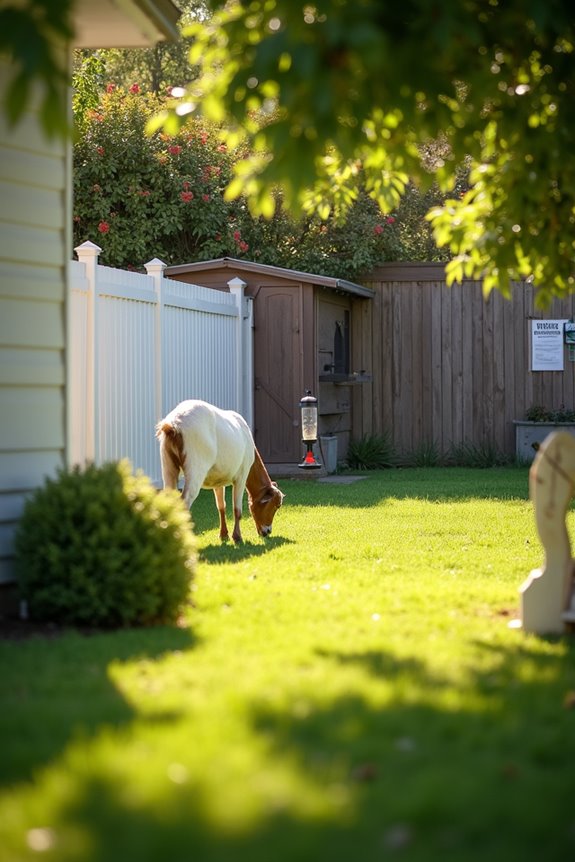
Once you’ve verified that your area allows backyard goats, you’ll need to check whether your local municipality requires permits or inspections before bringing animals home. Contact your city or county code enforcement or planning department to learn what applications you must submit and what standards your housing setup must meet. Scheduling inspections in advance of purchasing goats creates a clear timeline and helps you avoid costly violations or fines down the road.
Check Local Ordinance Requirements
How do your city’s rules affect backyard goat ownership? Your local city ordinances define what you can legally keep. Many municipalities require permits before you bring goats home. Check your zoning rules first. Some areas allow backyard goats freely, while others demand conditional use permits or approvals.
Review fencing requirements carefully, as these directly impact your setup costs. Your city likely specifies minimum enclosure sizes and shelter standards. The fencing requirements exist because they contain animals and protect neighbors.
Call your local zoning office or visit their website. Ask about herd size limits, housing dimensions, and setback distances from property lines. Get answers in writing when possible. Understanding these requirements upfront prevents costly violations later and creates a compliant setup from the start.
Submit Your Permit Application
What does your local department actually require for a goat permit? You’ll submit your application to your city or county building department. They’ll define specific forms, fees, and submission methods you must follow exactly.
Your application creates the official record of your backyard permits request. Include detailed site plans showing your coop location, fencing layout, water sources, and waste management. These plans demonstrate zoning compliance and allow inspectors to understand your setup.
The site plans also help officials verify setbacks and safety measures. Submit everything according to your department’s guidelines. Once approved, inspectors will schedule visits to check fencing conditions, housing standards, and sanitation practices. Follow-up inspections verify ongoing compliance after occupancy begins.
Schedule Property Inspections
Your permit approval doesn’t conclude the process—inspectors must verify your setup meets all local requirements. You’ll schedule property inspections to confirm your backyard goats’ housing and fencing comply with city ordinances. Inspectors examine setback distances, checking that structures sit at least three feet from side and rear lines, ten feet from the front. They verify secure fencing prevents escapes and protects landscaping. Ground cover inspection confirms absorbent material prevents odor and vector breeding. The inspection process determines whether your property setup actually protects animal welfare and neighborhood conditions. You’ll receive written documentation confirming compliance or noting required adjustments. This verification step creates accountability between you and your local jurisdiction, establishing that your backyard goat operation meets established standards.
Review HOA Covenants and Neighborhood Restrictions
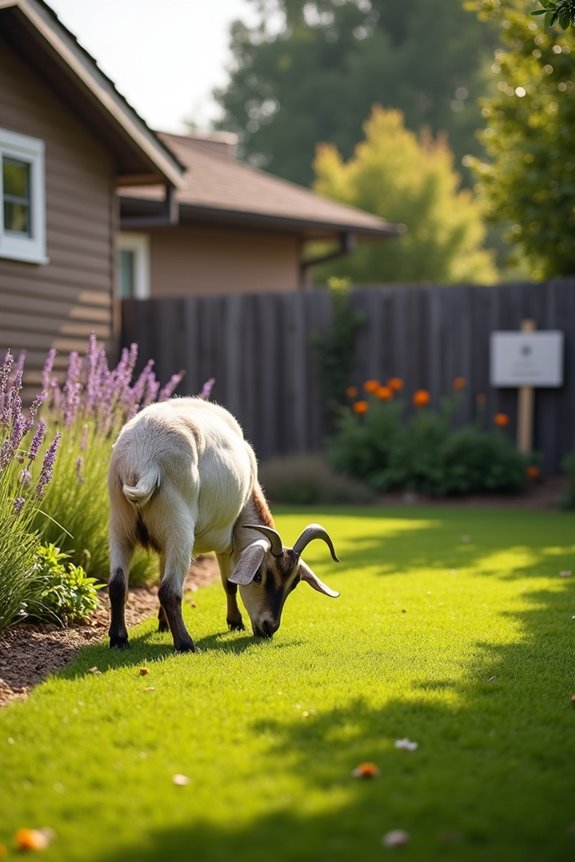
Before you bring goats home, you’ll need to review your HOA covenants carefully. These documents define what you can and can’t do on your property. Your community likely has specific rules about livestock restrictions that directly affect your goat plans.
Review these key areas:
- Check whether goats are prohibited entirely or allowed with conditions
- Identify breed, size, and number limits your HOA establishes
- Confirm required setbacks, fencing height, and housing specifications
- Determine what permits and compliance obligations you’ll need to meet
The covenants do this because they protect property values and community standards. Contact your HOA board before building any structures. Ask about variance procedures if current rules don’t accommodate your goals. Understanding these restrictions upfront prevents costly mistakes and enforcement penalties later.
Choose the Right Goat Breed for Your Space and Goals
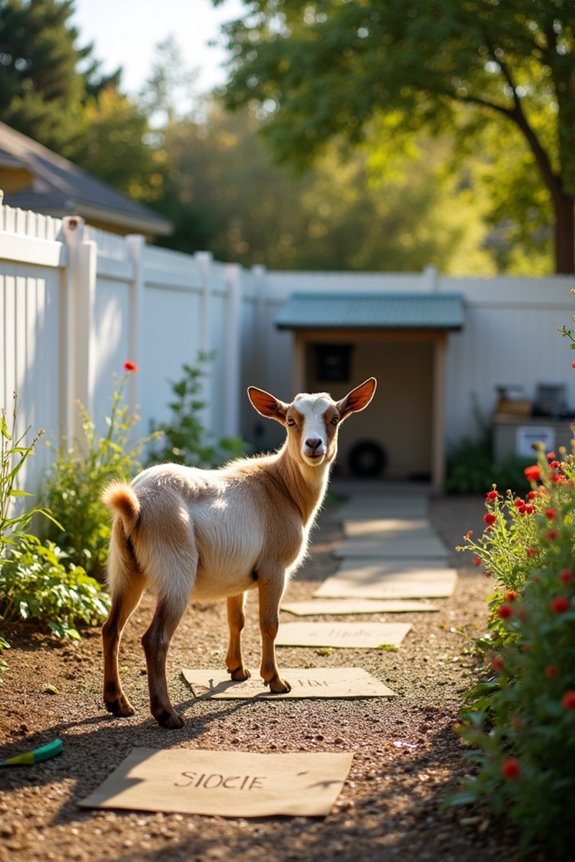
Once you’ve confirmed local regulations, you’ll need to select a breed that matches your space, climate, and goals—whether you’re raising goats for milk, cheese, or companionship. Dwarf breeds like Pygmy and Nigerian Dwarf goats offer practical solutions for backyards since their smaller size requires less fencing and housing than standard breeds. Your choice of breed defines your long-term potential: starting with a dairy-capable breed now preserves your option to milk later, even if companionship is your primary goal today.
Dwarf Breeds For Backyards
What makes dwarf goat breeds ideal for backyard settings? Their compact size fits limited spaces while meeting goat ownership regulations in many areas. Nigerian Dwarf and Pygmy goats create manageable livestock experiences for urban and suburban homeowners.
Consider these popular dwarf options:
- Nigerian Dwarf goats weigh 50–80 pounds and reach 16–24 inches tall
- Pygmy goats stand 16–23 inches high and weigh around 60–90 pounds
- Both breeds require proper fencing, housing, and social herd requirements despite their size
- Dwarf goat breeds provide milk production or companionship value
Your backyard space requirements depend on your goals. Evaluate temperament, milk potential, and climate compatibility. The smaller frame does solve housing challenges because it reduces shelter needs, yet these animals still demand adequate infrastructure. Selecting the right breed defines your long-term success with backyard goat ownership.
Deciding Your Primary Purpose
Selecting a breed that matches your backyard setup and personal goals determines your goat ownership success. You’ll need to identify your primary purpose first—whether that’s milk production, cheese making, or companionship. This decision defines which breed works best for your space and regulations.
Dwarf breeds like Pygmy or Nigerian Dwarf goats suit small yards because they require less feed and space. Dairy-focused breeds create higher milk yields if production matters to you. Meat goats offer alternative value if you prioritize protein or crossbreeding potential.
Your backyard goats will thrive when their breed matches your actual intentions. Starting with one clear purpose prevents costly mistakes and management challenges later. Local regulations often restrict certain breeds, so verify restrictions before purchasing. This foundation shapes every decision you’ll make about housing, feeding, and herd size.
Temperament And Bonding Potential
Understanding your goat’s personality shapes whether backyard ownership becomes rewarding or frustrating. Goat temperament varies by individual and breed, directly influencing your daily experience. Well-socialized goats prove curious and communicative, creating manageable interactions within backyard goat regulations.
Bonding with goats develops through consistent effort. You’ll strengthen connections by implementing these strategies:
- Establish predictable feeding schedules and routines
- Handle your goats regularly from a young age
- Provide climbing structures and enrichment activities
- Maintain companionship—never keep goats alone
Dwarf breeds like Nigerian Dwarf and Pygmy goats suit backyards because their smaller size reduces space demands. These breeds typically display friendly dispositions when properly socialized. Bottle-fed kids require frequent nighttime feeding initially, but this early investment defines stronger long-term bonding. Proper shelter and adequate space prevent stress-related behaviors that damage relationships with your animals.
Size Your Shelter and Space for Your Chosen Breed
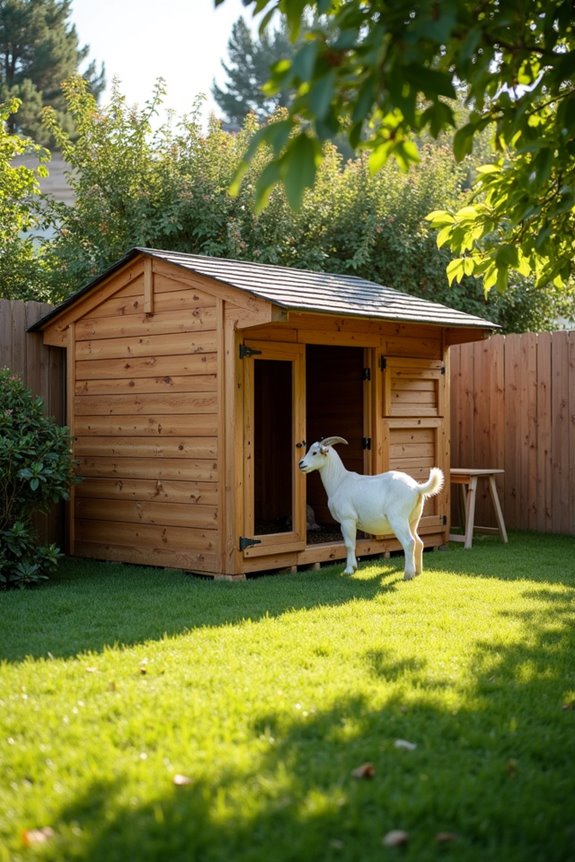
How you design your goat shelter directly determines your animals’ comfort and health. You’ll want to provide at least 10 square feet of enclosed space per goat, allowing adequate room for movement and rest. Larger breeds require more square feet than smaller ones, so assess your specific animals before building.
Your goat shelter needs three solid sides and a sturdy roof. This design protects from rain, wind, and snow while allowing ventilation. The shelter works effectively because the open side prevents moisture buildup that causes respiratory issues.
Include thick bedding—straw, hay, or wood shavings—that you’ll replace regularly. Fresh bedding creates sanitary conditions that reduce disease risk. Add climbing structures inside your enclosed space. These elements create a functional shelter supporting both safety and natural goat behavior.
Plan Secure Fencing to Prevent Escapes
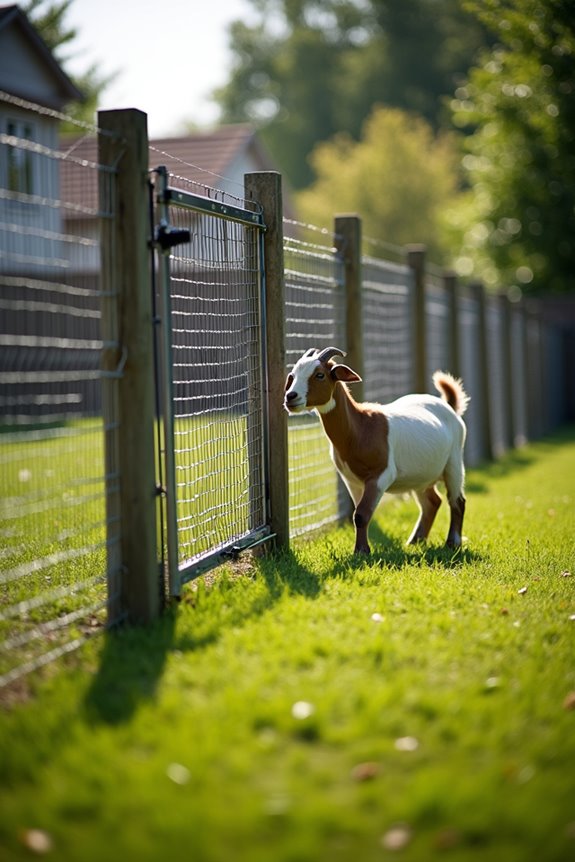
You’ll need to select fencing materials that your goats can’t push through or climb over, with cattle panels offering a sturdy, gap-free option that creates a reliable barrier. The height of your fencing defines whether escapes occur—goats require at least four to five feet of fencing because they’re natural climbers who exploit shorter barriers. Regular inspections catch wear, gaps, and damage before your goats exploit these weak points and breach your enclosure.
Cattle Panels and Materials
Cattle panels form the backbone of a secure goat enclosure because they’re sturdy, gap-free, and tall enough to contain climbing animals. Your goat fencing choice directly impacts backyard regulations compliance and escape prevention success. Consider these essential materials:
- Cattle panels (4.5–6 feet tall) create strong perimeter barriers that resist goat pressure and climbing attempts.
- Metal T-posts or wooden corner posts define panel attachment points and distribute structural stress evenly.
- Galvanized hardware cloth (¼-inch mesh) lines lower panels to prevent small goats from squeezing through gaps.
- Drainage gravel beneath panels reduces trapped moisture, preventing rust and deterioration.
The metal construction resists damage because galvanizing protects against weather exposure. Ground conditions directly influence panel longevity. Inspect fencing regularly for wear and gaps. This systematic approach creates a secure environment meeting local backyard regulations while protecting your investment.
Escape Prevention Strategies
Why do goats escape from poorly designed enclosures? Goats are natural climbers and jumpers who exploit weaknesses in fencing. You’ll need sturdy materials like cattle panels that withstand their constant pressure and test.
The fence contains your goats by eliminating gaps they could squeeze through. Inspect your goat fencing regularly for wear, rust, or separation points. Small openings invite escape attempts.
Before installation, you’ll verify local ordinances to confirm your setup complies with city rules on backyard goats. This step protects your investment and prevents costly violations.
Height matters—you’ll want fencing at least four feet tall for most breeds. The enclosure defines your goat’s boundaries while preventing neighborhood conflicts.
Your escape prevention strategy keeps your goats safely contained while respecting community standards.
Fencing Height Requirements
How tall should your goat fence actually be? Your containment strategy depends on understanding goat climbing ability and local regulations. Most areas require fencing that reaches at least 4-5 feet high, though some jurisdictions mandate 6 feet. Here’s what defines effective goat fencing height:
- Standard height of 4-5 feet prevents most goats from jumping over
- Add 6 inches of inward-angled extensions at the top to block climbing attempts
- Check local regulations, as some zones require 6-foot minimum heights
- Inspect gaps between ground and fence rails monthly for escape routes
The fence works because it creates a physical barrier matching your goat’s jumping capacity. Taller fencing also deters wildlife and predators more effectively. Measure your fence regularly since settling ground can reduce effective height over time.
Set Up Water, Feed, and Waste Management Systems
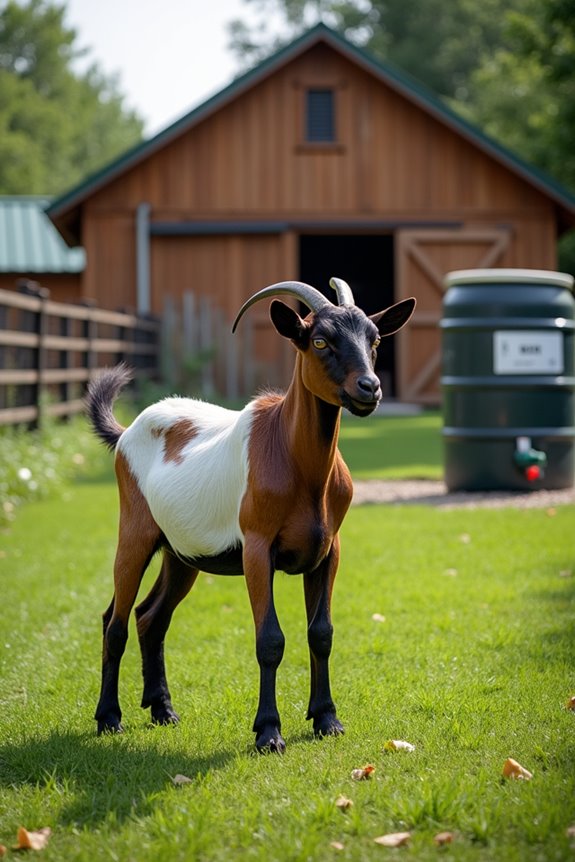
Once you’ve secured your fencing and shelter, establishing reliable systems for water, feed, and waste management becomes necessary to your goat setup. Install multiple water troughs in shaded areas, refreshing them daily to prevent contamination. Consistent access to clean water prevents dehydration because goats drink throughout the day.
Provide goat-specific hay or feed based on your pasture quality. Supplemental feeding supports nutrition because forage alone may lack necessary minerals. Store feed in sealed containers that protect against moisture and pests.
For waste management, spread thick bedding in shelter areas and replace it weekly. Regular bedding replacement reduces disease risk because it minimizes bacterial buildup. Consider composting soiled bedding separately, creating a practical system that manages accumulating manure efficiently.
Determine How Many Goats Your Backyard Can Support
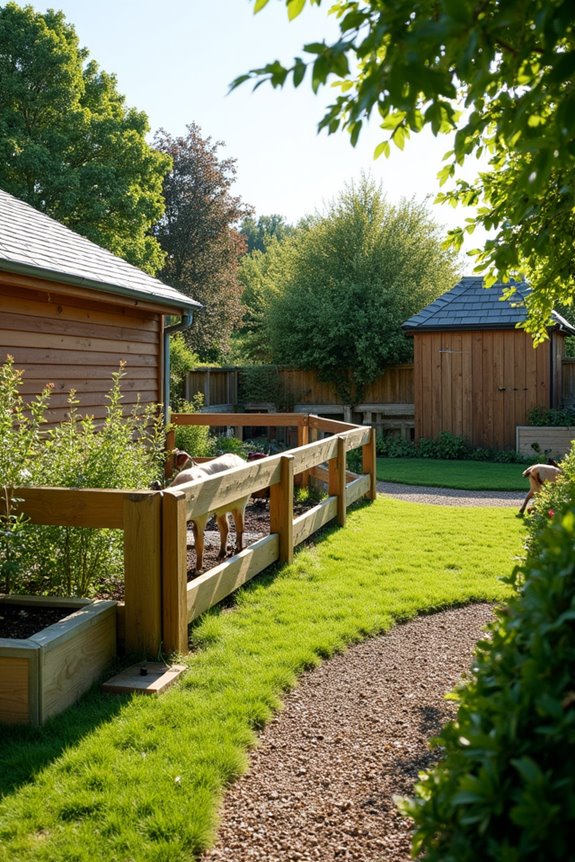
Your lot size directly determines how many goats you can safely keep on your property. This foundation defines your zoning compliance and creates realistic expectations for your backyard operation.
Consider these guidelines for goats per yard:
- Lots under 10,000 square feet allow three miniature goats or sheep maximum
- Lots between 10,000 and 20,000 square feet permit up to five animals
- Lots exceeding 20,000 square feet with agricultural zoning allow unlimited numbers
- Nursing offspring may temporarily exceed limits until weaned (maximum 12 weeks)
Ground cover quality, sanitation standards, and proper fencing determine actual capacity beyond these numbers. The condition of your yard directly impacts animal welfare because insufficient space breeds odor and disease. Assess your lot’s drainage, vegetation, and current state honestly before selecting your herd size.
Minimize Noise and Maintain Good Neighbor Relations
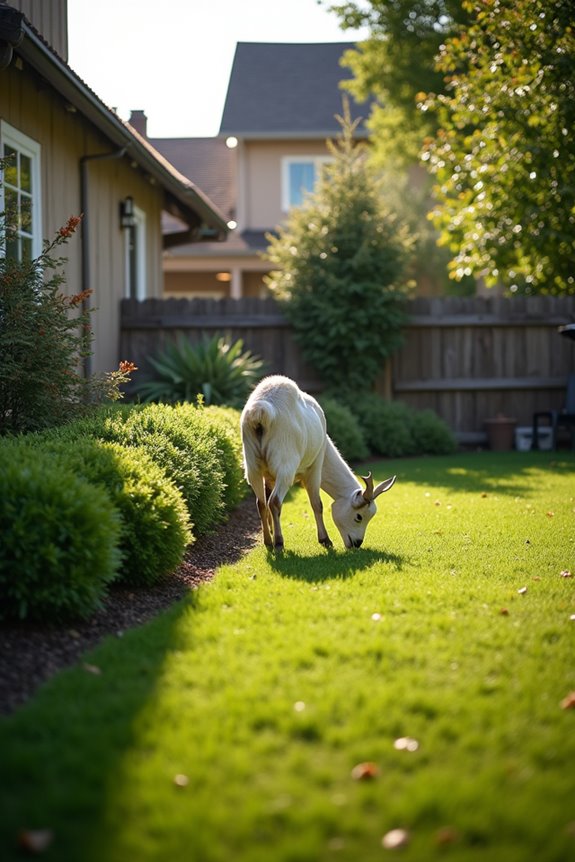
What separates a successful backyard goats operation from a neighborhood conflict? Noise control through consistent feeding schedules and proper herd management.
Goats vocalize most when hungry or stressed. Establish regular feeding times with quality hay and feed to keep your backyard goats calm and quiet. The predictable routine reduces noise because animals anticipate their meals.
Regular feeding schedules with quality hay keep backyard goats calm and quiet by reducing hunger-related stress and vocalization.
Keep at least two goats together, since they’re herd animals and solitude creates unnecessary stress-related bleating. Secure fencing prevents escapes that would disturb neighbors’ gardens and relationships.
Before acquiring goats, review your local city ordinances carefully. Size limits, density restrictions, and noise regulations define what’s legally permitted in your area. Sturdy enclosures with proper drainage minimize odors affecting neighbors.
Fresh water access remains essential throughout the day.
Calculate Total Costs: Purchase, Housing, and Annual Care
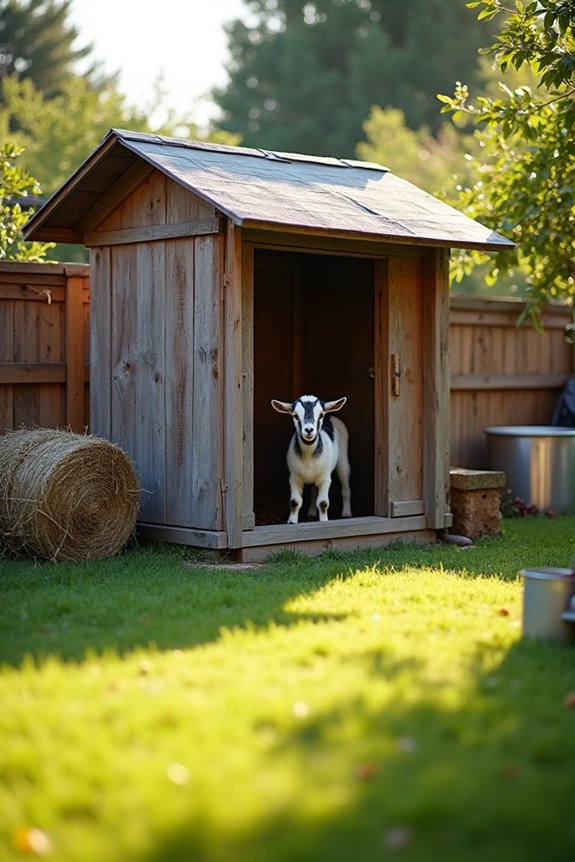
Several expense categories determine whether you can afford backyard goats long-term. Understanding these costs helps you plan responsibly and participate in the backyard goat community.
- Initial purchase price: Expect $150–$200 per healthy goat in most areas
- Housing and fencing: Three-sided shelters with roofs and secure fencing require upfront investment
- Annual feed and bedding: Hay, forage, minerals, and regular bedding replacement create ongoing expenses
- Veterinary and maintenance: Routine health checks, hoof care, and housing repairs define seasonal costs
Additional expenses include enrichment items, ground cover replacement, and potential permits. The bedding system reduces odor because fresh material prevents moisture buildup. Your housing investment creates healthy living conditions, which prevents costly disease problems later. Calculate total costs carefully before committing to goats and care responsibilities.
Get Your Goat a Companion: Herd Dynamics and Welfare
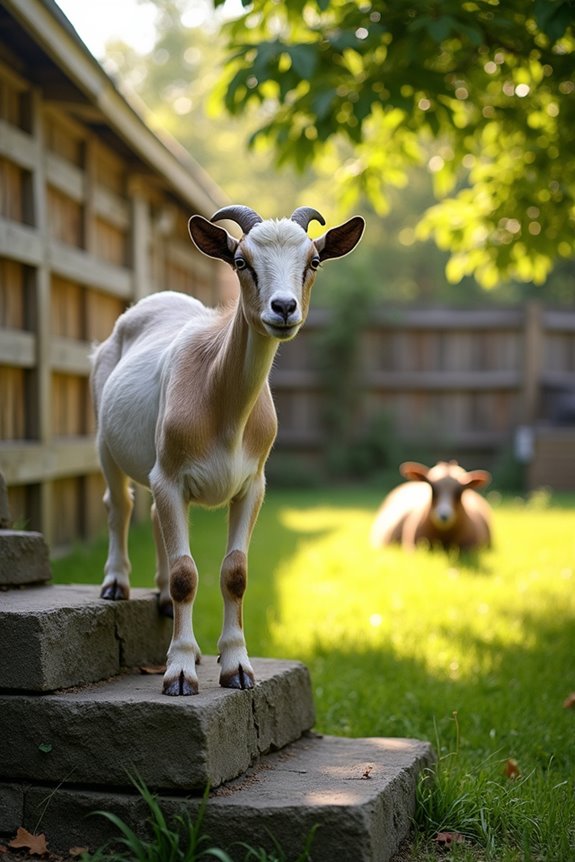
Once you’ve budgeted for housing and care costs, you’re ready to address a fundamental need: goats aren’t solitary animals. You must obtain at least two goats to support healthy herd dynamics and prevent behavioral problems. A single goat becomes stressed and destructive without companionship.
Before acquiring your herd, check local backyard goat regulations. City ordinances define maximum herd size and housing requirements that vary by location. Understanding these rules prevents legal conflicts with neighbors.
Proper goat companion welfare depends on appropriate space and enrichment. Provide climbable structures and varied terrain that creates mental stimulation. Boredom drives mischief because goats need engagement. Multiple animals interact within the same enclosure, establishing social hierarchies that keep them occupied.
Investing in a second goat costs less than managing behavioral issues from isolation.
Document Compliance and Prepare for Day One
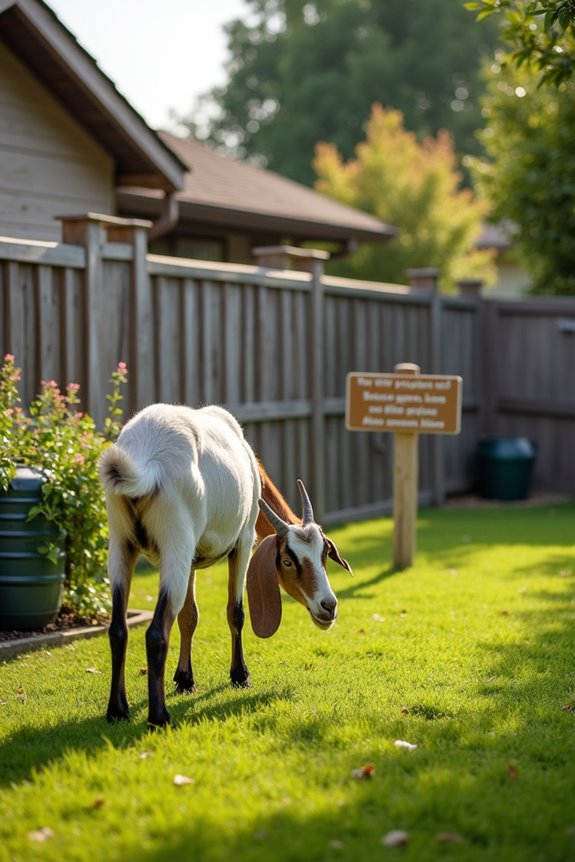
Before you bring goats home, you’ll need to verify that your property and plans comply with local regulations. Documentation creates a clear record protecting both you and your animals.
- Obtain written permits from your city and confirm all local ordinances allow backyard goats on your lot size.
- Photograph your property’s setbacks, fencing, and shelter structures to document compliance with zoning requirements.
- Keep copies of animal welfare standards your goats must meet, including housing ventilation and ground cover specifications.
- Schedule an initial inspection with municipal officials to confirm your setup meets current codes before bringing animals home.
This compliance planning defines your responsibilities going forward. The documentation protects you by establishing that you’ve followed required procedures. Your goats thrive when your setup meets local standards from day one.