You’ll improve your living room by positioning floor lamps strategically. Place lamps beside seating to create comfortable task lighting, positioning the shade at eye level with warm 2700K–3000K bulbs.
Brighten dark corners with tall, wide-shade lamps angled toward the room’s center to expand perceived space.
Layer lighting behind sofas 12–18 inches from the back for indirect glow.
Highlight focal points and artwork to define visual interest.
Match lamp height to your ceiling—65–80 inches for high ceilings, 50–60 inches for lower ones.
Test placement throughout the day, adjusting for shadows and daylight shifts.
Explore additional techniques to optimize your entire lighting scheme.
Position Floor Lamps Next to Seating for Task Lighting
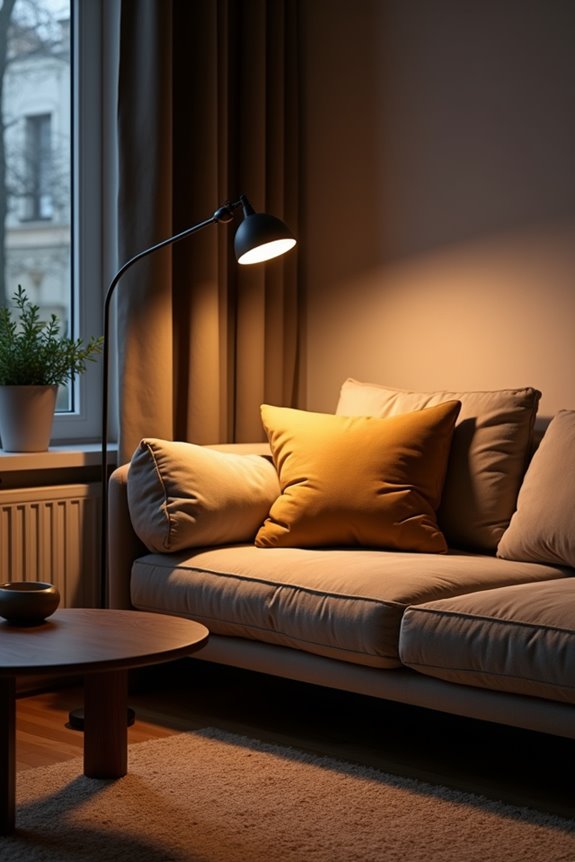
Where should you place a floor lamp to read comfortably at night? Position your floor lamp near seating to create effective task lighting for reading nooks. Place an adjustable lamp height model slightly behind or to the side of your chair. This positioning directs light over your shoulder, reducing glare on pages. The shade placement keeps warm ambient light at eye level when seated, typically around 2700K–3000K color temperature. This warm ambient light minimizes eye strain during extended reading sessions. Pair your floor lamp near seating with a nearby side table or ottoman. This setup stabilizes the lighting and provides convenient access. The spatial relationship between lamp and furniture defines a functional reading zone that supports comfortable, sustained focus without harsh shadows.
Brighten Dark Corners to Expand Your Living Room’s Feel
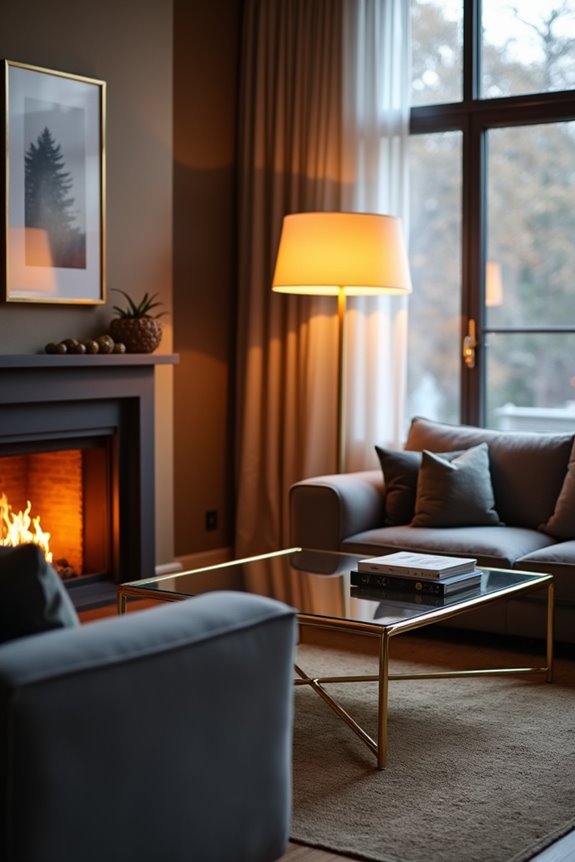
Dark corners absorb light and create shadowed pockets that make your living room feel smaller than it actually is. An Akari-style lantern or tall column lamp with a wide shade diffuses light evenly because its broad coverage bounces illumination off walls and ceilings rather than concentrating it in one spot. Position the lamp to angle toward the room’s center, which expands the perceived space and eliminates the visual weight that dark corners otherwise define.
Corner Shadow Problems
Have you noticed how certain corners of your living room feel smaller and less inviting than the rest of the space? Corners naturally collect shadows because walls block light from spreading evenly throughout your room. These dark pockets make your space feel cramped and disconnected from the rest of your home.
A strategic corner lighting plan solves this problem. Tall arc floor lamps bounce light off walls and ceilings, creating a diffuse glow that reaches neglected areas. Corner lamps with wide shades or multiple bulbs maximize light diffusion across adjacent surfaces. The lamp does this effectively because its placement allows light to travel upward and outward rather than downward.
Pairing corner lighting with ambient lighting prevents over-dark pockets from occurring. This layered approach creates balanced illumination and defines seating areas while expanding your perceived space.
Lamp Selection And Style
The right lamp fills a dark corner with function and warmth. You’ll want an adjustable floor lamp with a swivel head or articulating arm that directs light exactly where you need it. Arc designs and tall Akari-style lamps create ambient lighting that bounces softly off walls and ceilings, defining your living room layout in a natural way. Choose lamps with wide shades in neutral tones—cream, gray, or white—because they distribute light evenly rather than casting harsh shadows. Position your reading light near seating to establish a focal point. Proper placement combines task illumination with atmospheric warmth. Select fixtures rated 400–800 lumens at 2700K–3000K for comfortable, accurate color rendering that invites relaxation and connection.
Strategic Placement Techniques
Where should you position a floor lamp to brighten shadowy areas and make your living room feel larger? Strategic floor lamp placement addresses dark zones by creating functional lighting. Position lamps in corners to bounce light off walls and ceilings, creating ambient lighting that expands the room’s visual depth. Wide shades disperse illumination broadly, while multiple bulbs deliver balanced glow throughout seating areas.
| Placement Location | Lamp Type | Benefit |
|---|---|---|
| Dark corners | Wide-shade floor lamp | Bounces light; expands perceived space |
| Behind seating | Tripod lamp | Provides seating illumination without glare |
| Near focal points | Tall arched lamp | Highlights artwork; defines lighting focal points |
Tall corner lamps reach high ceilings effectively. Position lamps slightly behind or beside chairs for comfortable task lighting. This approach to corner lighting creates functional, inviting environments while solving visibility challenges strategically.
Layer Light Behind Sofas and Sectionals
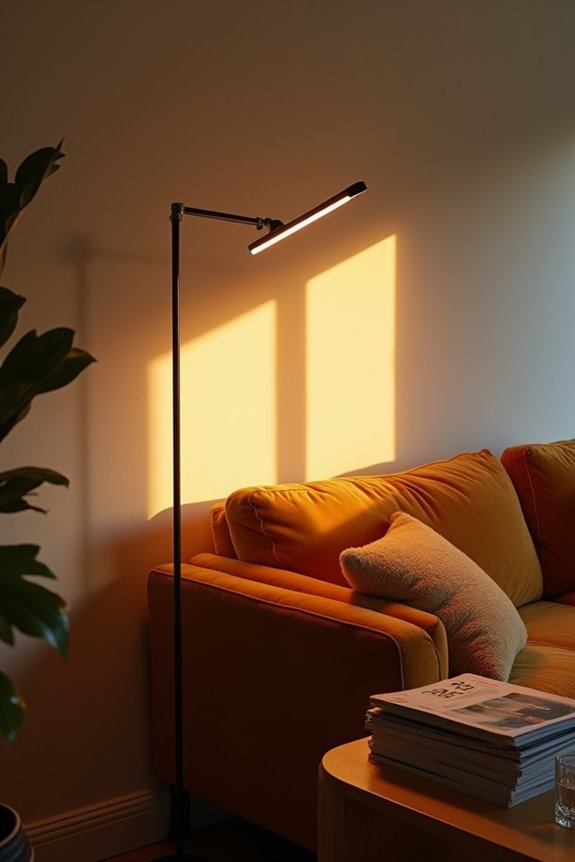
You can position floor lamps behind your sofa or sectional to create indirect ambient light that bounces off your ceiling and walls, eliminating harsh shadows. This strategic placement works because the lamp sits 12–18 inches from the furniture’s back, directing illumination upward rather than toward your eyes. Pairing this behind-seating light with table lamps or wall sconces creates a layered lighting scheme that feels balanced and functional throughout your living room.
Indirect Ambient Glow
By positioning a floor lamp behind your sofa or sectional, you create soft, room-wide illumination that bounces off walls and ceiling rather than shining directly into your eyes. Place the lamp 12–18 inches from the sofa back to achieve even diffusion without glare. This indirect ambient glow defines a welcoming space where you and others feel comfortable gathering.
Tall Akari-style or slim uplight lamps work best for this floor lamp placement. They maximize wall reflection, which enhances perceived room height and creates balanced lighting throughout. The lamp accomplishes this because its design directs light upward rather than outward.
Select bulbs with warm color temperature—2700K to 3000K—for a cozy, diffused ambience. Pair your setup with dimmers to adjust intensity for different activities while maintaining consistent, flattering light.
Strategic Sofa Placement
While ambient uplighting sets the foundational glow across your room, positioning a floor lamp directly behind or beside your sofa creates task lighting that supports reading and close activities without casting shadows on your lap. A floor lamp behind sofa placement at 12–18 inches from the back delivers soft ambient light while keeping pathways clear. Choose an adjustable lamp with a swivel head to direct illumination exactly where you need it for your reading nook. Layered lighting works best when you pair this behind-sofa lamp with ceiling uplights. The combination balances brightness throughout your seating area. Taller designs, typically 65–80 inches high, prevent blocking sightlines while providing shoulder-level illumination. This strategic positioning creates a functional, inviting seating area.
Use Floor Lamps to Highlight Focal Points and Artwork
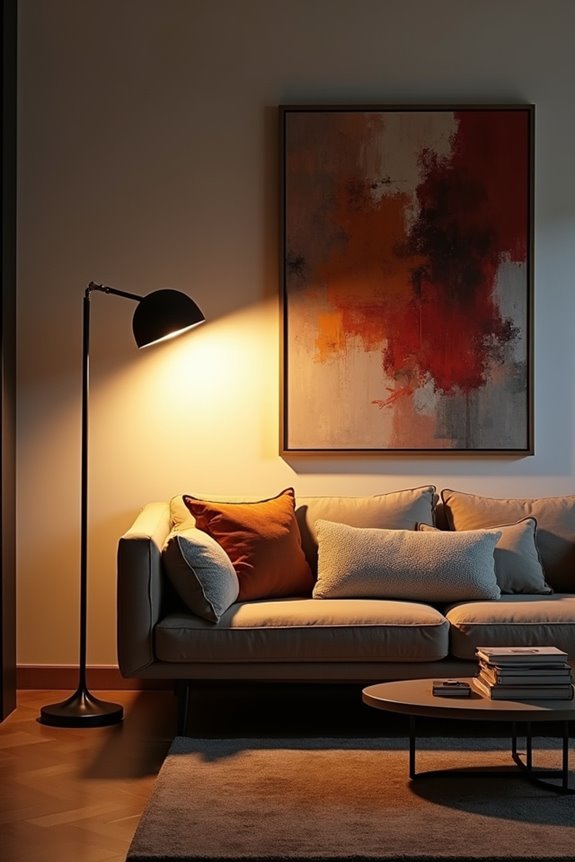
Floor lamps create visual emphasis by directing light toward the room’s most important elements. Position your floor lamp twelve to eighteen inches from artwork or focal points. This distance creates an even wash of light across the piece without causing glare. The lamp does this because the angle prevents harsh shadows and hotspots that diminish visual appeal.
Choose lamps with warm color temperatures between 2700K and 3000K. These temperatures render artwork hues accurately, keeping colors true to life. Select fixtures with CRI90+ ratings for superior color accuracy.
Adjustable heads and dimmers provide flexibility in your lighting design. They allow you to highlight artwork from multiple angles while preserving overall room ambiance. Pair floor lamps with other lighting layers to keep artwork as your visual centerpiece without overpowering the space.
Choose the Right Lamp Height for Your Space
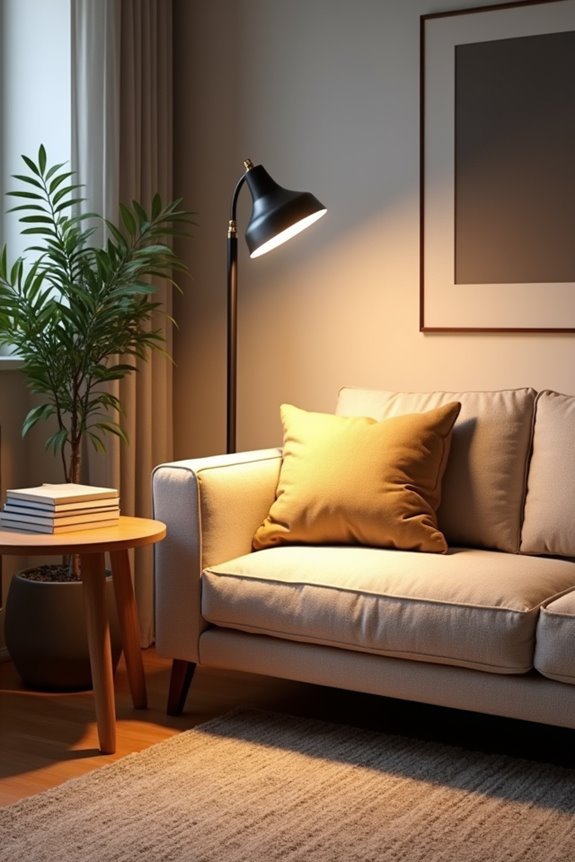
How does lamp height affect both comfort and function in your living room?
Your floor lamp height directly creates the difference between comfortable lighting and eye strain. Aim for 65–80 inches in rooms with high ceilings; lower ceilings work better at 50–60 inches. This positioning places your shade at eye level, which defines how you experience the space without glare.
The shade placement matters because translucent shades diffuse light upward for ambient lighting, while opaque shades direct light downward for focused tasks. Adjustable-height lamps offer flexibility when you need to shift between reading and conversation areas.
If your lamp sits behind seating, use taller heights to maintain visual balance with surrounding furniture. Your ceiling height ultimately determines the best floor lamp height for your specific room layout and lighting needs.
Identify Dark Spots and Underlit Areas First
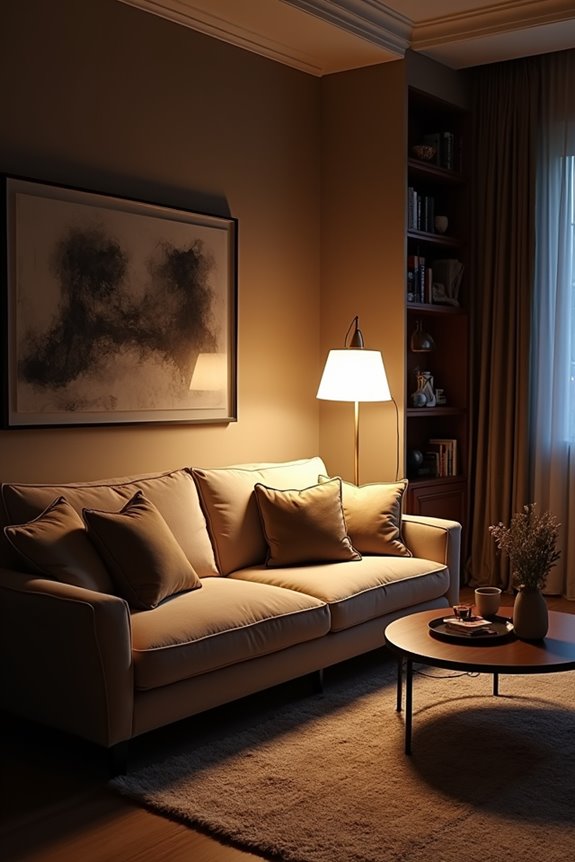
Before you buy a floor lamp, take time to scan your living room and identify where shadows settle. Dark spots typically hide in corners, behind seating, and near reading nooks throughout the day. You’re looking for underlit areas that lack adequate illumination—roughly the darkest 15–20% of your room’s surface.
Mark these zones as you walk through different times of day:
- Corners where two walls meet, creating natural shadow pockets
- Behind couches and chairs where people sit but can’t see well
- Entryways and transition spaces between rooms
- Recessed areas near bookshelves or built-in storage
Floor lamp placement in these underlit areas creates ambient lighting that defines the space. Layering lighting with task-focused fixtures fills gaps and reduces harsh shadows. Test your living room illumination at dawn, midday, and evening to identify permanent dark spots before committing to placement.
Test Your Setup at Different Times of Day
When does your living room feel most uncomfortable to inhabit? Test your floor lamp placement throughout the day. Morning light differs drastically from evening conditions, affecting how your lamp performs. Position the lamp where daylight-aware adjustments create balanced soft lighting without harsh glare reduction issues on screens or seating.
Observe shadows shifting across your room as natural light changes. The lamp defines reading comfort by filling gaps where sunlight fades. Afternoon testing reveals whether your current setup handles bright zones adequately. Evening sessions show if adjustable placement maintains consistent illumination as darkness falls.
Note glare patterns on furniture and adjust accordingly. Your layered lighting strategy should complement, not fight, available daylight. Reposition or use dimmers to prevent overpowering key zones. This systematic testing allows your lamp to enhance comfort across all hours.