
Your bathroom smells like a sewer because sewer gases are escaping into your space. This happens when the P-trap—the curved pipe beneath your drain—loses its water seal, typically from evaporation or blockages.
Vent pipes that are clogged or damaged also push gases backward into rooms instead of directing them outside.
A damaged toilet wax seal creates similar problems.
You can refill your P-trap by running water for 30–60 seconds, but persistent odors indicate deeper issues requiring professional inspection.
Six Common Causes of Bathroom Sewer Smells
Why does your bathroom smell like a sewer? Several common issues create that unpleasant odor. A clogged shower drain traps hair and soap scum, which harbor bacteria that produce strong smells. The dry P-trap, found in unused sinks or showers, loses its water barrier that blocks sewer gases from entering your space. Blocked vent pipes prevent proper airflow, pushing sewer gases back into your bathroom through backflow. A damaged toilet wax seal around the toilet’s base allows gases to escape into the room. Sewer line problems, including cracks or blockages, cause widespread odors requiring a camera inspection. These six causes define why your bathroom develops that sewage-like smell. Drain cleaning, refilling traps with water, or professional repairs address these issues effectively and restore fresh air to your space.
Simple Fixes You Can Try Right Now
You can tackle three straightforward fixes before calling a plumber for help. Start by running water down unused drains for 30–60 seconds to refill the P-trap, which blocks sewer gases from entering your bathroom. If the smell persists, check your vent pipe for blockages and inspect the wax ring seal around your toilet, as these issues often create the odors you’re noticing.
Clean Your Drain Trap
Your bathroom’s P-trap—the curved pipe section beneath the drain—creates a water seal that blocks sewer gases from rising into your home. Over time, biofilm buildup and debris accumulate inside this trap, trapping sewer odor even when water remains present.
Start by running water down the drain for 30–60 seconds to refill the trap completely. This simple step often eliminates dry-trap problems immediately.
If the bathroom smell persists, you’ll need to clean the trap itself. Remove the P-trap carefully, empty standing water into a bucket, and scrub away biofilm and debris using a brush. Reinstall it with tight seals and proper washers.
When refilling and cleaning don’t resolve your sewer odor, deeper issues like vent or sewer line problems may exist. Contact a professional plumber to investigate further.
Check Vent Pipe Issues
If cleaning the P-trap didn’t solve your sewer smell, the problem likely exists elsewhere in your plumbing system. Your plumbing vent creates a necessary pathway for sewer gas to escape outside. When this vent clogs or gets blocked, odor backflow occurs inside your home.
Check these vent pipe issues:
- Debris accumulation on your roof vent opening traps gases inside
- Gurgling drains indicate inadequate venting throughout your system
- Multiple slow drains suggest a vent clog somewhere in the network
- Blocked vent pipes prevent proper gas circulation and odor control
- Roof vent damage requires professional inspection and potential vent repair
The vent pipe does its job because it channels unwanted gases away from living spaces. If you suspect vent problems, a professional plumber can safely assess and repair issues, especially roof access situations. Severe damage may require complete vent replacement.
Replace Wax Ring Seal
Have you noticed sewer odors specifically around the toilet base? A worn wax ring seal creates that persistent bathroom smell by allowing sewer gases to escape. The wax ring does its job because it forms a watertight seal between your toilet and the drain flange underneath.
Replacing it involves shutting off water, draining the toilet, and removing it completely. You’ll scrape away the old wax, then install a new wax ring seal before reseating your toilet securely. Reconnect your water supply afterward.
The toilet replacement process determines whether leaks and odors disappear. Flush to check for leaks, then test for any remaining odors around the toilet base. If wobbling persists or the seal fails again, a professional plumber should inspect for flange damage requiring additional repair work.
When to Call a Professional Plumber
When should you stop troubleshooting on your own and call a professional plumber?
Persistent sewer odors that don’t disappear after refilling your P-trap signal deeper problems requiring professional diagnosis. You’ll want expert help when you notice these warning signs:
- Gurgling or bubbling sounds from multiple drains simultaneously
- Odors that linger despite your DIY efforts and basic fixes
- A cracked or damaged toilet seal (wax ring) you can’t confidently replace
- Vent pipe blockages affecting your home’s drainage system
- Sewage backups or visible leak signs behind walls and under floors
A licensed plumber uses camera inspections to identify sewer line issues and blockages. They’ll assess whether you’re dealing with a simple dry P-trap or a serious sewer line issue. Act promptly—professional evaluation prevents costly water damage.
How Your P-Trap Works (And Why It Fails)
The U-shaped pipe under your sink creates an important barrier against sewer gases. This plumbing trap, called a P-trap, holds water that protects your home from odors. The water seal works because it blocks noxious gases from rising through your drain line.
Your P-trap fails when water evaporation occurs. Unused fixtures dry out faster, particularly when a vent blockage creates a vacuum effect. A dry trap leaves your bathroom vulnerable to sewer odors escaping upward.
Refill water quickly by running your tap for 30–60 seconds. This simple action restores the water seal and reestablishes your odor barrier. Regular use prevents evaporation naturally. Understanding how your plumbing trap functions helps you maintain it effectively and avoid unpleasant surprises.
Sewer Gas Health Risks: Symptoms to Watch
While fixing your P-trap prevents odors from entering your home, you should also understand what happens when sewer gases do escape. Exposure to hydrogen sulfide and other sewer gas creates immediate and long-term health risks that you’ll want to recognize early.
Watch for these symptoms when bathroom smell intensifies:
- Eye, nose, and throat irritation that worsens over days
- Persistent coughing or bronchitis-like symptoms from repeated exposure
- Dizziness, headaches, and nausea during or after bathroom use
- Skin irritation or dermatitis on exposed areas
- Unusual mold growth indicating moisture from gas leakage
The contaminated surfaces near sewer odor sources do harbor bacteria because wastewater contains E. coli and salmonella. Gas leakage from blocked lines creates mold growth conditions that compound bacteria exposure risks. Addressing bathroom smell promptly protects your family’s wellbeing.
Stop the Smell: Prevention Checklist
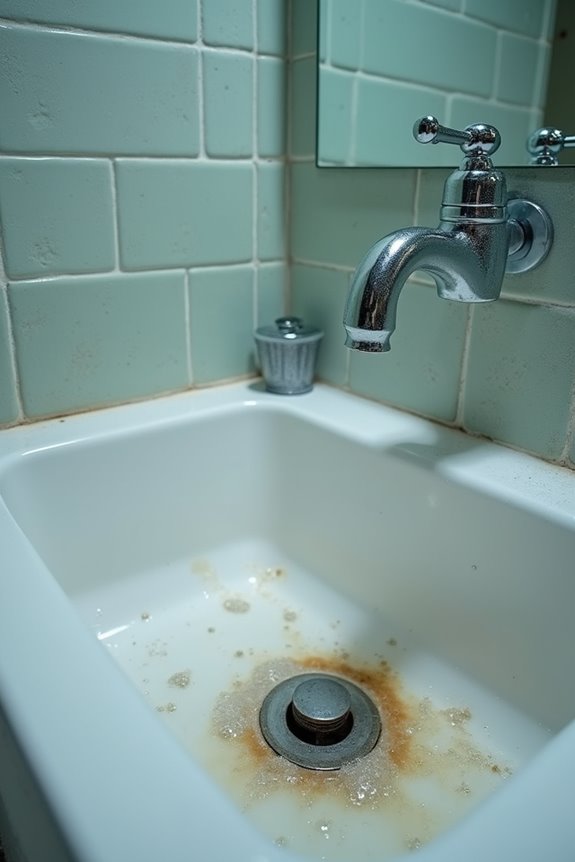
You can stop sewer odors by maintaining your drains and plumbing system through regular, deliberate action. Running water into unused fixtures keeps P-trap seals filled, while annual drain cleanings remove hair and debris that harbor bacteria. Monitoring your vent pipes, toilet seals, and main lines protects against the sewer gases that escape through weakened plumbing components.
Regular Drain Maintenance
Regular drain maintenance stops odors before they start by keeping pipes clear and functioning properly. You’ll prevent the bacteria buildup that creates sewer odors in your bathroom.
What you should do:
- Use a plunger for simple clogs to clear blockages immediately
- Deploy a drain snake or hydro-jetter for deeper blockages that plungers can’t reach
- Run water for 30–60 seconds in unused fixtures to refill P-traps
- Check vent pipes on your roof for blockages or damage that compromises venting
- Schedule professional camera inspections if odors persist despite your efforts
The P-trap does its job because standing water creates a barrier against sewer gases. When you maintain clear drains, you eliminate the environment where bacteria thrive. Drain cleaning removes debris buildup that traps odors. These preventive steps make the difference between fresh bathrooms and persistent bathroom smells.
Monitor Plumbing System Health
Beyond clearing drains, you’ll want to keep tabs on your entire plumbing system’s condition. Regular monitoring prevents odor persistence and catches problems early. Start by inspecting your P-trap under sinks monthly. Run water for 30–60 seconds after use to maintain the water seal that blocks sewer gas from entering your bathroom. Listen for dripping sounds indicating hidden leaks beneath fixtures. Next, check your roof vent stack for blockage from leaves or nests. A vent blockage creates dangerous gas backup inside your home. If odors remain after these checks, perform odor testing across multiple drains. The persistence defines whether you need drain inspection or professional assessment. A cleanout camera examination confirms sewer line integrity by detecting cracks or obstructions. This proactive approach maintains reliable plumbing health and eliminates recurring problems.