You need a mildew-resistant paint with a satin or semi-gloss finish to prevent peeling within two years. Benjamin Moore’s Aura Bath & Spa or Zinsser Perma-White both contain mold-killing additives that standard interior paint lacks. Pair your topcoat with a mold-resistant primer like Zinsser Mold Killing Primer—this two-step approach creates superior adhesion and moisture sealing. Higher-sheen finishes shed water better than flat finishes, which absorb vapor and fail faster. Proper ventilation reduces humidity exposure and extends your ceiling’s lifespan. The right product combination protects against damage that most homeowners never anticipate.
Why Standard Ceiling Paint Fails in Steamy Bathrooms (And Why Labels Lie)
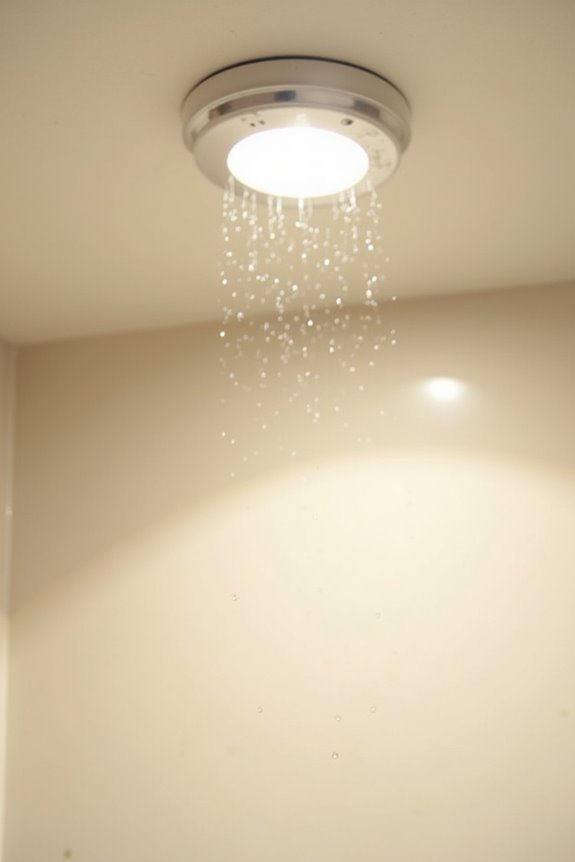
Why does bathroom ceiling paint peel and bubble when standard products fail? You’re likely using ceiling paint that lacks moisture-blocking agents. The paint bubbles because steam condenses on cooler surfaces, driving moisture into the film. Standard ceiling paints create problems in steamy bathrooms because they’re too porous, especially flat finishes that absorb water vapor readily.
Labels claiming “interior” or “bathroom-safe” often mislead you. These products frequently lack true mildew resistance and moisture tolerance your ceiling needs. Ceiling paint failure happens faster without proper ventilation accelerating exposure. You need bathroom-grade paint with mold-resistant primer instead. These formulas provide protection through enhanced mildew growth prevention. Latex paints specifically formulated for bathrooms contain the moisture-blocking agents that standard ceiling products don’t offer, preventing peeling and mildew before it starts.
The 3 Traits That Stop Mildew and Peeling
Because bathroom ceilings face constant moisture exposure, you need paint with three specific traits that work together to prevent mildew and peeling.
Bathroom ceilings need paint with three specific traits working together to prevent mildew and peeling.
First, mildew resistance matters most. You’ll want bathroom-appropriate paint containing mold-killing additives that actively prevent growth. Acrylic latex formulations with mildewcides create a hostile environment for mold spores.
Second, moisture tolerance defines durability. Semi-gloss and satin finish options resist water vapor better than flat paint. These higher-sheen coatings shed moisture instead of absorbing it, keeping your ceiling protected longer.
Third, adhesion prevents peeling entirely. A mold-resistant primer creates the foundation your topcoat needs. The primer does this because it bonds properly to clean, prepared surfaces, keeping your bathroom-appropriate paint locked in place.
Ventilation completes this system. Proper airflow works alongside these three traits to eliminate excess humidity before it damages your ceiling.
Best Bathroom Ceiling Paints for 2025 (Ranked by Durability)
Now that you understand what traits protect bathroom ceilings, selecting the right product matters just as much as application technique. Aura Bath & Spa from Benjamin Moore creates superior mold resistance through Color Lock technology, a durable choice for moisture-heavy spaces. Zinsser Perma-White stands out as a mildew-proof, self-priming option. Its pink-to-white coverage simplifies your application process considerably. Behr Premium Plus Ultra offers affordable mildew resistance ideal for steamy bathrooms without compromising quality. Sherwin-Williams Duration Home delivers moisture resistance with multiple sheen options, including satin or semi-gloss finishes that outperform flat in humid conditions. Each ceiling paint addresses specific durability challenges. Your selection should align with your bathroom’s moisture levels and maintenance preferences for lasting protection.
Primer vs. Paint-and-Primer-One: What Actually Works

Selecting the right primer separates a bathroom ceiling that holds up from one that fails within months. Paint-and-primer-one products seem convenient, but they don’t deliver true mold resistance your bathroom ceiling demands. A dedicated mold-resistant primer creates superior adhesion and moisture sealing compared to combined formulas. Products like Zinsser Mold Killing Primer or Benjamin Moore Fresh Start encapsulate existing mold before your topcoat goes on. These mildew-resistant primers protect against humidity better because they’re engineered specifically for high-moisture environments. Your bathroom paint performs longer when you apply a bathroom-grade topcoat over a quality mildewcide primer. The two-step approach defines durability in steamy bathrooms. Skip paint-and-primer-one shortcuts—your bathroom ceiling’s longevity depends on proper primer selection first.
Matte, Satin, or Semi-Gloss: Which Finish for Your Ceiling?

Matte, Satin, or Semi-Gloss: Which Finish for Your Ceiling?
What finish you choose for your bathroom ceiling directly impacts how long your paint lasts. You’re weighing three main options: matte, satin, and semi-gloss finishes.
Matte finishes look smooth and hide ceiling imperfections well. However, they offer limited moisture resistance in steam-prone environments. The porous surface absorbs water vapor, making mildew resistance weaker.
Satin and semi-gloss finishes create superior moisture resistance and washability. These options strike a balance between durability and light reflection without accentuating flaws. Semi-gloss reflects more light but may highlight imperfections slightly.
Modern bathroom-matte formulas bridge this gap. These engineered products deliver moisture-prone environment protection with lower sheen. They create the smooth aesthetic you want while matching satin durability.
Choose finishes specifically designed for moisture-prone environments. This decision defines your ceiling’s longevity and appearance.
Which Bathroom Ceiling Paint for Your Situation?

Have you considered that your bathroom’s moisture level should guide your paint choice? Your ceiling’s environment determines which products work best. High-humidity bathrooms need moisture-resistant paint with mold resistance built in. Standard flat ceiling paints fail because they absorb moisture and invite mildew.
Your bathroom’s moisture level should guide your paint choice—high-humidity spaces demand moisture-resistant paint with built-in mold resistance.
Start with proper prep work:
- Apply Zinsser Perma-White or Kilz mold-resistant primer to block moisture penetration
- Choose satin or semi-gloss finishes instead of flat options for washability
- Select Benjamin Moore Aura Bath for matte appearance with moisture inhibitors
- Install humid bathroom ventilation before painting to prevent blistering
The ceiling paint selection process creates lasting protection when you match products to your specific moisture conditions. Budget options like Behr Premium Plus Ultra deliver reliable mold resistance. Proper primer application defines success because it prevents peeling and adhesion failure.
5 Mistakes That Guarantee Mildew and Peeling
Why do bathroom ceilings fail so quickly despite a fresh coat of paint? You’re likely making one of five critical mistakes that guarantee mildew growth and peeling.
Skipping a mold-inhibiting primer creates pathways for mildew under your topcoat. Painting over damp or unrepaired surfaces traps moisture, causing bubbles and poor adhesion. Using standard flat ceiling paint in a steamy bathroom lacks the moisture resistance you need. The porous finish deteriorates faster because it can’t handle humidity cycles.
Inadequate ventilation overwhelms even premium topcoats. Your exhaust vent must direct air completely outside, not into your attic. Finally, relying on “paint and primer in one” products without mold inhibitors increases staining risk.
Moisture-rated finishes with proper primer preparation define successful bathroom ceilings. Water-based latex options with mold inhibitors create lasting protection in high-moisture environments.