

Before you bury your dog, verify that backyard burial is legal in your area—regulations vary by state and county.
Bury your pet within 24 to 48 hours in a spot at least two to three feet deep, away from water sources and utilities.
Use a biodegradable container to support natural decomposition.
Notify neighbors and call your local utility locating service to identify buried pipes.
If burial isn’t permitted, cremation and licensed pet cemeteries offer compliant alternatives that address health and environmental concerns more thoroughly.
Is Backyard Pet Burial Legal Where You Live?
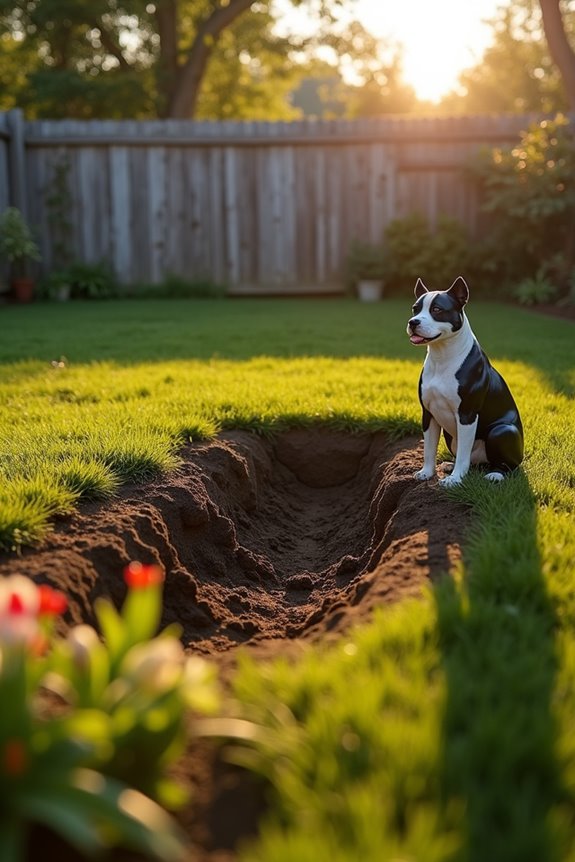
Before you decide to bury your dog in your backyard, you’ll need to check what’s actually allowed where you live. Backyard burial legality varies substantially across states, counties, and municipalities. Some regions permit burial with specific conditions, while others prohibit it entirely. You must research your local ordinances before proceeding.
Depth requirements typically range from two to three feet, with additional soil layers above. These standards exist because proper depth creates environmental safeguards protecting your water table from contamination. Distance from water sources matters markedly for the same reason.
Beyond local laws, HOA restrictions and deed covenants may further limit your options. Even where burial is legal, your neighborhood agreement might prohibit it. If backyard burial isn’t feasible, licensed pet cemeteries and pet cremation alternatives provide respectful options aligned with local regulations.
Avoid These Legal and Safety Mistakes
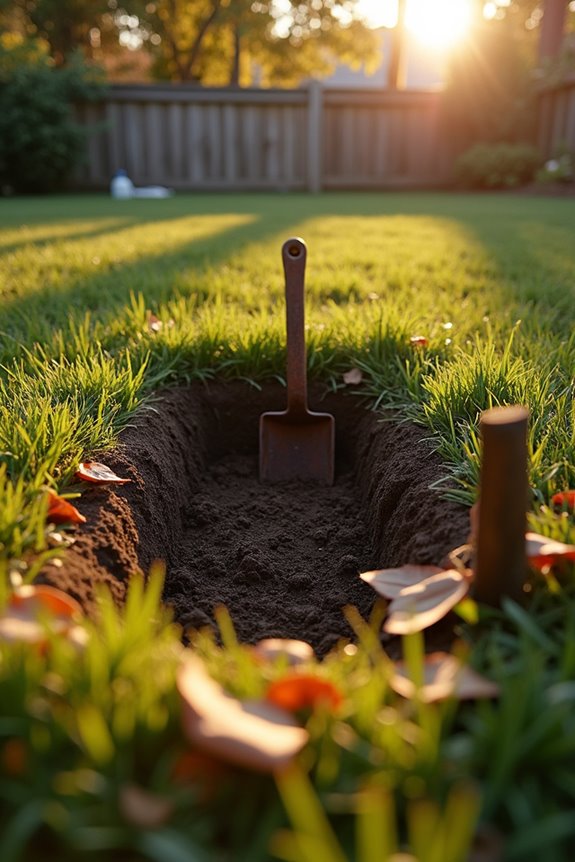
What mistakes should you avoid when burying your dog in your backyard? You must never bury your pet on public property or rights-of-way. This action violates local laws and creates health hazards for nearby communities. Always verify permits and regulations before beginning your backyard burial on private property you own. Insufficient burial depth invites scavengers to disturb remains. Dig at least three to four feet deep to protect against wildlife interference. A biodegradable container provides additional protection and defines proper decomposition standards. Never choose locations near water sources, wells, or streams. Water protection prevents contamination of groundwater supplies in your area. Ignoring these guidelines creates legal consequences and safety risks. Research your specific local laws thoroughly beforehand to comply with all requirements.
How Deep, How Soon, and Where to Bury
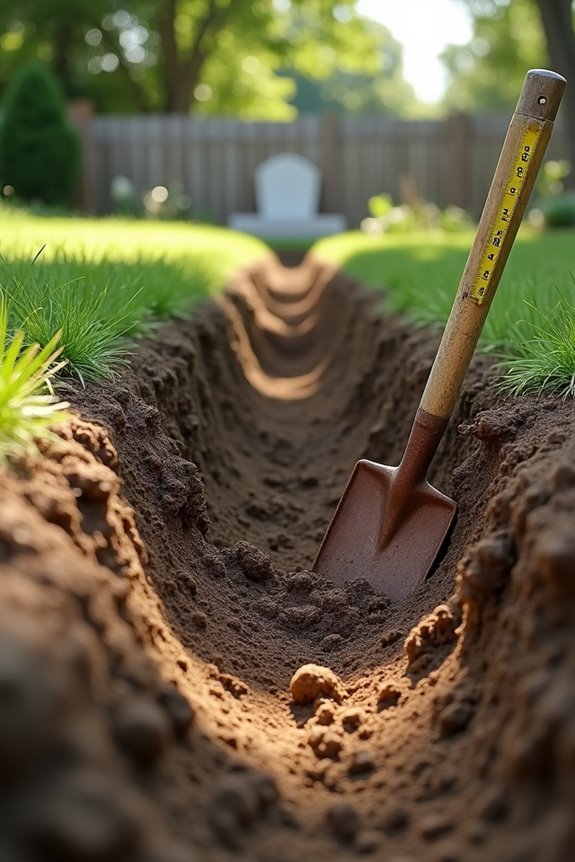
Timing and depth create the foundation for a proper backyard burial. You should bury your dog within 24 to 48 hours after death to minimize health risks. The burial depth must measure at least three feet, with two feet of soil covering the body. This depth defines protection from scavengers and environmental contamination. You shouldn’t exceed eight feet, as excessive depth complicates the process unnecessarily.
Your burial site location matters significantly. Choose an area away from bodies of water, septic systems, and places where other animals might dig. Avoid public land without permission.
A biodegradable container reduces environmental impact during decomposition. If contagious disease caused death, cremation is advisable instead. Always check local ordinances first—they define what’s legally permitted in your jurisdiction.
Choose the Right Container for Your Dog
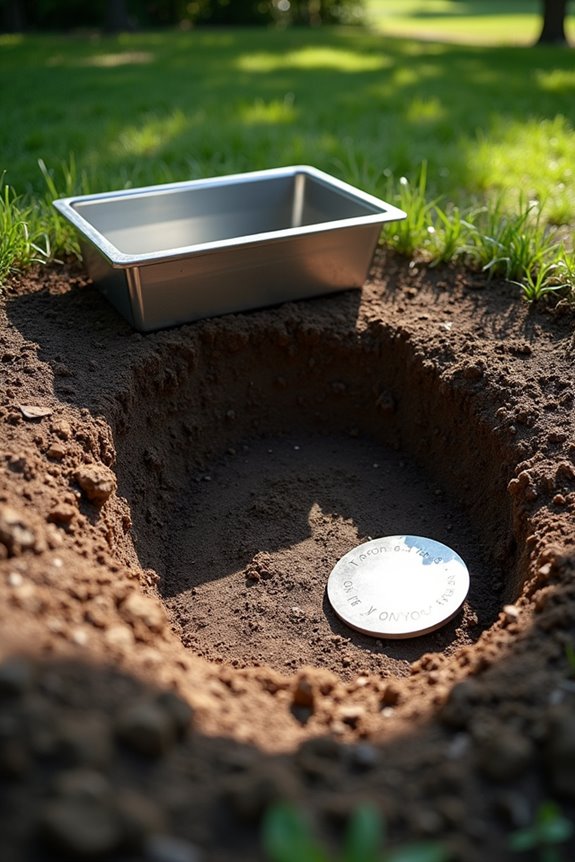
How you contain your dog’s remains directly affects decomposition and environmental safety. You’ll want to select a container that balances protection with natural breakdown processes while meeting local regulations.
Consider these container options:
- Wooden caskets or boxes that decompose naturally underground
- Eco-friendly pods designed specifically for pet burial
- Sturdy cardboard containers lined with biodegradable materials
- Cloth wrappings secured with natural twine as minimal containment
The right pet container creates proper scavenger deterrence because it protects remains at your chosen burial depth. Biodegradable containers support environmental guidelines by breaking down without leaving harmful residues. Choose materials compatible with your burial depth of at least two feet. Verify distance from water sources before finalizing your selection. Some areas enforce strict local regulations requiring certified disposal instead of backyard burial, so confirm requirements beforehand to avoid complications.
Why Groundwater, Scavengers, and Disease Matter
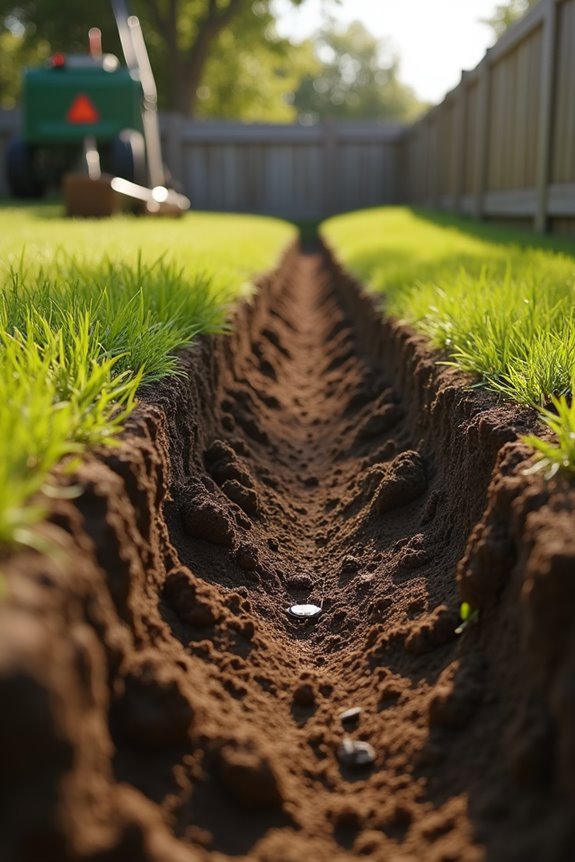
You’ll want to consider three critical factors that directly affect your backyard burial site. Shallow graves create pathways for groundwater contamination and allow scavengers to expose your dog’s remains, which is why proper depth and location are important. If your dog died from a contagious disease, you’ll need to take extra precautions because pathogens can spread through soil and water sources near your home.
Groundwater Contamination Risks
When a dog’s body decomposes in soil, it releases pathogens and organic matter that can seep downward toward groundwater sources. You create serious contamination risks when you don’t follow proper burial practices.
To minimize groundwater contamination, follow these steps:
- Bury your pet at least two to three feet deep, as burial depth directly blocks contaminant pathways from reaching water sources
- Maintain distance from wells, springs, and other water sources where disease transmission occurs more easily
- Avoid flood-prone areas that increase environmental impact through seasonal water movement
- Use biodegradable containers that still provide initial protection against scavengers
Burial regulations exist because decomposition creates chemical and biological contaminants. The soil does filter some pathogens, but insufficient depth represents a failure in protection. Your choices about burial location and depth determine whether your buried pet affects groundwater quality for years ahead.
Wildlife Scavenging Prevention
Shallow graves create opportunities for wildlife to expose your pet’s remains, undoing your burial efforts entirely. You’ll want to dig deeper—at least two to three feet of soil coverage deters most scavengers from disturbing your pet remains. The depth accomplishes this because animals can’t easily penetrate compacted earth layers.
Your burial site selection matters considerably. Position the grave away from areas where digging animals frequent, and avoid locations near gardens or compost piles that attract wildlife.
A biodegradable burial container adds protection. These caskets contain remains while decomposing naturally, reducing scavenging risk and supporting environmental safety. Compact topsoil firmly over the container—this creates a barrier animals recognize as difficult to breach.
Proper backyard burial depth, combined with suitable disposal alternatives like cremation, defines responsible pet care practices.
Disease Transmission Concerns
How does a buried pet affect the environment around it? Your backyard burial creates potential risks you’ll want to manage carefully. Proper burial depth prevents disease transmission and scavenger protection simultaneously. Groundwater contamination remains your primary concern, especially if your property sits near wells or water sources.
Consider these protective measures:
- Bury your pet at least three feet deep to deter animals and protect groundwater
- Maintain safe distance from water sources—typically 100 feet from wells and streams
- Choose biodegradable burial materials like cardboard or cloth to minimize chemical leaching
- Avoid burying pets with contagious disease; cremation becomes the safer option
The burial depth accomplishes this work because deeper soil layers naturally filter contaminants before reaching groundwater. Your location selection determines whether environmental health remains protected or compromised long-term.
Pet Cemeteries, Cremation, and Other Alternatives
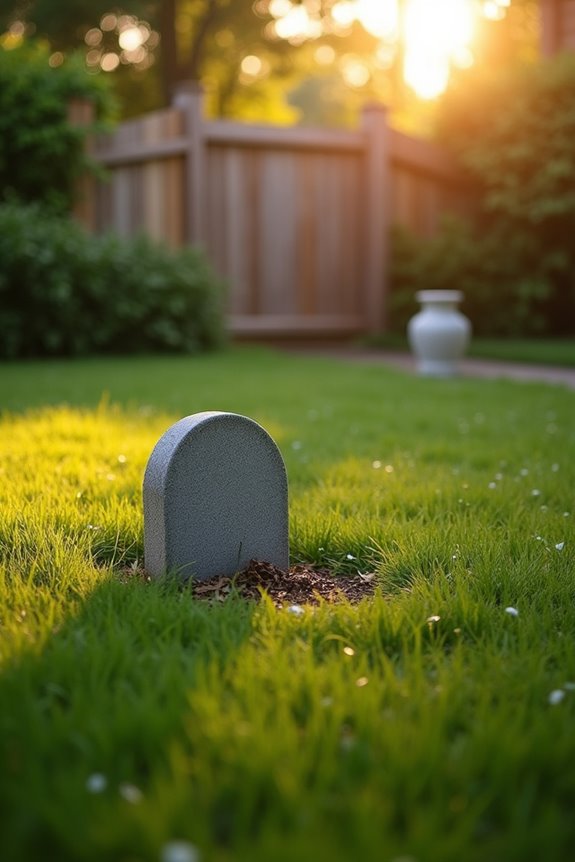
If backyard burial isn’t an option for you, several established alternatives exist to honor your dog’s memory. Pet cemeteries provide designated, regulated spaces with professional memorial services that respect local regulations and health and safety standards. Cremation services, often available through veterinarians or pet cemeteries, return your dog’s ashes in a memorial urn. This option eliminates concerns about disease transmission and pet disposal complications. Animal control services may offer free or low-cost options if backyard burial isn’t feasible or allowed in your area. Rendering plants convert deceased animals into biodegradable material, creating another practical choice. Your veterinary clinic frequently provides euthanasia combined with aftercare decisions, supporting you through the process. These alternatives represent responsible pet disposal while removing uncertainty about local regulations and health considerations.
What to Do if Your State or County Bans Burial
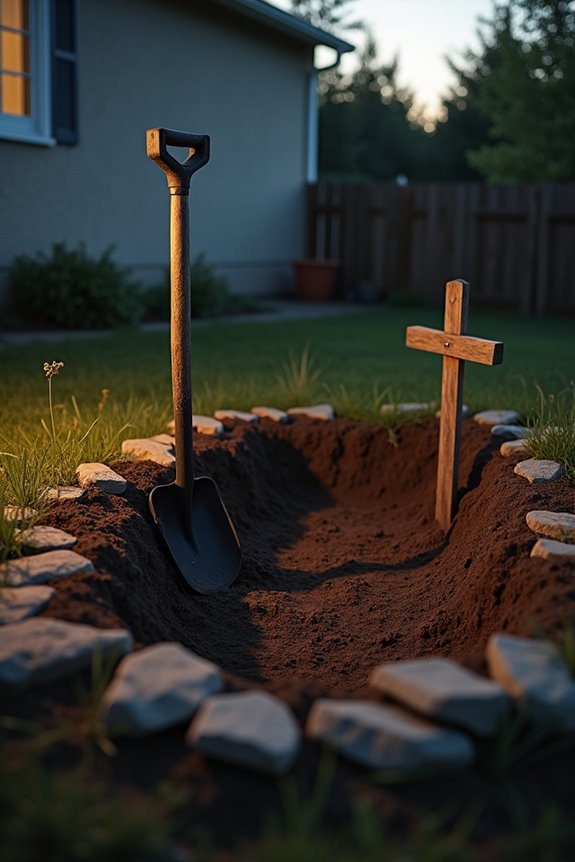
If your state or county bans backyard burial, you’ll need to explore approved alternatives that comply with local regulations while honoring your dog. Cremation services and licensed pet cemeteries define the primary options available in most restricted areas, each offering different ways to preserve your pet’s memory. You should contact your local animal control or a licensed funeral professional to determine which options meet your specific regulations.
Cremation As Primary Alternative
When your state or county restricts backyard burial, cremation emerges as the most practical alternative for pet aftercare. You’ll find cremation services create solutions that address environmental concerns while respecting local ordinances.
Consider these cremation options:
- Individual cremation returns your pet’s ashes in an urn or container you select
- Communal cremation offers a budget option when you don’t need ashes returned
- Veterinarian services streamline the process through established providers and facilities
- Pet cemeteries provide professional cremation alongside memorial options
Cremation reduces environmental risks like groundwater contamination and scavenger disturbances that burial can cause. Pricing and availability vary by locality, so contact multiple providers for comparison. If your pet had contagious disease, health guidelines may require cremation anyway. Verify all local rules before deciding, making a choice that meets your family’s needs and legal requirements.
Pet Cemetery Services Available
What’re your options when backyard burial isn’t permitted in your area? Pet cemeteries offer legally regulated alternatives that honor your dog while respecting local ordinances. These facilities create permanent resting places for pet remains through professional burial regulations and maintenance standards.
Pet cemeteries define your dog’s final disposition clearly. The grounds do feature dedicated sections because organized spaces protect burial sites and provide long-term care. You’ll find memorial options unavailable with backyard burial—headstones, plaques, and landscaping that commemorate your pet meaningfully.
Before selecting a pet cemetery, verify your local ordinances thoroughly. Some jurisdictions require licensed facility disposal when backyard burial bans apply. Pet cemeteries work alongside cremation services as complementary disposal options. Research nearby facilities, compare pricing structures, and understand what legal considerations govern their operations. This approach allows your dog to receive dignified treatment while meeting all regulatory requirements in your community.
Respect Your Neighbors and Local Utilities
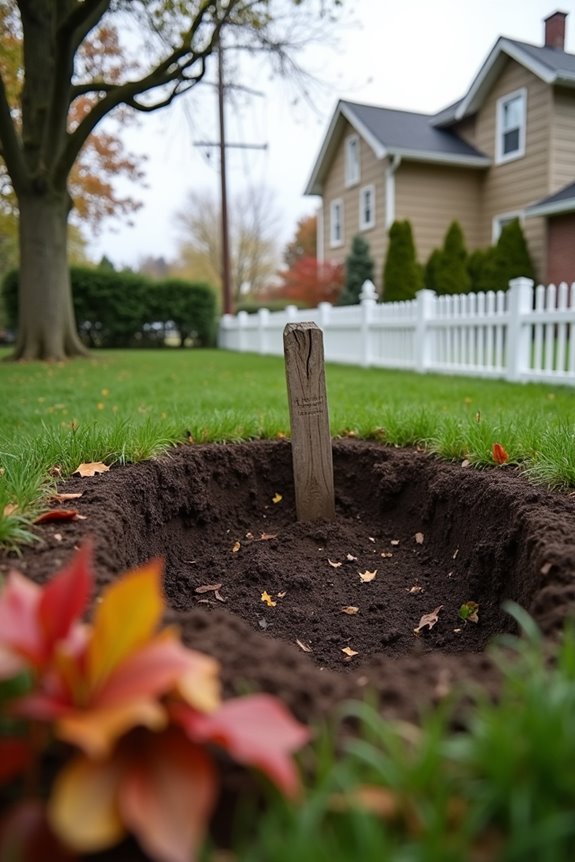
Beyond your property line, your burial decision affects those around you. Your backyard burial creates responsibilities that extend beyond your fence. Respecting neighbors and local utilities defines responsible pet ownership in residential areas.
Before you dig, consider these essential steps:
- Notify neighbors about your intention to bury your dog on private property
- Call your local utility locating service to identify buried pipes and cables
- Maintain adequate distance from shared property lines and neighboring wells
- Verify that your backyard burial complies with local ordinances in your municipality
The depth requirement of 2–3 feet protects groundwater and prevents odors from reaching neighbors. Underground utilities suffer significant damage when excavation hits unmarked lines because repair costs escalate quickly. Obtaining permits demonstrates your commitment to health and safety standards. Local authorities provide guidance that makes backyard burial a respectful, lawful process.