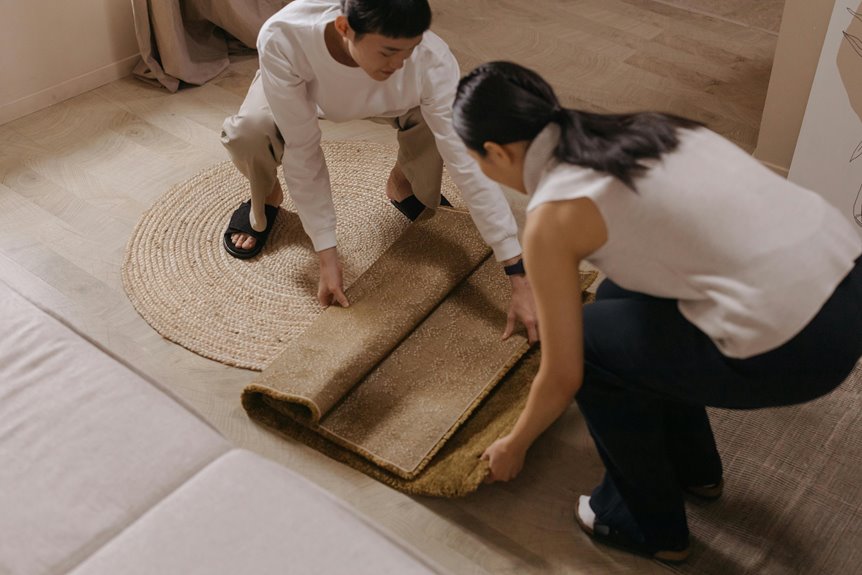
You’ll want to measure your seating area first to define furniture boundaries and prevent costly mistakes.
Next, decide between an all-on approach, where all furniture legs sit on the rug, or front-legs-only, which saves space.
Keep traffic lanes clear by extending your rug 6–18 inches beyond furniture edges while leaving 12–18 inches of bare floor around the perimeter.
Choose standard sizes like 8×10 or 9×12 for cost efficiency.
If space constraints exist, float a smaller rug instead.
Understanding these five strategies creates a balanced, functional living room that anchors your seating without disrupting flow—and there’s more detail to discover.
Measure Your Seating Area First
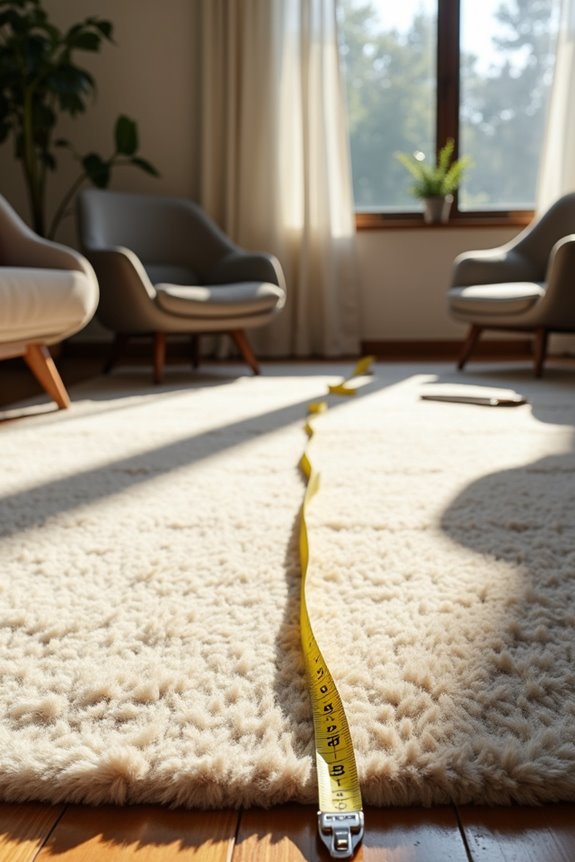
How do you know what rug size actually works for your living room? Start by measuring your seating area, which creates a clear boundary for your furniture placement. This measurement guides your rug size selection and helps anchor your furniture appropriately.
The seating area matters because it defines how your rug layout functions. Measure the distance your sofa, chairs, and tables occupy. Then size up from that measurement to maintain proper room balance. Your rug should extend beyond seating by 6–18 inches on each side, depending on your living room’s dimensions. This extension creates visual cohesion while anchoring your furniture grouping.
The extended boundary establishes design purpose because it connects your seating pieces into one unified zone. Taking these measurements prevents costly mistakes and protects your rug investment by fitting your space correctly.
Understand Your Placement Options: All-On vs. Front-Legs-Only
Choose between all-on rug for cohesion or front-legs-only to save space and improve traffic flow based on your room’s needs.
Once you’ve measured your seating area, you’re ready to decide where your furniture actually sits on the rug. You have two main rug placement strategies: all-on rug and front-legs-on rug configurations.
The all-on rug option creates a cohesive, anchored seating area by placing all furniture legs directly on the rug. This approach works best in larger spaces using 8×10, 9×12, or 10×14 rug size options. It defines clear limits around your seating arrangement.
The front-legs-on rug approach saves space and manages cost by keeping only sofa and chair front legs on the rug. Position your rug 6–18 inches from walls to maintain balanced sightlines. This method accommodates tighter floor plans while improving traffic flow.
Your choice depends on room size, traffic flow patterns, and how much visual anchoring you want. Both rug boundary strategies work effectively when matched to your specific layout.
Keep Living Room Traffic Lanes Clear
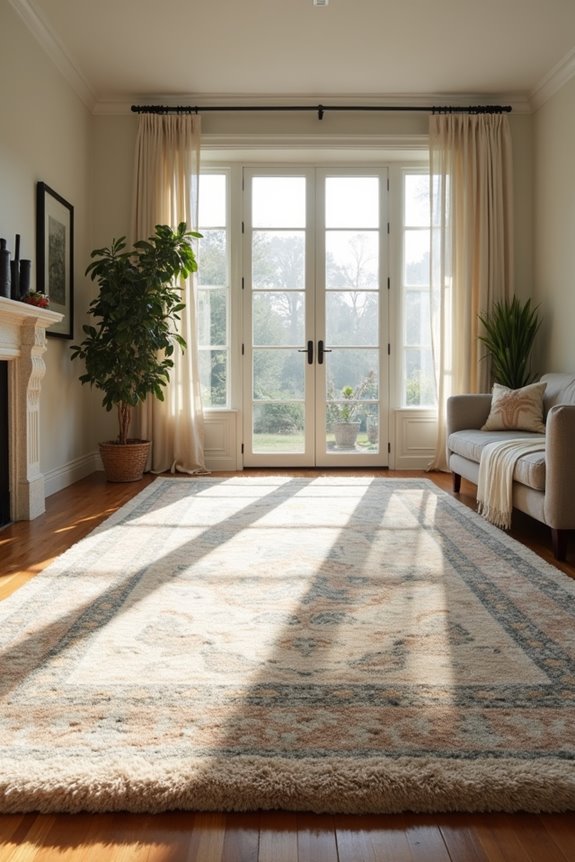
Now that you’ve settled on your furniture placement, consider how your rug affects movement throughout the space. Your rug size directly impacts whether traffic lanes stay clear and accessible. Position seating strategically so furniture doesn’t block natural pathways through your living room layout.
The rug extends beyond sofa edges by 20–30 cm on each side because this creates visual cohesion in open plan areas. This placement also helps anchor seating effectively without consuming floor space needed for circulation.
Leave 12–18 inches of bare floor around rug edges to frame your space and prevent overcrowding. Avoid oversized rugs that obstruct movement. Similarly, undersized rugs create disjointed layouts that invite tripping hazards.
When all front legs sit on the rug, pathways naturally remain unobstructed. This configuration defines clear walking routes while maintaining balanced proportions throughout your room.
Anchor Furniture With Front Legs on the Rug
When you can’t fit all furniture legs onto your rug, positioning just the front legs creates a practical anchoring solution.
This front legs on rug approach defines your seating area without requiring a massive rug size. The technique does this because it visually grounds furniture while maintaining visible floor around the perimeter. Your rug placement matters for balanced proportions in your room layout.
Consider these guidelines:
- Extend 6–18 inches beyond the sofa width on each side
- Position 6–18 inches away from surrounding walls to prevent crowding
- Choose common sizes like 8×10 or 9×12 for cost-effective options
- Keep floor visible around the rug’s edges for clear definition
- Position front legs to ground the furniture and unite your seating area
This strategy creates visual cohesion while controlling costs effectively.
Scale Up for Cohesion or Float When Space Doesn’t Allow
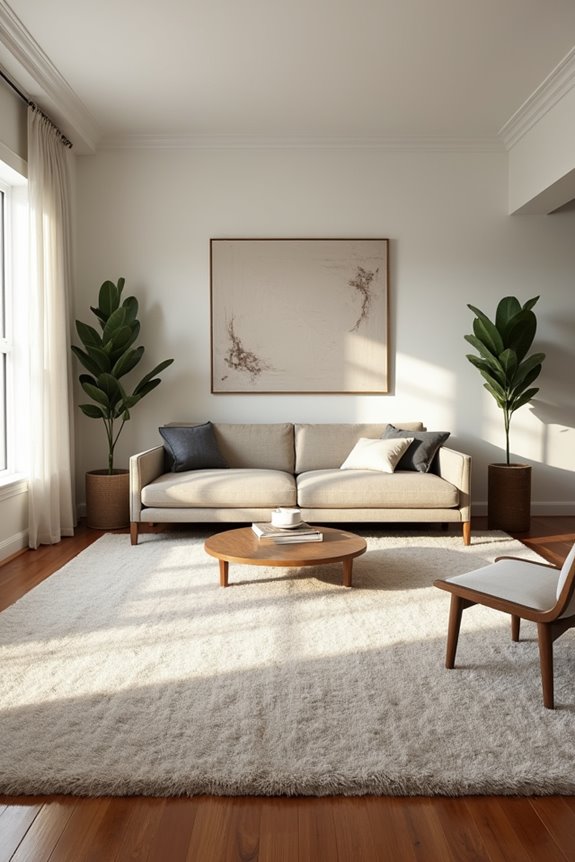
The front legs approach works well for smaller rooms, but scaling up your rug creates stronger visual unity across your seating area. When your living room layout permits, a larger rug size anchors all furniture together, defining the entire seating area as one cohesive zone.
Aim for a rug that extends at least 20–30 cm wider than your sofa on each side. In larger rooms, position 40 cm of floor space between the rug edge and walls for an open, spacious feel.
If space constraints prevent full coverage, you can still float a smaller rug in front of furniture instead. Keep the float rug 6–18 inches from walls to maintain visual balance. This approach works because it defines your seating area without overwhelming tight room layouts, allowing you to achieve cohesion regardless of your space.