
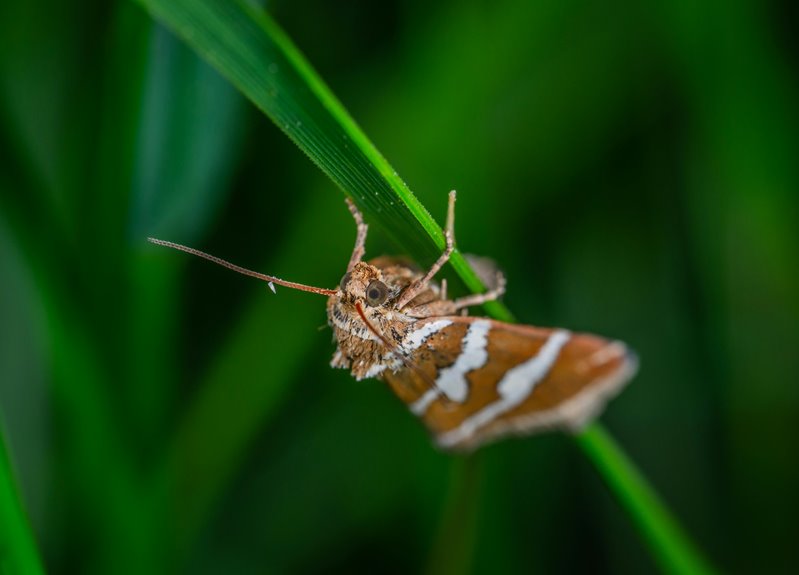
You’re likely seeing drain flies—tiny black insects about 1/8 inch long with fuzzy, moth-like wings that hover near sinks and showers. They breed directly in drain biofilm and sludge, thriving in your bathroom’s moisture and warmth.
Other possibilities include fungus gnats, springtails, or booklice, each indicating different moisture problems.
The real solution targets what attracts them: excess humidity and standing water. Understanding which pest you’re facing defines which specific moisture sources you need to eliminate first.
Drain Flies: The Culprit in 99% of Cases
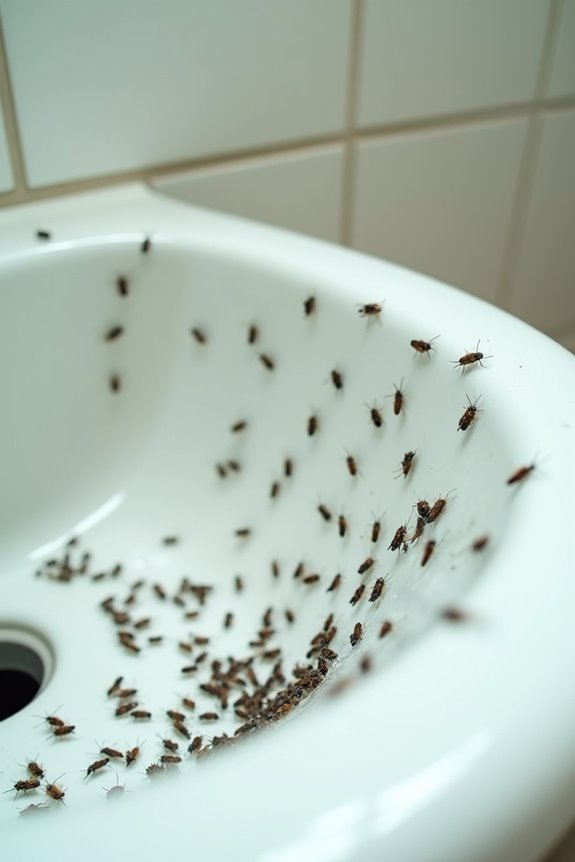
Why do you spot tiny black bugs near your bathroom sink? You’re likely dealing with drain flies, also called moth flies or sewer gnats. These bathroom pests measure about 1/8 inch long and feature fuzzy, moth-like wings. You’ll notice them hovering near sinks, showers, or drains because they breed in these locations.
Drain flies lay eggs directly in drain biofilm and sludge. Larvae feed there for one to two weeks before becoming adults, creating a continuous cycle. The hairy-looking wings and slow fluttering flight define how you’ll identify them.
Your drains become breeding sites when P-traps dry out, allowing sewer access. Running water weekly for 60 seconds restores the water seal and eliminates these breeding grounds, stopping the infestation before it worsens.
Identifying Other Common Bathroom Bugs (Springtails, Gnats, Booklice, Beetles)
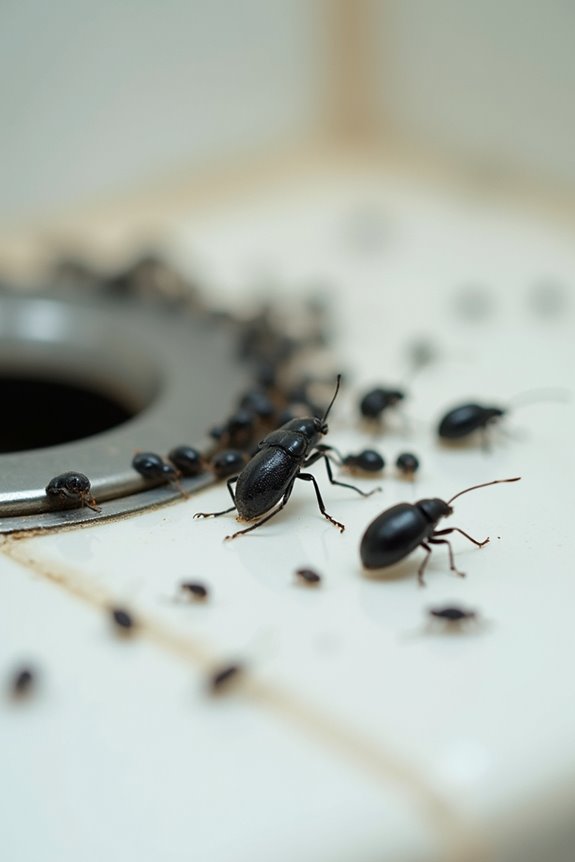
While drain flies account for most bathroom bug problems, you’ll want to identify other moisture-loving insects that create similar conditions. Springtails jump when disturbed, fungus gnats hover near damp soil, and booklice move quickly across wet surfaces—each indicates lingering humidity you must address. Small beetles like carpet beetles measure only 2–3 millimeters and signal nearby food sources, defining a different pest management approach than drain fly treatment.
Springtails: Moisture Indicators
If you’ve spotted tiny black bugs jumping erratically across your bathroom floor, you’re likely dealing with springtails. These moisture indicators reveal something important about your bathroom environment.
| Condition | What It Means | Your Action |
|---|---|---|
| Springtails near sink | Active leak present | Check under cabinet |
| Springtails by shower | Poor ventilation traps humidity | Run exhaust fan longer |
| Springtails after rain | High moisture levels | Use dehumidifier |
Springtails thrive in damp areas where moisture accumulates. Their presence signals that your bathroom has a humidity problem. These pests aren’t harmful to you or your pets, but they’re telling you something needs attention.
Leaks under sinks, inadequate airflow, and high humidity all support springtail populations. The bugs jump because they’re escaping wet surfaces where they breed. Addressing moisture eliminates springtails by design. Fix leaks, improve ventilation, and reduce humidity—these steps solve the real problem.
Gnats vs. Drain Flies
How you identify which tiny bug you’re seeing determines where you look to solve the problem. Drain flies and fungus gnats both hover near bathrooms, but they’re fundamentally different bathroom pests. Drain flies are fuzzy-winged, moth-like insects about 1/8 inch long that breed in biofilm-filled drains. They create colonies directly in your pipes. Fungus gnats resemble tiny mosquitoes with noticeably longer legs and antennae. They hover around damp plant soil and bathroom windows instead of drains. Fungus gnats lay 100–200 eggs in moist soil, signaling excess moisture rather than sanitation problems. The distinction matters because drain flies require drain cleaning, while fungus gnats demand you reduce soil moisture. Observing where they congregate guides your treatment approach and defines your solution strategy.
Booklice and Small Beetles
Beyond drain flies and fungus gnats, two other tiny bathroom bugs deserve your attention: booklice and small beetles. Booklice are soft-bodied, pale insects less than 3/16 inch long that move quickly across damp surfaces where mold thrives. They indicate moisture problems because they require humidity above 58% to survive. You’ll find them near moldy areas, and they’ll disappear as humidity drops below 45%. Small bathroom beetles appear brown or black and measure slightly larger. Adult beetles wander toward light sources, while their larvae hide nearby in closets or air ducts. Both infestations signal underlying moisture issues. Addressing humidity through ventilation and reducing damp surfaces eliminates conditions these pests need, preventing future infestations.
Why Your Bathroom Attracts These Insects?
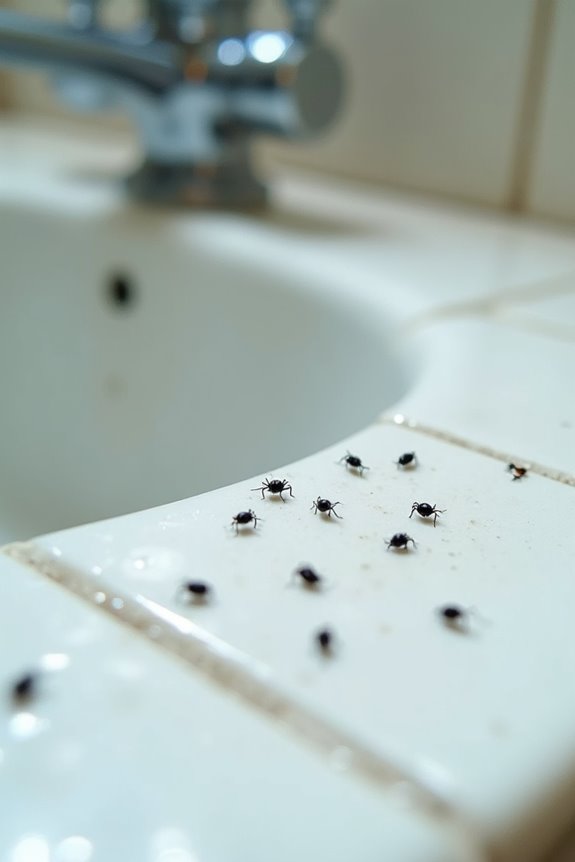
Your bathroom creates the perfect insect habitat because it combines moisture, warmth, and hidden breeding sites that other rooms don’t offer. The combination of steam from showers, leaky pipes behind walls, and standing water in drains defines an ideal environment where drain flies and springtails reproduce rapidly. You’re unknowingly providing shelter because your bathroom’s dark, damp spaces—like drain biofilm and water trapped behind tile—give insects exactly what they need to lay eggs and raise larvae undetected.
Moisture And Warmth Combination
Why does your bathroom become a magnet for tiny black bugs? Your bathroom creates the ideal environment for drain flies and bathroom pests because it combines two things they need: moisture and warmth.
The high humidity from showers and baths does more than fog your mirror. It sustains moisture levels that define ideal breeding conditions. Leaky wax rings under toilets and water behind tile provide hidden moisture sources. Standing water in sink traps and biofilm buildup in pipes offer direct breeding grounds.
Your bathroom’s warmth amplifies these problems. Poor airflow and inadequate insulation trap humid air near walls and fixtures. Installing an exhaust fan reduces humidity significantly and eliminates habitat where pests thrive. By addressing these moisture and warmth combinations, you can stop attracting insects.
Hidden Breeding Site Access
What makes your bathroom plumbing a perfect incubator for drain flies? Your pipes create ideal conditions for these bathroom pests to thrive and multiply rapidly. Hidden breeding sites exist behind tiles, under sinks, and within drain pipes where hair, soap scum, and grease accumulate as gelatinous biofilm. The biofilm does more than clog your drains because it provides eggs and larvae with essential nutrients. P-trap evaporation in unused sinks creates entry points from sewer lines when water barriers disappear. Drain fly eggs hatch in 32–48 hours within this biofilm, with adults emerging in 9–15 days. Your plumbing areas become active breeding grounds unless you eliminate these hidden sites. Understanding how your bathroom’s design defines pest access helps you target treatment effectively.
Moisture Control: The Real Solution to Bathroom Bugs
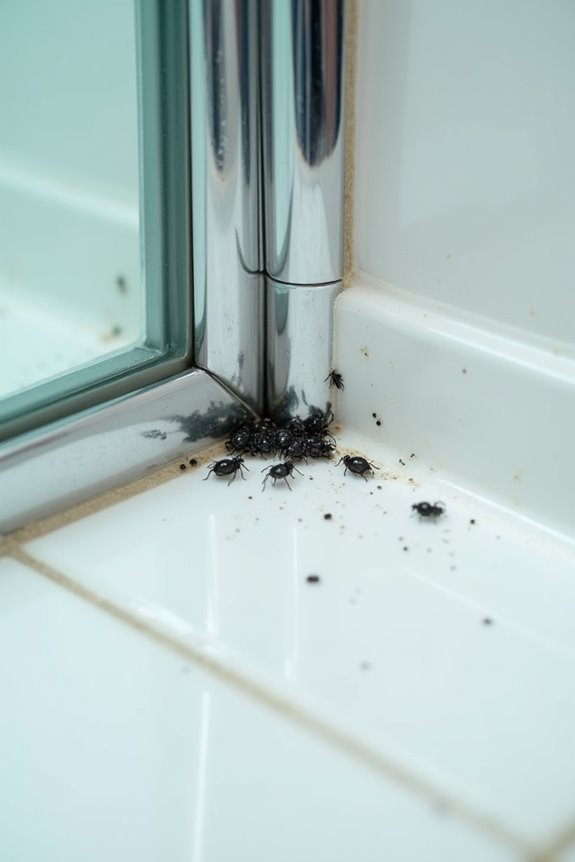
How do you stop bathroom bugs at their source? You address moisture control, the foundation that defines long-term pest elimination.
Drain flies, springtails, and booklice thrive in damp environments where biofilm builds up. The drain does accumulate organic matter because standing water feeds these pests. You’ll eliminate breeding grounds by:
- Installing exhaust fans that reduce humidity and improve ventilation throughout the space
- Fixing leaky wax rings and water pooling under sinks that create hidden infestations
- Running dehumidifiers and promptly drying shower surfaces to prevent mold growth
Regularly cleaning drains removes biofilm, the key food source sustaining bathroom pests. This moisture control approach proves far more effective than surface sprays because it targets root causes rather than symptoms. Addressing leaks and improving airflow creates an inhospitable environment where these insects simply cannot survive or reproduce.
Short-Term Steps to Stop Seeing Bugs Now
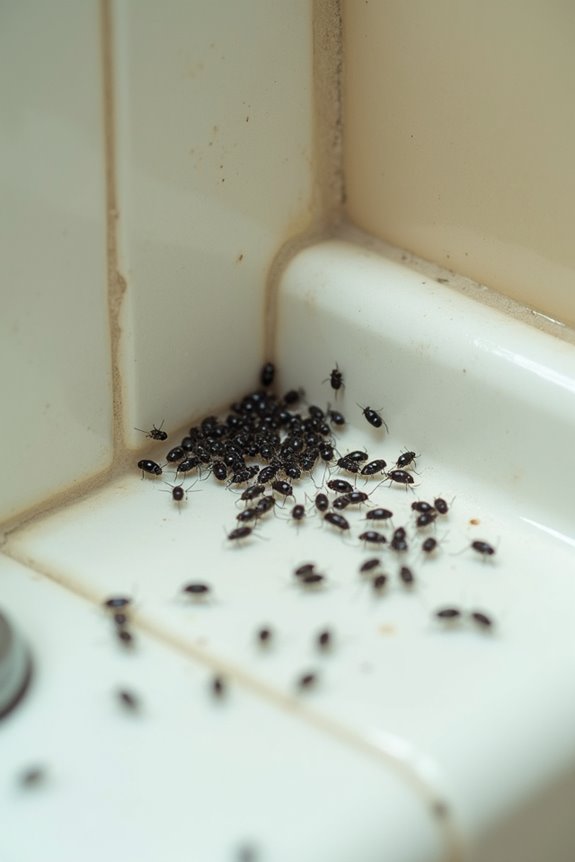
You’ll stop seeing bugs fastest by eliminating the moisture they need to survive and breed. Wipe down surfaces daily, clean your drains with hot water or a baking soda and vinegar flush, and remove standing water around sinks and fixtures because these areas create ideal breeding grounds. Running a dehumidifier and fixing any leaks reduces humidity levels throughout your bathroom, which directly cuts off the conditions that attract these pests.
Eliminate Moisture And Humidity
The fastest way to stop seeing tiny black bugs is to control the moisture they depend on. You’re already taking action by addressing what attracts drain flies, springtails, and booklice to your bathroom.
Moisture control creates the foundation for eliminating these pests:
- Dry surfaces immediately after use by wiping down sinks, tubs, and shower walls to remove standing water that breeding sites need
- Run a dehumidifier to maintain humidity below 50%, which discourages damp-loving species and improves overall airflow throughout your space
- Clean drains regularly to prevent biofilm buildup, the organic material drain flies feed on
The biofilm does harbor pest larvae because decomposing matter creates ideal conditions. Fix bathroom leaks under sinks and behind tiles promptly. These hidden water problems persist otherwise, attracting multiple tiny black bugs simultaneously. This practical approach delivers results faster than chemical treatments alone.
Clean Drains Thoroughly Daily
When drain flies persist despite moisture control, cleaning your drains thoroughly daily becomes your most effective short-term solution. You’ll want to run boiling water through affected drains one to two times daily for a week. This practice washes away drain biofilm where drain flies breed and lay eggs.
For deeper cleaning, you can combine baking soda and vinegar to physically scrub loose organic buildup inside pipes. Follow this with more boiling water flushing to complete biofilm removal. Enzyme cleaners offer a safer alternative to harsh chemicals, breaking down organic matter effectively without toxins.
Don’t neglect your P-trap either. Running water weekly in unused drains maintains the water seal that prevents sewer gases and stops drain flies from emerging into your bathroom moisture-prone spaces.
Remove Standing Water Sources
While daily drain cleaning addresses where flies breed, eliminating standing water removes what attracts them in the first place. Standing water creates ideal conditions for bathroom bugs because moisture fuels pest populations and biofilm growth.
You’ll find standing water in these common locations:
- Under sinks with leaking pipes—fix these promptly to stop ongoing moisture that feeds drain flies
- Around shower bases and tub edges where water pools instead of draining properly
- Beneath bathroom fixtures where condensation collects unnoticed
The leak does damage because it maintains constant humidity that defines pest prevention failures. Fixing these sources interrupts the moisture cycle your bathroom bugs depend on. Moisture control directly impacts your ability to eliminate infestations.
Inspect under sinks weekly. Check shower seals carefully. Address leaks immediately through pest prevention efforts that reduce standing water entirely.
Why Bugs Keep Coming Back After Cleaning?
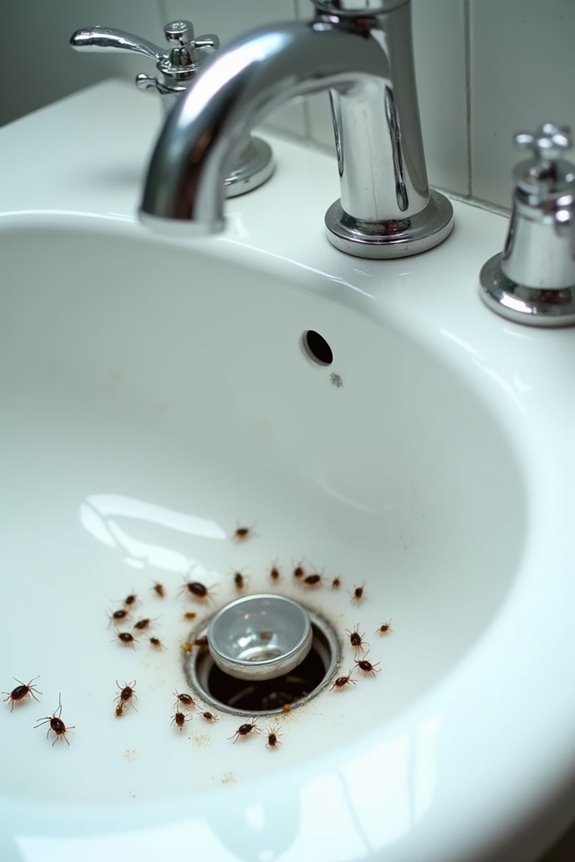
Why do tiny black bugs return after you’ve scrubbed your bathroom clean? Drain flies lay hundreds of eggs directly in biofilm inside your pipes, so surface cleaning alone won’t eliminate them. The P-trap beneath your sink does its job by holding water, but when you neglect moisture control, that seal evaporates. Once it dries out, drain flies re-enter from sewer lines effortlessly.
Your bathroom’s humidity above 58% creates ideal conditions for reinfestation. You’ll need ongoing moisture management, not just one-time cleaning. Run water periodically to re-seal traps and prevent entry points. Enzyme cleaners target biofilm buildup that feeds these pests. Addressing the underlying dampness is the key to success, making your bathroom an inhospitable environment where drain flies simply cannot survive long-term.
Are Bathroom Bugs a Health Risk?
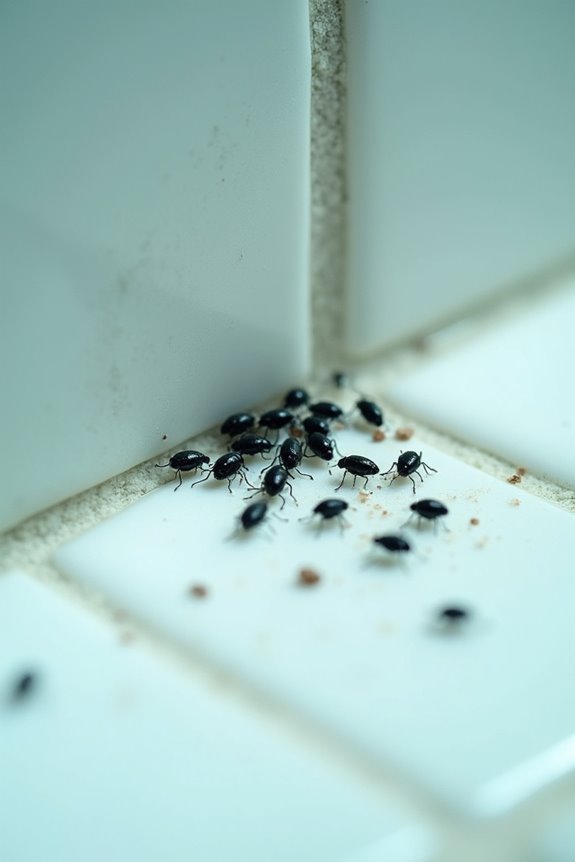
Are your bathroom bugs actually dangerous to your health? The good news is most tiny bathroom pests aren’t direct health threats. However, you should understand what they signal about your space.
Your bathroom environment creates conditions these pests need:
Your bathroom’s moisture and conditions create the perfect environment for pests to thrive and multiply.
- Drain flies indicate sanitation issues and moisture problems requiring attention
- Springtails and booklice reveal high humidity levels affecting your bathroom’s air quality
- Allergic reactions occur when sensitive individuals contact beetle hairs or drain fly scales
The moisture control defines your prevention strategy. These bathroom pests don’t spread diseases, but they reveal underlying problems. Cleaning and prevention through proper ventilation reduces humidity. You’ll eliminate pests by addressing the root cause—excessive moisture—rather than relying solely on chemical sprays. This approach protects sensitive household members while solving the actual problem.
When to Call a Pest Control Pro
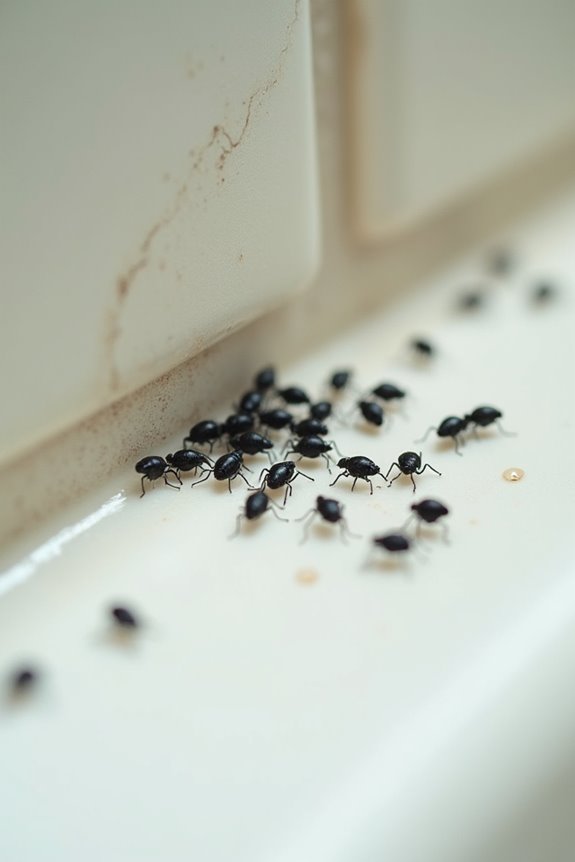
Most bathroom drain fly problems you’ll handle yourself with basic cleaning and moisture control. However, persistent infestations warrant professional intervention. You should call a pest control pro when drain flies return despite your efforts with enzyme cleaners and baking soda treatments. Professional inspectors identify hidden biofilm buildup in pipes that homemade solutions can’t reach. They locate dried P-traps allowing entry from sewer lines and assess your bathroom moisture patterns systematically. Pest control specialists apply targeted treatments to eliminate eggs and adults throughout your drain system. A professional inspection defines problem areas you’ve missed, creates a comprehensive treatment plan, and prevents reinfestation. This approach saves time and money compared to repeated failed attempts at DIY solutions.
Quick Drain Fly Identification Test
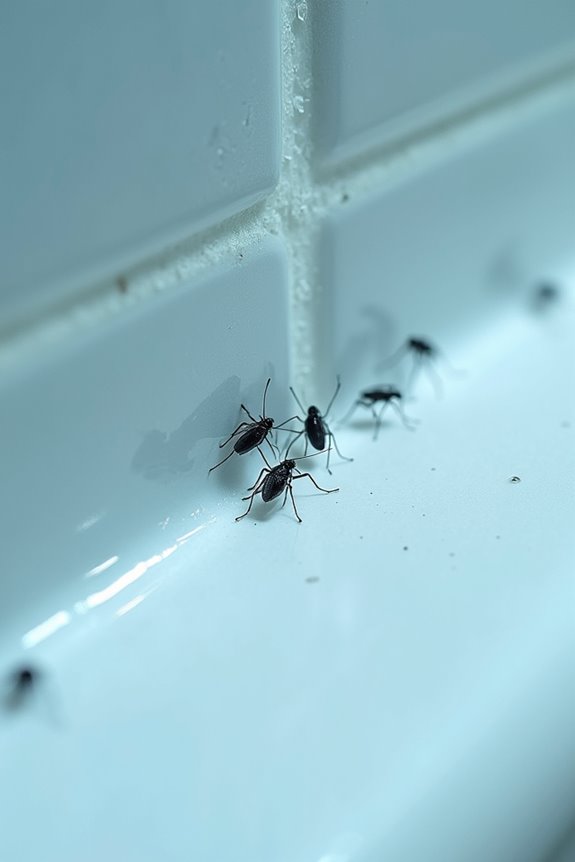
To confirm you’re actually dealing with drain flies, you’ll need clear tape and patience.
Place clear tape directly over suspected drains for 24 hours. This tape test traps any drain flies present in your bathroom. The tape creates a barrier that captures insects without requiring chemicals or disinfectant drains.
After 24 hours, examine your tape closely:
- Tiny dark specks with fuzzy, moth-like wings indicate a positive identification
- Multiple insects suggest larvae are actively developing in biofilm buildup
- Wings appearing hairy under close inspection confirm drain flies as your problem
Drain flies measure about 1/8 inch long and breed in organic sludge. The identification test works because biofilm provides ideal conditions where eggs hatch within 48 hours. This straightforward method determines whether you’re addressing drain flies specifically or other bathroom pests requiring different solutions.
FAQ: What Readers Ask Most About Bathroom Bugs
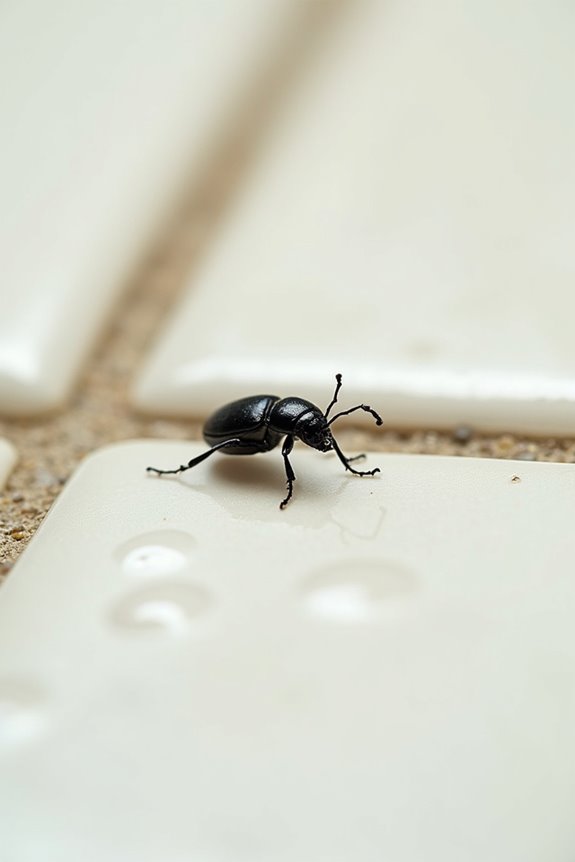
Beyond identifying drain flies with the tape test, you’ll likely wonder which other tiny black bugs might be lurking in your bathroom.
| Bug Type | Size | Key Indicator |
|---|---|---|
| Springtails | 1/25 to 1/12 inch | Jump when disturbed |
| Booklice | Soft-bodied | Move on damp surfaces |
| Fungus Gnats | Tiny | Appear near moisture |
You’re asking the right questions. Springtails create visible jumping behavior because excess moisture attracts them. Booklice define their presence through rapid movement on wet areas; they vanish when humidity drops below 45%. All these bathroom pests signal moisture problems requiring attention.
Prevention is your best strategy. Repair leaking pipes, reduce standing water, and improve airflow throughout your space. These actions eliminate conditions that drain flies, springtails, and booklice need to survive. You’ll notice fewer bugs naturally disappear once you address the underlying moisture issue.