
Most California cities prohibit backyard shooting on private property, so you’ll need to verify your specific city and county ordinances first. Private property ownership doesn’t automatically grant permission to discharge firearms. You must maintain safe distances from homes and schools, use appropriate backstops, and follow strict storage and transport rules. Many residents find public ranges and BLM lands offer legal alternatives that eliminate property concerns. Understanding your local regulations before setup determines whether backyard shooting remains viable for you.
The Quick Answer: Can You Shoot in Your California Backyard?
Can you legally fire a gun in your California backyard? The answer isn’t straightforward. Many California cities prohibit backyard shooting on private property, even within your own space. Your city’s local ordinances define what’s permissible in your area. You must check these restrictions before attempting any backyard shooting.
Many California cities prohibit backyard shooting on private property. Always check your local ordinances before attempting any shooting.
California state law creates additional safety requirements. Certain areas near occupied dwellings impose a 150-yard safety zone. Discharging firearms near homes can trigger penalties. Liability applies if you cause harm to others, regardless of private property ownership.
Storage rules also matter. Firearms must remain unloaded and locked when transported or unused. These requirements exist because unsafe practices create public dangers.
Your responsibility is clear: verify local restrictions, understand state laws, and maintain safe targets with proper backstops. Legal backyard shooting requires careful planning and compliance.
BB Guns vs. Firearms: Know Which Rules Apply to You
You need to understand that California treats BB guns and firearms under different legal frameworks, which creates distinct rules for your backyard use. BB guns fall under “imitation firearm” classifications with display and transfer restrictions, while traditional firearms face separate permitting and licensing requirements that define what you can legally operate. Knowing which category your weapon falls into determines whether you must follow municipal firing bans, parental consent rules, or storage obligations.
Legal Classification Differences
California classifies BB guns as imitation firearms under Penal Code 16700, creating distinct regulatory pathways from real firearms. This classification defines how you handle storage, transport, and use. BB gun regulation requires parental permission for minors, whereas firearm rules differ considerably. Local ordinances often restrict private property shooting within city limits, regardless of ownership legality. The distinction matters because imitation firearms face display and visibility restrictions that real firearms don’t always share. You can’t openly carry BB guns in public or transport them visibly in vehicles. Understanding this separation helps you navigate what’s permissible on your property versus what local rules prohibit in your specific jurisdiction.
Regulatory Requirements Comparison
Whether you’re planning to shoot a BB gun or a firearm on your property, California’s regulatory framework creates distinctly different requirements for each. BB gun regulations demand unloaded storage in locked cases during transport, while firearms require dealer processing and background checks before purchase. Your municipality defines what’s permitted on private property shooting rules—many cities prohibit both entirely within limits. Municipal restrictions vary significantly by location, so you’ll need to verify local ordinances before setting up. Storage and transport standards differ substantially between the two. Firearms involve state licensing requirements that BB guns don’t require. Understanding these distinctions helps you remain compliant and avoid costly violations. Check your specific city and county regulations before proceeding with any backyard shooting activity.
Why Private Property Doesn’t Give You Permission
Many California residents assume that owning land means they can shoot freely on it—but that assumption creates significant legal problems. Your private property doesn’t automatically grant shooting permission under California gun laws. Local ordinances often prohibit backyard shooting even on your own land. Cities enforce these restrictions because discharging firearms poses risks to neighbors and their property.
Liability defines your actual legal exposure. If your shot injures someone or damages property beyond your boundaries, you face criminal or civil consequences. The law holds you responsible regardless of property ownership. Additionally, state regulations preempt local rules, meaning statewide firearm restrictions still apply to your backyard.
You must check specific city ordinances before attempting any backyard shooting. “Private property” alone doesn’t solve the legal equation in California.
Check Your City and County Ordinances First
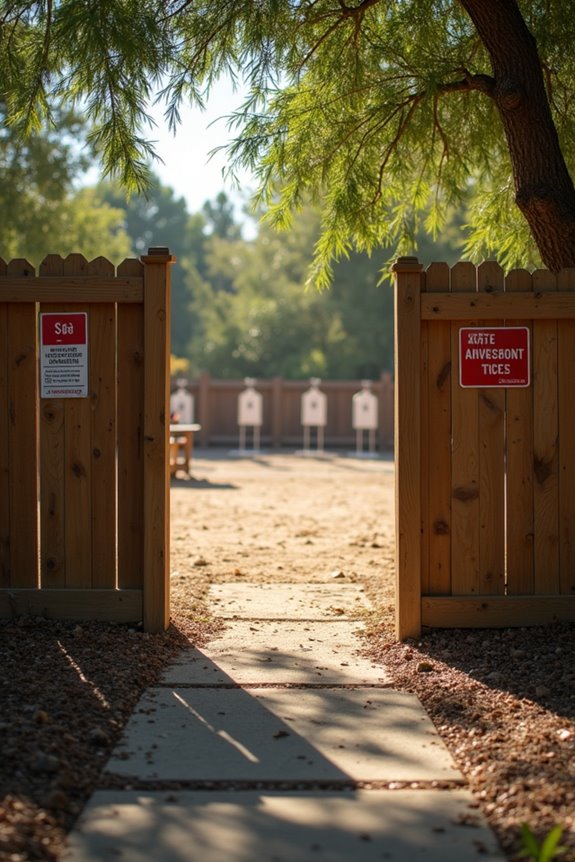
Since private property alone won’t protect you legally, you’ll need to investigate your local rules before shooting. Your city ordinances and local permits define what’s actually allowed in your area. Many California cities prohibit BB guns and air guns on private property entirely, while others permit shooting only in designated zones or during specific times.
Contact your city or county code enforcement office to understand shooting restrictions in your neighborhood. Local prohibitions often tighten near schools, parks, and residential zones. Fire season creates additional restrictions you must follow. Your local police or fire department can confirm current rules and required safe-distance measurements from property lines.
This research step prevents legal problems and liability issues. Verify everything through official sources before setting up your backyard shooting area.
Safety Zones Around Homes: How Far Back Is Safe Enough?
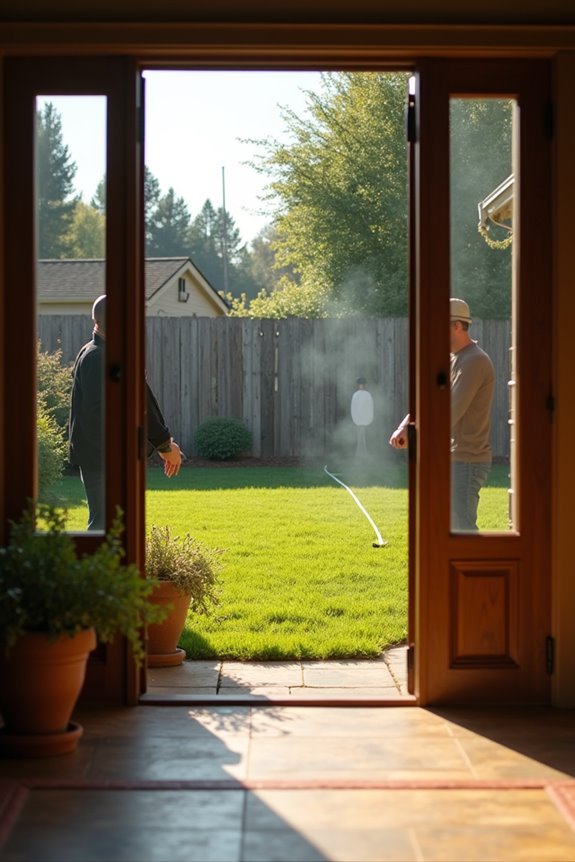
How much distance do you actually need between your shooting area and your home?
California Fish and Game establishes a 150-yard safety distance around dwellings for hunting activities. While this hunting precedent isn’t universal law, it defines a practical baseline for backyard shooting safety zones. You’ll want to position your range on private property, measuring setback requirements from your home and any occupied structures nearby.
The 150-yard standard creates a protective buffer because bullets travel unpredictably and ricochet. Distance absorbs impact energy before projectiles reach buildings. Position your shooting setup perpendicular to neighbor properties, maximizing separation from adjacent homes.
Check your specific city ordinances—many municipalities impose stricter setback requirements than state guidelines. Your local zoning office clarifies exact distances required. Meeting or exceeding the 150-yard benchmark demonstrates responsible range placement and protects everyone on surrounding properties.
How to Legally Transport Your Firearm to Your Backyard
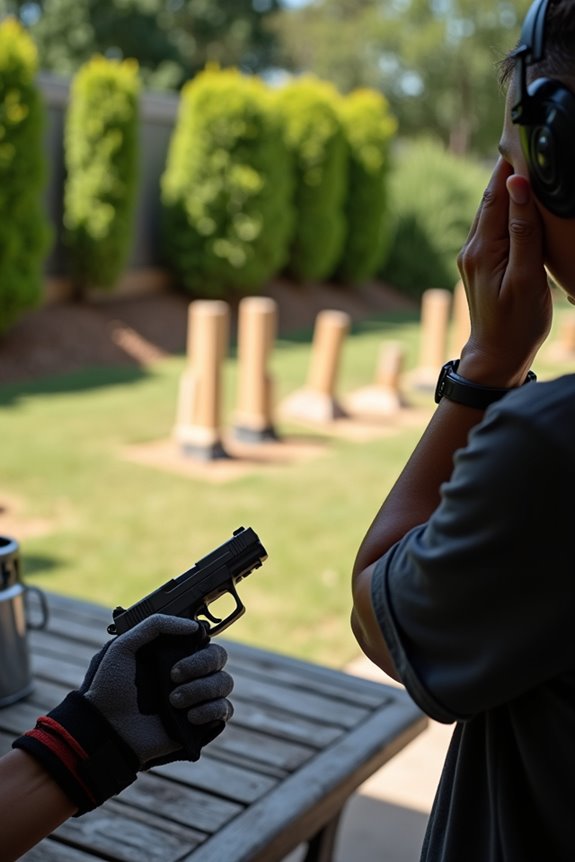
You must store your unloaded firearm in a locked, hard-sided case during vehicle transport because California law creates strict liability for accessible weapons. The case placement matters substantially: you’ll position it in your trunk or secured rear compartment rather than a glove box, which defines compliant transportation and protects you legally. Ammunition travels separately from your firearm in a locked container, and this physical separation eliminates ambiguity about your compliance with state regulations.
Vehicle Storage Requirements
What’s the safest way to get your firearm from home to your backyard? You’ll need to transport your unloaded firearm in a locked container placed in your vehicle. This requirement creates a secure barrier that prevents accidental access during transport.
Keep your ammunition completely separate from the firearm itself. Store ammunition in a different locked container, positioned away from your gun. The separation accomplishes this because it eliminates any chance of your firearm being loaded while traveling.
For handgun storage specifically, use a locked case rather than a general container. A trunk or secure locked compartment defines the ideal placement location. These choices keep your firearm inaccessible to others during vehicle transport, meeting California’s legal standards for backyard shooting preparation.
Visibility and Concealment Rules
When transporting your firearm to your backyard, keeping it concealed from public view remains a legal requirement in California. The locked container accomplishes this by preventing neighbors and passersby from seeing your weapon. Use an opaque case—dark colors work best—rather than transparent materials that expose the firearm inside.
Transport your gun through your vehicle’s trunk or a secure enclosure, never on passenger seats where visibility creates legal problems. This placement defines safe transport and protects you legally.
Once at your backyard, check municipal ordinances before shooting. Many California cities prohibit firearm discharge within city limits, even on private property. It is unlawful to discharge weapons where neighbors can see or hear the activity. Your backyard shooting rules depend entirely on local regulations, so verify restrictions first.
Proper Case and Handling
Keeping your firearm concealed during transport sets the foundation for legal compliance, and the equipment you choose determines whether that protection holds up to scrutiny.
You’ll need specific gear to transport safely to your backyard:
- Hard-sided locked case – A rigid container with secure latches creates a barrier that protects your firearm from damage while meeting state requirements.
- Separate ammunition storage – Store rounds in a locked container apart from your weapon because this separation defines responsible handling.
- Trunk or enclosed container – The firearm stays hidden from public view during transport, which prevents misunderstandings about your intentions.
- Compliance verification – Check local private property rules before transport because municipalities impose varying requirements on residential shooting.
The locked case accomplishes this job through solid construction that prevents accidental discharge. Your ammunition storage accomplishes this job through separation that removes immediate firing capability. These choices create lawful transport conditions.
Safe Storage When You’re Not Using It
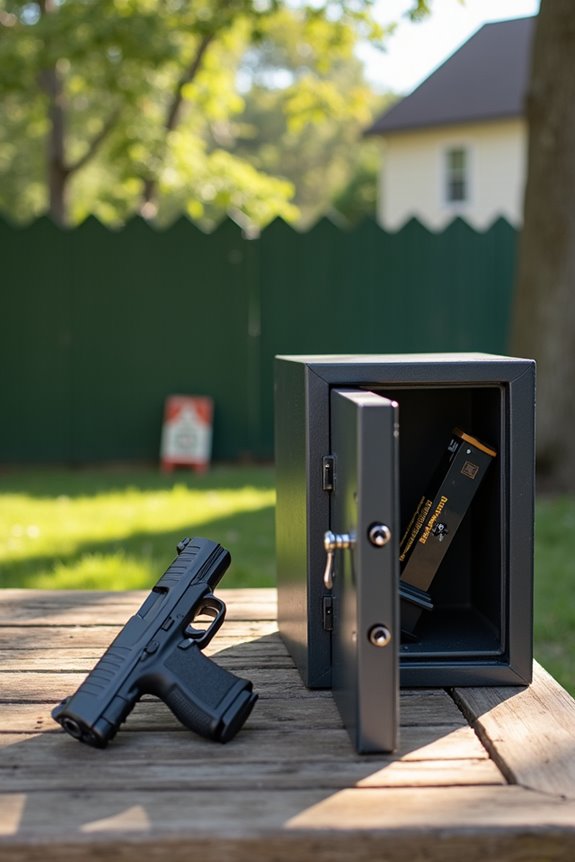
How you store your firearm when it’s not in use creates the foundation for responsible gun ownership in California. You’ll keep your unloaded firearm in a locked container—a metal safe, lockbox, or cabinet works well. Store ammunition separately in another locked location. The locked container prevents unauthorized access, particularly by juveniles, to dangerous equipment.
Local ordinances define specific storage requirements for your area, so verify your municipality’s rules. You might use a trunk in your garage or a bedroom closet cabinet, positioning it away from common spaces. Your storage choice determines who can reach your firearm and ammunition. This separation practice meets California’s legal standards while protecting your household and demonstrating community responsibility.
Legal Targets vs. Prohibited Targets: What’s Off-Limits
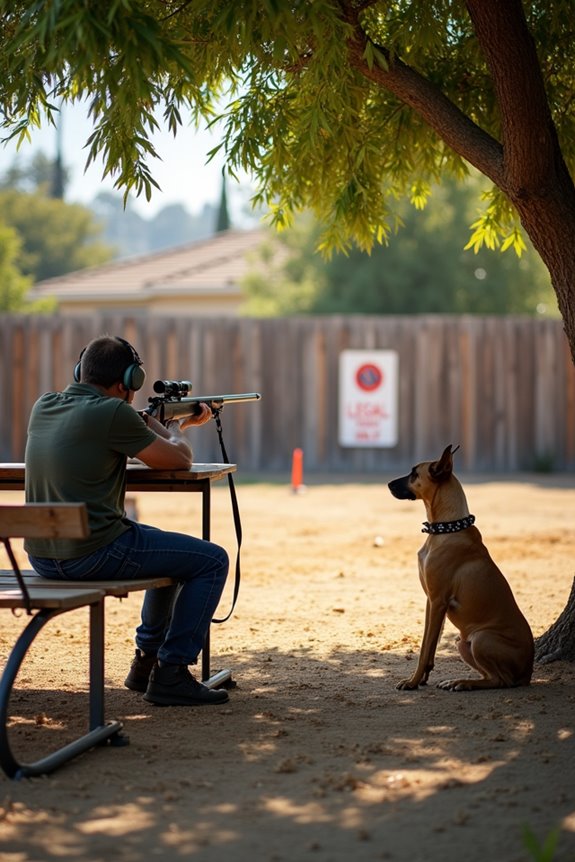
Your secured firearm is only part of the picture—where and what you shoot matters equally under California law. Backyard shooting requires you to understand which targets comply with local ordinances and safety regulations.
- Paper or steel targets – These stationary targets create minimal ricochet risks and define responsible practice shooting.
- Prohibited targets – Objects like bottles, cans, or reactive targets generate unpredictable fragments that endanger nearby properties and people.
- Proximity restrictions – Firearm discharge within 1,000 feet of schools or occupied dwellings violates safety regulations in most jurisdictions.
- Lead-free ammunition zones – Wildlife areas near your backyard may require specific ammunition types under environmental guidelines.
The target you choose does impact liability because unsafe selections create legal exposure. Before setting up backyard shooting, verify your municipality’s target restrictions to stay compliant with applicable firearm discharge ordinances.
Ammunition Rules in California
California’s ammunition regulations require you to use nonlead projectiles in most shooting scenarios, a requirement that defines your ammunition choices substantially. Specific caliber standards exist because lead contamination creates environmental hazards, particularly in areas where hunting occurs near water sources. You’ll find that copper-based rounds meet state specifications while delivering comparable ballistic performance to traditional ammunition types.
Nonlead Ammunition Requirements
When you’re shooting a firearm in your California backyard to take wildlife, you’ll need to use nonlead ammunition. Assembly Bill 711 established this requirement, effective July 1, 2019. This regulation protects California wildlife and ecosystems from lead contamination.
What you need to know about ammunition regulations:
- Use copper-based or steel rounds instead of traditional lead bullets when taking game animals
- Understand that nonlead ammunition requirements apply specifically to wildlife harvesting, not all target shooting
- Check local county rules, as some areas impose stricter standards than state minimums
- Know that violations can result in penalties or loss of hunting privileges
The regulation defines what ammunition types protect ecosystems because lead particles persist in soil and water. Backyard shooting that follows these rules creates safer habitats for California’s wildlife populations.
Caliber Specifications And Standards
Beyond the nonlead ammunition requirement, California regulates which calibers you can legally use in your backyard. Magazine capacity restrictions define your ammunition limits—standard magazines cannot exceed ten rounds. This design creates safer backyard shooting environments by reducing rapid-fire capability. The state distinguishes between BB devices and airsoft pellets, with 6mm or 8mm configurations requiring fluorescent orange markings for legal use.
Assault weapons and .50 BMG rifles face separate caliber restrictions entirely. You’ll find these weapons prohibited for backyard shooting on private property without specific registration. Ammunition restrictions also prohibit armor-piercing rounds in most contexts. Safe storage requirements mandate securing ammunition away from minors, establishing responsible handling practices.
Understanding these caliber specifications protects you legally and supports compliant backyard shooting practices across public and private property rules.
What Happens If You Get Caught Shooting Illegally
Violating California’s firearm discharge laws creates serious legal consequences you’ll want to understand. Getting caught shooting illegally puts you in a difficult position with multiple enforcement actions possible.
Violating California’s firearm discharge laws creates serious legal consequences with multiple enforcement actions possible.
Here’s what you’re facing:
- Firearm seizure – Law enforcement confiscates your weapon immediately upon discovery of unlawful discharge violations.
- Criminal charges – You’ll face misdemeanor or felony Penal Code violations, depending on circumstances and intent involved.
- Financial penalties – Fines and court costs accumulate quickly, straining your budget significantly over time.
- Arrest and jail time – Serious violations result in custody, creating lasting personal and employment consequences.
Local ordinances define prohibited shooting areas. The illegality of backyard discharge exists because public safety depends on controlling firearm use. Avoid these outcomes by using licensed ranges instead.
Alternatives to Backyard Shooting: Ranges and BLM Land
Rather than risk legal trouble on your property, you have practical options that won’t land you in court. Public ranges create controlled environments where you’ll find professional oversight and proper safety compliance. These facilities define clear firearm regulations and provide range safety instruction that protects everyone present. Indoor and outdoor ranges offer coaching, equipment, and structured shooting time with California-compliant policies enforced by trained officers.
BLM shooting on public lands presents another alternative if you verify allowed zones beforehand. You’ll need to understand local fire restrictions and wildlife regulations specific to each area. Plan your trip using detailed maps and confirm permitted firearms and calibers. Both options—ranges and BLM land—eliminate private property concerns while following all applicable regulations legally and safely.